

What to Confirm Before Ordering a Custom PET Blow Mould
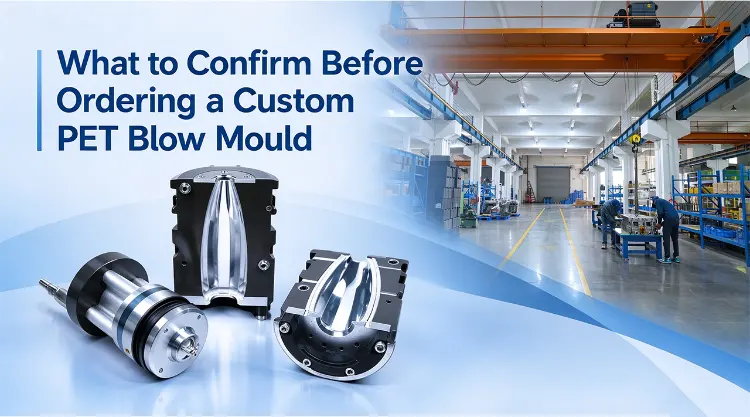
Ordering a custom PET blow mould is a production decision, not just a tooling purchase. The mould has to match the bottle drawing, preform, blowing machine, cooling circuit, venting arrangement, and the output you expect from the line. If one of these inputs is missing, a mould can be made accurately and still perform badly after installation.
For a reliable quotation, send the bottle drawing or sample, target volume, preform details, machine model, cavity arrangement, installation dimensions, and any current defect information. A supplier should then confirm the design in 2D or 3D before machining. The following checks help beverage plants and packaging producers compare a custom PET blow mould on facts instead of a catalogue name.
What Information Should You Prepare Before Ordering?
Start with the bottle drawing or a physical sample
The bottle shape controls almost every mould decision. Provide a dimensioned drawing with the neck finish, body diameter, height, base profile, grip features, label area, and nominal volume. If the bottle is a new design, include the intended use, such as still water, carbonated soft drinks, juice, edible oil, or an aseptic application. A sample bottle is also useful because it shows details that a simplified drawing may leave out.
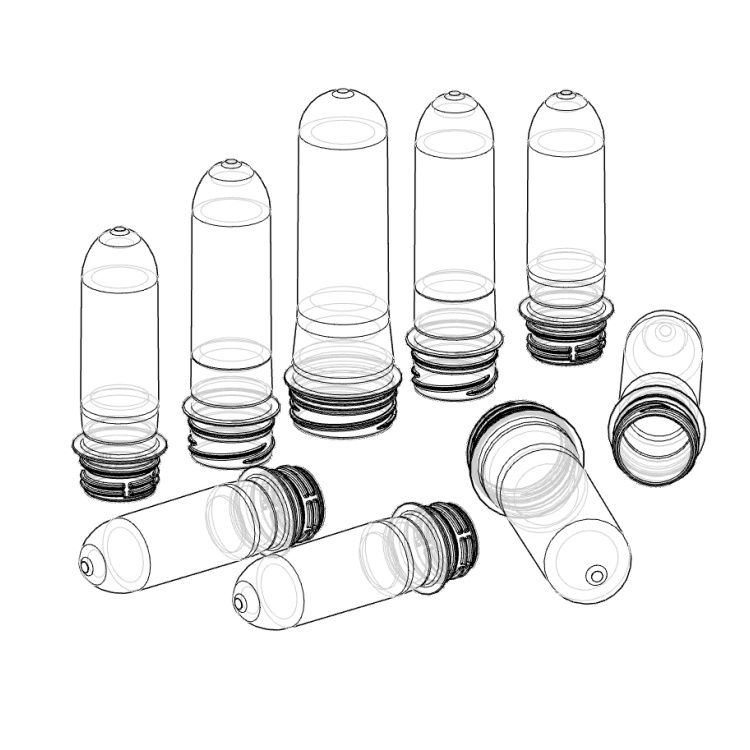
The preform matters just as much. Share its weight, length, neck specification, gate position, and any existing wall-thickness problem. The supplier needs to understand how the preform will stretch into the cavity. A change in preform design can affect bottle distribution even when the outside mould dimensions stay the same.
BJY’s normal engineering route starts with a customer sample or drawing, followed by reverse engineering, 2D/3D drawing confirmation, manufacturing, inspection, and shipment. That sequence gives both sides a clear point to check the shape before cutting metal. The company published product pages provide reference points for the checks below.
Give the complete machine and interface data
“Fits a Sidel machine” is not enough information for a custom order. Send the machine make and model, mould station or shell-holder drawing, cavity count, mould height, width, thickness, pin or bolt positions, neck ring information, and quick-change requirements. Also identify whether the line is rotary or linear and whether it is used for a standard or aseptic process.
Installation dimensions should be checked against the actual machine drawing. For example, BJY lists a sample 150 × 419.6 mm specification for its 500ml PET Blow Mold Cavity, while the page states that the final dimensions are customised to the machine model. That is the right way to read a catalogue dimension: as a reference for discussion, not as permission to order without a fit check.
How Do You Check PET Blow Mould Compatibility?
Match capacity and cavity layout to the line
Confirm the nominal bottle capacity and the actual bottle drawing together. A “500ml” mould can still produce different shoulder, base, and neck geometries. Confirm the number of cavities, production target, cycle time, and whether the mould will be used for one bottle design or several approved variants.
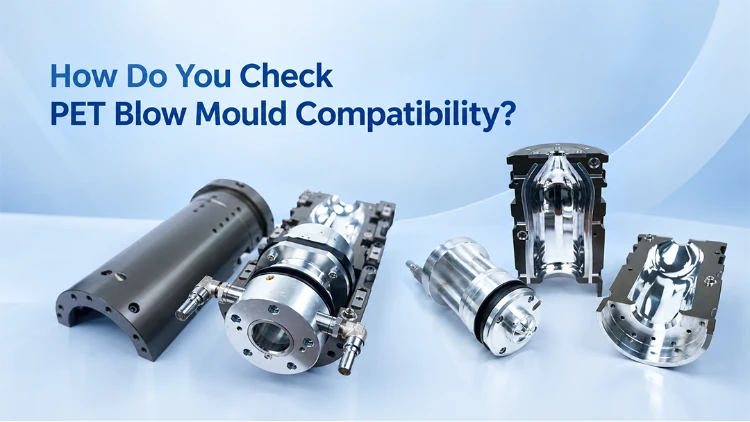
Ask the supplier to show where the parting line, inserts, venting channels, cooling ports, and wear components will sit. These details affect maintenance time. They also help the production team understand what can be changed later and what is fixed by the original design.
If you are replacing a mould on an existing KHS line, compare the old mould’s measured installation points with the new design. BJY documents a custom 570ml blow mould upgrade for KHS machines using a 150 × 401.6 mm installation standard. The practical lesson is simple: an upgrade should be discussed as a machine-specific engineering project, with the current performance and interface data reviewed before production.
Check cooling and venting before discussing speed
Cooling and venting are often the first areas to examine when bottles show uneven walls, incomplete forming, cloudy areas, or a difficult release. The water circuit should follow the cavity shape closely enough to remove heat consistently around the body, shoulder, and base. The mould design also needs vents that let trapped air leave the cavity without damaging the bottle surface.
Do not accept a speed promise without asking what conditions support it. Cooling-water temperature, air pressure, preform temperature, stretch-rod alignment, and machine settings all influence output. A mould supplier can control the cavity, surface, water passages, and venting geometry; the full bottle process still depends on the line.
For a 350ml application, BJY describes a 350ml PET Blow Mold with a 150 × 408 mm cavity block and venting features intended for high-speed beverage production. Treat these page details as a starting point for a technical review. The final cooling and venting design should be confirmed against your bottle and machine data.
Which Material and Surface Details Matter?
Choose the cavity material for the production duty
Aluminum is common in PET blow moulds because it transfers heat well and is practical to machine. The grade, stock form, and treatment still matter. Ask whether the cavity is made from solid or extruded bar, what areas use stainless-steel inserts, and how the material choice relates to the expected cycle count and bottle finish.
BJY’s 500ml page identifies imported solid aluminum bars for the mould body, a stainless-steel critical insert, high-precision CNC machining, and a stated ±0.01 mm tolerance for the sample specification. Those are useful items to place on an RFQ checklist. They should be matched with the drawing tolerances that actually affect fit, sealing, bottle appearance, and maintenance.
Confirm surface treatment and service access
Hard anodizing can protect an aluminum cavity from wear, but the treatment is only one part of service life. Ask which surfaces are treated, how the parting faces are protected during processing, how scratches are repaired, and which components can be replaced without remaking the full mould.
Also confirm cleaning access. Operators need to remove resin dust, condensate, and deposits from vents and water connections. A design that is precise but difficult to clean can create avoidable stops. Include the maintenance method and spare-part list in the quotation, especially for a line that runs multiple shifts.
What Should Be Included in the Trial and Inspection Process?
Before manufacturing, require an approved drawing package. It should show the bottle profile, cavity dimensions, installation interface, cooling and venting concept, material, surface treatment, and revision number. Keep one approved copy with the purchase order so later changes are traceable.
After machining, request dimensional inspection records for the features that matter to installation and bottle quality. Depending on the project, this may include CNC inspection data, CMM measurements, cavity matching, and a visual check of vents, parting lines, and surface finish. The inspection method should be agreed in advance; do not assume that a general “quality checked” statement covers every critical dimension.
A trial should be run under settings close to your production conditions. Check bottle volume, weight, height, neck alignment, base stability, wall distribution, clarity, and release. Take samples by cavity and record the machine station, preform batch, temperatures, pressures, and cycle settings. If one cavity behaves differently from the others, the sample record helps separate a mould issue from a machine or process issue.
For higher-output lines, also review changeover time, water leakage, vent cleaning, and the condition of wear parts after the trial. A mould is ready for shipment when it meets the agreed drawing and trial criteria, not simply when it has finished machining.
How BJY Supports Custom PET Blow Mould Projects
BJY, established in 2011 in Foshan, provides PET liquid packaging moulds including blowing moulds, PET injection moulds, closure moulds, and related OEM machinery parts. The company’s published process combines customer drawings or samples with reverse engineering, drawing confirmation, manufacturing, inspection, and delivery. Its product range includes moulds for Sidel, Krones, KHS, Bestcrown, and SMF equipment, but the machine interface still needs to be checked for each order.
For projects that require a different bottle size or line format, the PET blowing mould product range is a useful place to compare starting points. Send the bottle file, preform data, machine drawing, cavity count, target output, and current defect photos with your enquiry. BJY can then confirm whether an existing design is close enough to adapt or whether a new cavity and interface should be engineered.
PET Blow Mould Ordering Checklist
Before approving a quotation, confirm that you have:
- Bottle drawing or sample, target capacity, and application.
- Preform weight, length, neck finish, and gate information.
- Machine make, model, cavity count, and installation drawing.
- Cavity dimensions, parting line, inserts, cooling, and venting details.
- Material, surface treatment, tolerances, and spare-part plan.
- Drawing approval, trial conditions, inspection records, and acceptance criteria.
- Packaging, delivery terms, installation support, and after-sales contact.
Final questions to ask the mould supplier
Ask who owns the approved drawing, which dimensions are guaranteed, how changes are recorded, and what happens if the first trial does not meet the agreed bottle criteria. These questions are more useful than asking only for the lowest mould price. They show whether the supplier understands the complete production problem.
If you are preparing a new bottle or replacing an existing cavity, contact BJY with the technical information above. A clear RFQ gives the engineering team enough detail to confirm compatibility, select the right product route, and quote a custom PET blow mould that can be checked before it reaches your line.
Frequently Asked Questions
Can I order a custom PET blow mould from a bottle sample only?
Yes, a sample can start the reverse-engineering process, but a machine drawing and preform data are still needed to confirm the interface and forming conditions. A sample alone does not define every installation dimension.
Should I choose a catalogue mould or a fully new design?
Use a catalogue product as a starting point when its bottle size, machine interface, cavity dimensions, and application match your project. Choose a new or re-engineered design when the bottle profile, preform, line, or production problem differs in a way that affects fit or forming.
What is a common ordering risk?
A common ordering risk is approving a mould from the nominal bottle volume or machine brand alone. The drawing, preform, cavity layout, installation points, cooling, venting, and acceptance test need to be reviewed together.
Disclaimer
The brand names and logos of sidel, husky, khs, sacmi, sipa, netstal, etc., are registered trademarks owned by their respective legal holders. All mentioned trademarks and brand names in this article are used solely for the purpose of illustrating product compatibility and suitability. BJY does not claim any rights to the aforementioned trademarks and has no affiliation, authorization, or partnership with the companies mentioned. Any references herein do not imply that our products are original factory parts or have received official recognition from the manufacturers.