

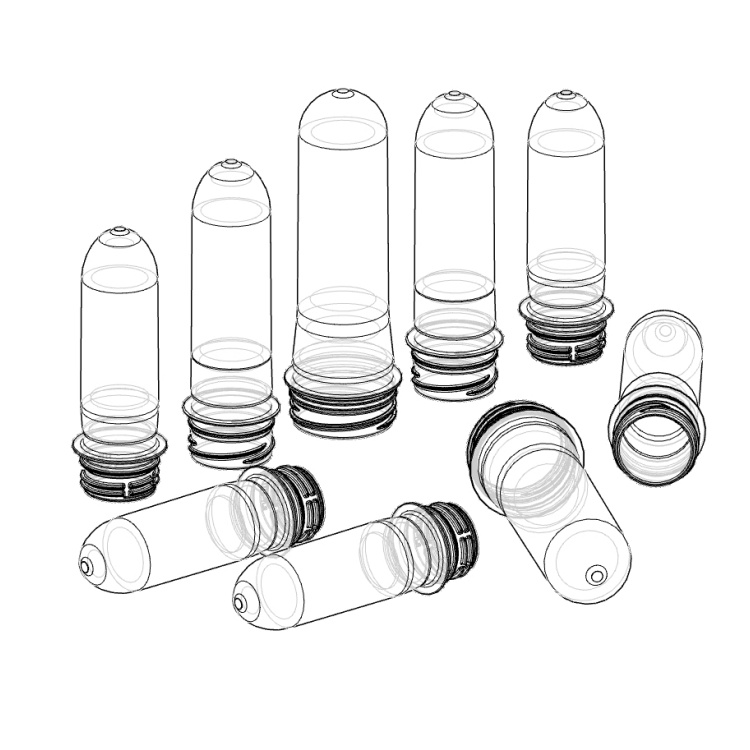
Is Extrusion Molding the Same as Blow Molding for Custom Blow Mold Projects
If you are planning a bottle packaging project, it is easy to mix up extrusion molding and blow molding. Both processes shape plastic, but they do not solve the same production problem. For PET bottles, a custom blow mold is usually linked to the final bottle shape, capacity, wall distribution, base design, and production line fit. That is very different from simply pushing melted plastic through a die to make a continuous profile.
BJY works in PET liquid packaging molds, including PET blowing molds, PET injection molds, compression capping molds, and related mold accessories. The company was founded in 2011 in Foshan and serves packaging projects for water, carbonated drinks, hot-fill drinks, edible oil, pharmaceutical packaging, and daily chemical products. For buyers, the useful part is not only mold supply. BJY can also support bottle shape design, preform design, equipment adaptation, drawing confirmation, trial mold work, and inspection before shipment. That makes the company suitable for buyers who need technical matching, not only a mold price.
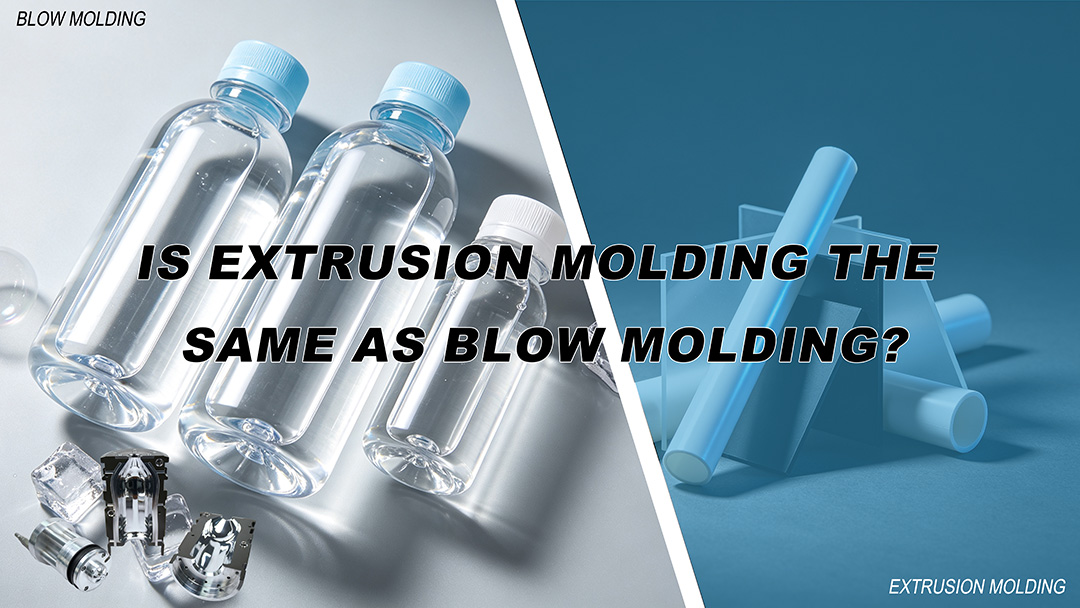
Is Extrusion Molding the Same as Blow Molding?
No, they are related to plastic forming but have different forming logics. This question is often posed by a buyer who is trying to compare production methods for hollow plastic containers. The wrong choice of processes for making hollow plastic containers will not allow for proper control of bottle shapes, poor neck fits, difficult ejection from molds, or incorrect size of molds for the given machine.
Different Plastic Forming Logic
Extrusion molding forms plastic by pushing melted material through a die. It is common for continuous shapes, such as tubes, sheets, and profiles. The cross-section is usually the main design concern.
Blow molding uses air pressure to expand heated plastic into a mold cavity. For bottle production, the mold cavity decides the bottle body, shoulder, base, grip area, label panel, and many visible details. In the PET bottle blow molding process, the preform is heated, stretched, blown, cooled, and released from the mold.
Hollow Products Need Mold Cavity Control
A hollow bottle is not only a plastic shell. It must hold volume, stand upright, seal with the cap, survive filling, and pass handling after packing. This is why blow molding needs closer control over the cavity, bottom shape, cooling, venting, and neck area. A custom blow mold is made around these details.
Why This Difference Matters for PET Bottles
If your project is a PET water bottle, juice bottle, carbonated beverage bottle, edible oil bottle, or daily chemical bottle, extrusion molding alone is usually not the answer. The real question is whether your bottle needs a standard mold, a modified mold, or a full custom PET bottle mold based on your sample, drawing, filling method, and machine interface.
Why Does a custom blow mold Matter for PET Bottle Projects?
A bottle buyer does not buy a mold only for the shape. The mold affects whether the bottle can be produced steadily on the line. If the mold design does not match the preform, filling process, neck finish, or machine structure, small problems can repeat every shift.
Bottle Shape, Capacity, and Neck Finish Control
Bottle appearance is the easy part to see. The harder part is hidden in details such as wall distribution, bottom thickness, shoulder forming, neck sealing surface, and label area stability. For a custom blow mold, these details must be checked before machining, not after the mold arrives at the factory.
BJY’s Custom PET Blow Mold is suitable when you are developing a new bottle shape, changing capacity, adjusting a bottle for a different filling requirement, or replacing an old mold that no longer gives stable output.
Equipment Compatibility Before Mold Production
A mold must fit the machine physically and also follow the production logic of the line. Mounting height, bottom mold structure, cooling connection, cavity layout, and changeover method all matter. BJY can work from samples, drawings, or customer requirements, then provide 2D or 3D drawings for confirmation before production.
Mold Design Linked to Real Production
For buyers, buying a custom blow mold should start with practical questions. What liquid will be filled? Is the bottle for cold filling or hot filling? Is the line running small bottles or larger containers? Do you need frequent bottle changes? Will the bottle use a lightweight preform? These answers affect the mold structure and inspection focus.
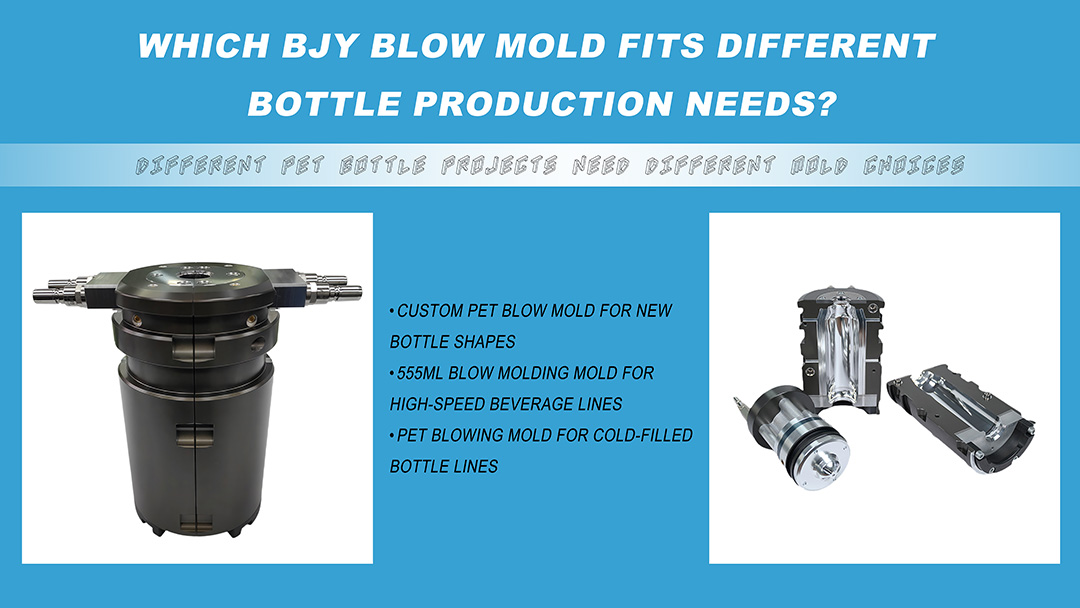
Which BJY Blow Mold Fits Different Bottle Production Needs?
Different PET bottle projects need different mold choices. A beverage plant running one stable bottle size every day has different priorities from a contract manufacturer switching between bottle types. The mold should match the real use case, not only the drawing.
|
Buyer Situation |
Suitable BJY Product |
Why It Fits |
|
New bottle design or special bottle shape |
Custom PET Blow Mold |
Supports bottle design, drawings, samples, and project-based mold development |
|
Medium-size beverage bottle production |
555ml Blow Molding Mold |
Fits common beverage applications such as water, juice, soda, and tea |
|
Cold-filled PET bottle line |
PET Blowing Mold |
Suitable for cold-filled bottle production where bottle clarity, cooling, and line fit matter |
Custom PET Blow Mold for New Bottle Shapes
A new bottle shape may look simple on a screen, but production tells the truth. Sharp shoulders, deep grips, uneven label panels, or weak bottoms can create forming issues. BJY’s Custom PET Blow Mold is a better fit when you need bottle shape review, preform matching, and equipment adaptation before cutting the final mold.
555ml Blow Molding Mold for High-Speed Beverage Lines
The 555ml Blow Molding Mold is useful for beverage projects that need a practical middle-volume bottle. According to BJY’s product information, this mold is designed for rotary blow molding machines, uses imported aluminum alloy, and is applied to water, juice, soda, tea, edible oil, condiments, pharmaceutical liquids, and cosmetic liquids. Its sandblasted bottom supports smoother demolding and a cleaner bottle bottom appearance.
This type of 555ml PET bottle mold is a good example of why process choice matters. The bottle is not made by extrusion alone. The final geometry comes from heating the preform and blowing it into the mold cavity.
PET Blowing Mold for Cold-Filled Bottle Lines
The PET Blowing Mold is more suitable when the project is focused on cold-filled PET bottle production. For cold-filled water or beverage bottles, buyers usually care about stable cooling, bottle transparency, neck accuracy, and repeatable output across cavities. In this situation, a cold filled PET bottle mold should be selected based on filling condition, bottle size, machine fit, and maintenance plan.
How Should Buyers Compare Mold Performance Before Purchasing?
A mold quotation can look simple, but the real cost appears during production. Poor fit, difficult demolding, unstable cooling, or repeated bottle defects can cost more than the mold itself. Before placing an order, buyers should ask for enough technical details to judge risk.
Material, Cooling, and Bottle Stability
For industrial PET bottle molds, material selection directly affects heat transfer, machining stability, and working life. BJY applies ALCOA A6061 and A7075 aluminum alloys in multiple PET blowing mold applications, while S136 stainless steel is used for cavity structures in specific hot-fill or mold configurations. These material choices are not only about strength. They also affect cooling response, cavity stability, surface treatment, and how the bottle releases from the mold after forming.
For precision control, BJY uses CNC machining and inspection equipment to check raw materials, mold parts, and finished mold dimensions. Its inspection center includes hardness testers, thickness gauges, pressure testers, high-precision projectors, Keyence Image Dimension Measurement Systems, and German Zeiss CMM equipment with 0.002mm detection accuracy. For related PET preform mold components, BJY’s product data also lists neck dimensional tolerance control of ±0.02mm and preform weight deviation control of ≤0.3% in specific cavity flange applications. These figures show how closely PET mold projects depend on measurable control, not only visual inspection.
BJY’s listed PET blowing mold products also include a production life-time of 10 million cycle times for several equipment-compatible mold types. For a buyer, this matters because mold cost should not be judged only by the first quotation. Material grade, cooling layout, dimensional control, and inspection method all affect long-term bottle stability and maintenance planning.
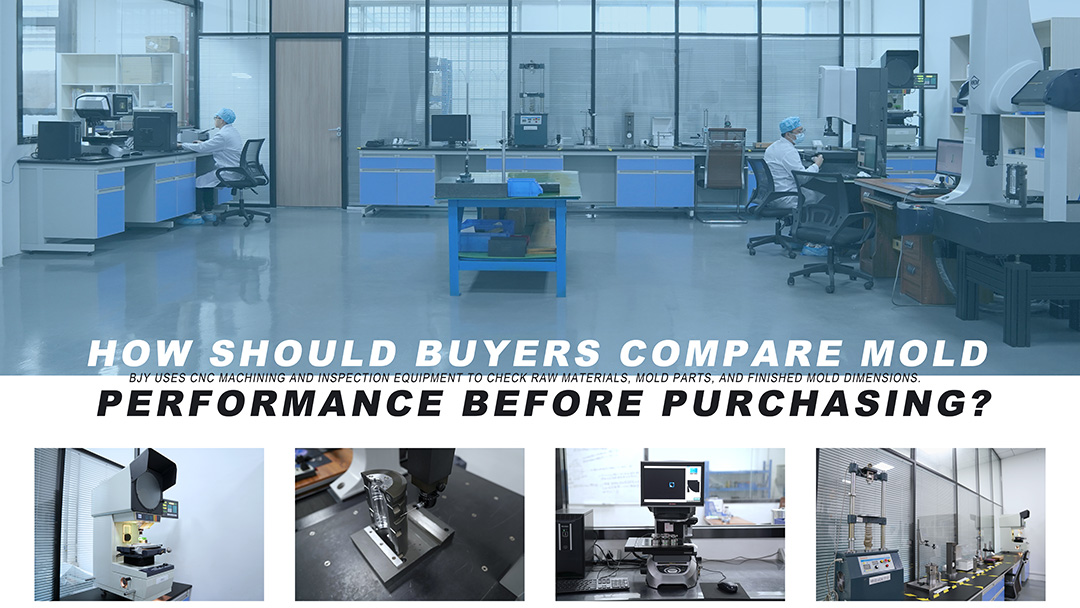
Demolding, Surface Finish, and Defect Reduction
Demolding problems can slow the line and damage bottle appearance. A bottle that sticks, drags, or releases unevenly may create scratches, base marks, or unstable output. For the 555ml Blow Molding Mold, BJY mentions a sandblasted bottom, which helps bottle release and improves the bottom surface look. This is a small detail, but on a repeated production cycle, small details matter.
Drawing Confirmation, Trial Support, and Quality Inspection
A serious mold project should have a clear process. BJY’s workflow can start from customer samples, bottle drawings, or dimensions. The team then works through drawing verification, 2D or 3D confirmation, production, inspection, and shipment. For buyers, this reduces guesswork before the mold enters production.
When Should You Contact BJY for Custom Blow Mold Service?
You should speak with a mold supplier early if your project involves a new bottle, a bottle volume change, a neck finish change, a cold-fill or hot-fill requirement, or a mold replacement for an existing line. Waiting until after bottle defects appear usually costs more time.
When You Need a New PET Bottle Design
If your bottle is still in the design stage, send the bottle concept, capacity target, preform information, filling condition, and machine details together. This helps the mold engineer check whether the design can be produced steadily, not only whether it looks good.
When You Need Mold Replacement or Line Adaptation
Some buyers already have bottles in production, but the old mold creates downtime or inconsistent bottle quality. In this case, BJY can review samples, drawings, and equipment information to support mold replacement or adaptation. This is also useful when one bottle mold needs conversion parts for a different machine setup.
Service, Technical Support, and Project Communication
If you are comparing extrusion molding vs blow molding for a PET bottle project, prepare your bottle sample, drawing, target capacity, filling method, neck finish, machine information, expected bottle use, and any current production problems before you contact BJY. These details help the team judge whether you need a new custom blow mold, a mold replacement, or a mold adaptation service. Clear technical information at the start usually makes the project smoother.
FAQ
Q: Is extrusion molding the same as blow molding?
A: No. When talking about extrusion molding, the melted plastic is forced through a die in order to produce long and thin parts. When referring to blow molding, the products are hollow and are produced inside of a mold cavity by using air pressure. For producing PET bottles blow molding is more relevant.
Q: When do I need a custom blow mold for PET bottles?
A: You may need to get a custom blow mold made if your bottle is of an unusual shape, has a particular volume, unusual label placement, etc. such as different filling line requirements, in order to be compatible with your existing equipment. Custom blow molds can also be made to replace an old mold that is producing inconsistent products and/or faulty containers.
Q: What information should I send before ordering a PET bottle mold?
A: The following information should be sent to the mold supplier: bottle drawing or sample, target production capacity, preform information, filling method, neck finish, information about the machine, expected bottle use, and current production problems that the new mold must solve. This information allows the supplier to check for proper cavity size, cooling, demolding, and machine fit before actual production begins.