

How PET Plastic Improves Bottle Manufacturing Efficiency Through Better Mold Design
PET Plastic can support fast and stable bottle production, but many factory problems are not caused by the material itself. Slow cooling, unstable preform size, uneven wall thickness, difficult demolding, and repeated machine adjustment often come from mold design or worn mold parts. For beverage and liquid packaging plants, real efficiency means more than running the machine faster. It means keeping each preform and bottle consistent across long shifts, with fewer rejects and less downtime.
BJY manufactures PET liquid packaging molds and related parts, including PET injection mold components, PET blowing molds, closure molds, and spare parts for filling and blowing equipment. For buyers working with water, tea, juice, functional drinks, food, pharmaceutical, or daily chemical packaging, BJY’s product range is useful because it covers both the preform stage and the final bottle forming stage. This article focuses on PET plastic bottle manufacturing efficiency from a practical mold selection view.
Why Does PET Plastic Efficiency Depend on Mold Design?
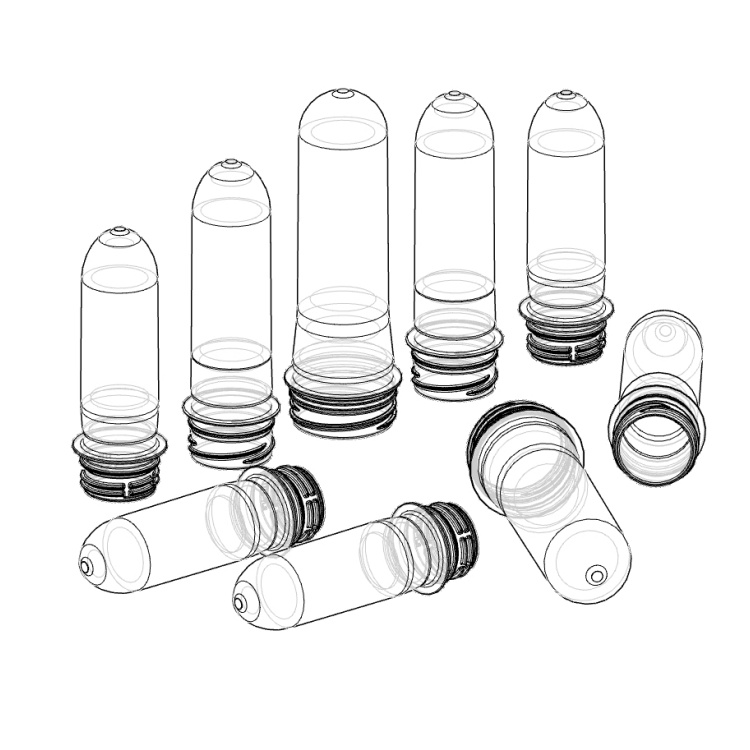
A PET bottle is shaped through several connected steps. The preform must be formed accurately, heated evenly, stretched in the right direction, blown into the mold cavity, cooled, and released without damage. If one step is unstable, the whole line may lose efficiency.
For buyers, PET mold design for bottle production efficiency should start with a simple question: which mold area controls the problem you are seeing? A bottle defect may begin from the preform core, cooling system, blow mold, or machine setting. Treating every defect as a final blow mold problem often leads to the wrong purchase.
Material Flow and Forming Stability
PET resin needs controlled flow and cooling during preform molding. If the core surface, internal geometry, or neck forming area is not stable, the preform may still look usable but create problems later during blowing.
Repeatable Output across Long Runs
A good mold structure keeps preform geometry, cooling, neck finish, and bottle release stable across repeated cycles. This is more useful than chasing a higher speed setting while the reject rate keeps rising.
Buying Checks before Mold Confirmation
Before confirming a mold or spare part, prepare the bottle drawing, preform weight, neck finish, filling process, machine condition, current defect photos, and target production use. These details help the supplier judge whether the issue is caused by the mold, cooling part, or process setting.
How Does Mold Design Improve Preform Quality?
Preform quality decides how much room the blow molding process has to work. If the preform is already unstable, the final bottle may show uneven wall thickness, weak base strength, sealing problems, or poor appearance.
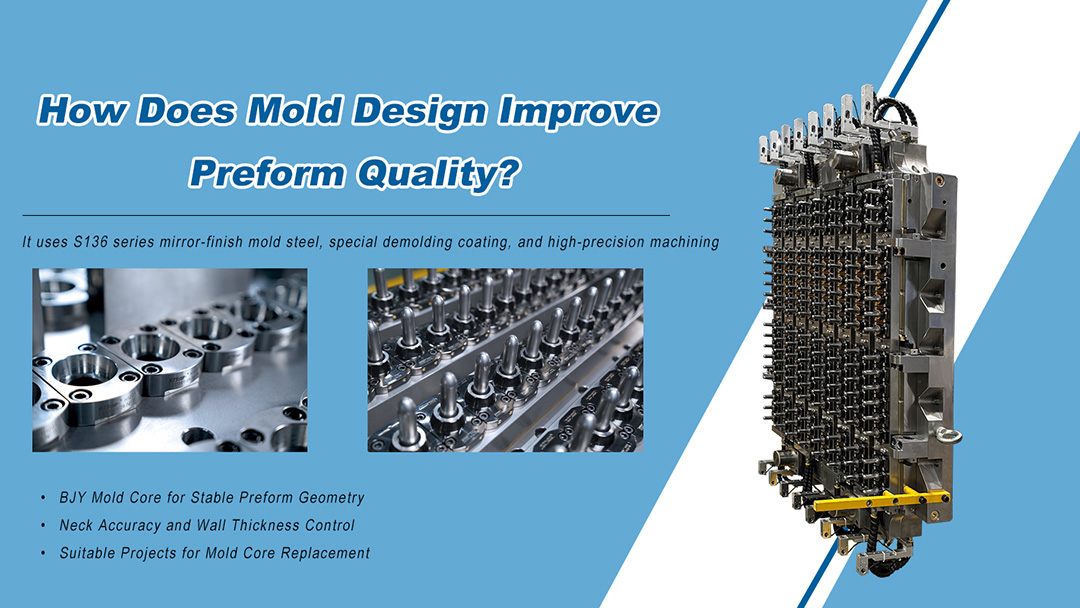
This is why the mold core is worth checking early. It is not only a replacement part. It directly affects internal preform shape, demolding, surface finish, and neck accuracy.
BJY Mold Core for Stable Preform Geometry
The Mold Core from BJY is designed for PET preform mold use. It uses S136 series mirror-finish mold steel, special demolding coating, and high-precision machining. In real purchasing terms, this product is suitable when the preform has unstable geometry, poor release, or surface quality issues.
Neck Accuracy and Wall Thickness Control
The preform neck area affects sealing, capping, and later filling. A stable Mold Core helps control the forming surface and supports more consistent preforms. It will not replace correct machine settings, but it gives the production team a better starting point.
Suitable Projects for Mold Core Replacement
This product fits PET preform manufacturers, beverage packaging plants, and maintenance teams that want to repair or upgrade existing preform molds instead of replacing the full mold set. Before ordering, buyers should confirm cavity information, preform drawing, neck finish, and current defect conditions.
Why Does Cooling Design Change Production Output?
Cooling is one of the most practical efficiency factors in PET production. A mold may be accurately machined, but if heat removal is uneven or slow, cycle stability will suffer. PET bottle mold cooling system efficiency affects cycle time, dimensional stability, and the amount of adjustment needed during continuous production.
Fast cooling is not enough. Temperature difference between key mold areas also needs to stay controlled. Otherwise, one cavity may release a stable preform while another creates size variation or later blowing problems.
BJY Cooling Tube Assemble for Heat Regulation
The Cooling Tube Assemble from BJY is made for PET preform mold cooling systems. It uses corrosion-resistant material, supports direct-contact water cooling, and is designed for rapid heat dissipation. It is a practical part to review when the production line has slow cooling, unstable preform dimensions, or cooling-related cycle fluctuation.
Cooling Balance and Preform Stability
A stable cooling part helps keep preform dimensions more repeatable after release. This matters because some defects do not appear immediately at demolding. They appear later when the preform cools further or enters the blow molding stage.
Maintenance Points for Continuous Production
For long-shift production, buyers should check water quality, scaling condition, cooling channel layout, and existing tube wear. If scale blocks the cooling path, replacing only one unrelated part may not solve the real output problem.
How Does PET Plastic for High Speed Blow Molding Become a Stable Bottle?
PET plastic for high speed blow molding depends on more than air pressure and machine speed. The final bottle quality comes from the match between the preform, stretch process, mold cavity, cooling, and release condition.
For 600ml beverage projects, this match is especially important. A small variation in wall distribution, base shape, or neck area can affect filling, labeling, packing, and transport.
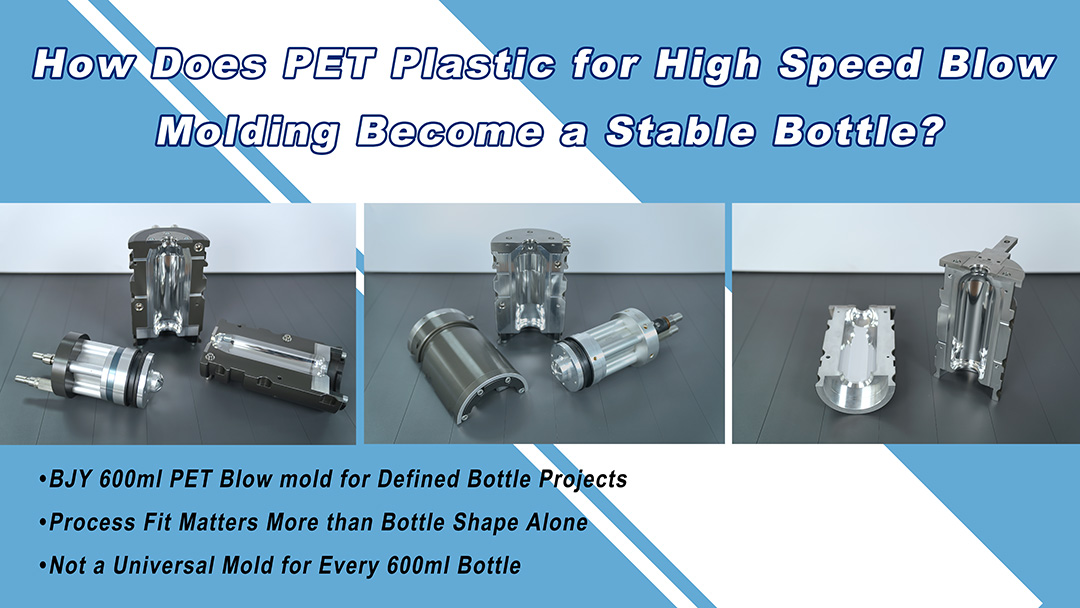
BJY 600ml PET Blow mold for Defined Bottle Projects
The 600ml PET Blow mold from BJY is developed for 600ml PET bottles with 1881 neck finish, 28g preform design, A6061 aluminum material, and aseptic filling line use. This product is suitable for buyers who already have a clear 600ml bottle project and need stable bottle forming around defined technical conditions.
Process Fit Matters More than Bottle Shape Alone
A blow mold should not be judged only by the final bottle drawing. Stretch timing, pre-blow pressure, air flow, cooling route, and bottle release all affect the final result. If the preform is unstable or cooling is poor, even a well-made blow mold may not solve every defect.
Not a Universal Mold for Every 600ml Bottle
The 600ml PET Blow mold is not automatically suitable for every 600ml bottle project. If the buyer uses a different neck finish, preform weight, filling process, or bottle base structure, the mold should be reviewed against the actual drawing and machine condition before production.
How Can Buyers Reduce Defects in PET Bottle Production?
To reduce defects in PET bottle production, buyers should first locate where the defect begins. A common mistake is treating every bottle defect as a blow mold problem. In real production, the source may be earlier. A poor preform core can create unstable geometry before blowing starts. Weak cooling can make the preform look acceptable at release but change dimension after temperature drops.
PET Plastic delivers stable output only when preform accuracy, cooling balance, and blow mold matching are checked as one system.
|
Production Problem |
What It Usually Means |
First Area to Check |
BJY Product or Service to Review |
|
Preform surface is unstable or hard to release |
Core surface, coating, or machining accuracy may be affecting forming |
Mold core condition and preform geometry |
Mold Core |
|
Preform size changes after cooling |
Cooling balance may be uneven or water channels may not remove heat well |
Cooling Tube Assemble and cooling path |
Cooling Tube Assemble |
|
Final bottle has uneven wall thickness |
Preform quality, stretch timing, or blow mold matching may be unstable |
Preform data, stretch setting, and mold fit |
Mold Core and 600ml PET Blow mold |
|
600ml bottle base or shape is unstable |
Blow mold structure or process matching may need adjustment |
Bottle drawing, preform weight, neck finish, and blowing parameters |
600ml PET Blow mold |
|
Frequent downtime during mold maintenance |
Old parts may no longer support stable long-shift production |
Worn spare parts and mold refurbishment needs |
BJY customization and refurbishment service |
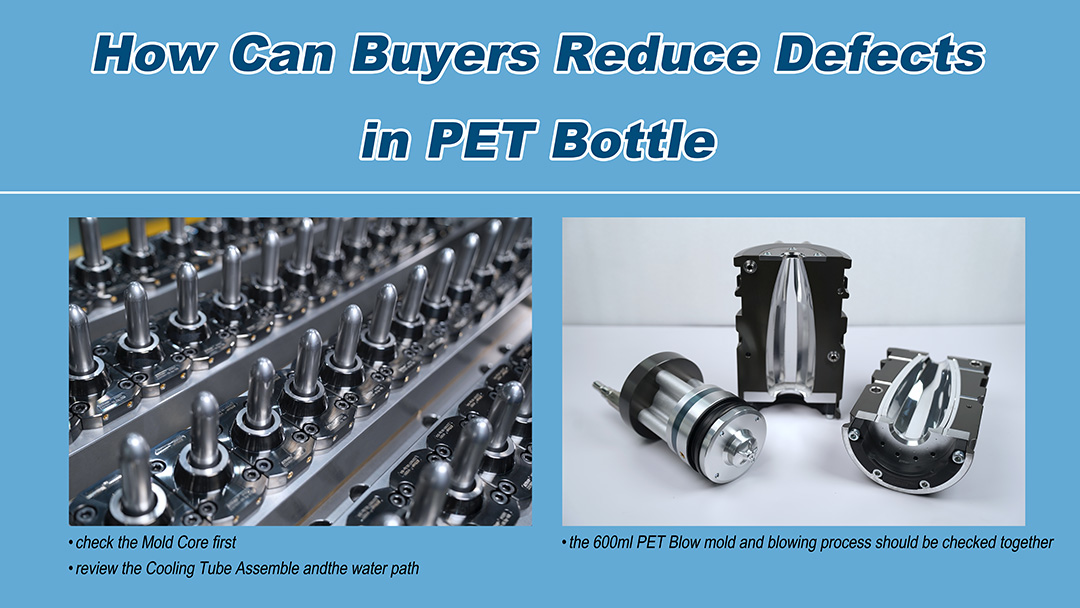
For a buyer, the practical decision can be made in three steps. If the preform shape, neck finish, or demolding is unstable, check the Mold Core first. If the cycle is slow or preform dimensions change after cooling, review the Cooling Tube Assemble and the water path. If the preform is stable but the final 600ml bottle still has shape, base, or wall distribution issues, the 600ml PET Blow mold and blowing process should be checked together. This order helps avoid replacing the wrong part and keeps the project discussion focused.
Service and Project Support
If your PET Plastic project involves a new bottle, old mold repair, cooling issue, preform defect, or 600ml bottle format, prepare the bottle drawing, neck finish, preform weight, machine condition, filling process, and defect photos before sending project details. BJY can review these materials and suggest whether the project should start from a mold part, cooling component, blow mold, or customization service. For technical documents or purchasing communication, use the BJY contact page.
FAQ
Q: How does PET Plastic improve bottle manufacturing efficiency?
A: PET Plastic supports efficient bottle production because it can be shaped into lightweight, clear, and strong containers. But the real efficiency gain depends on preform accuracy, cooling balance, mold fit, and stable blow molding conditions. The material works better when the mold system is designed around the actual bottle project.
Q: Which BJY product should I check first if preform quality is unstable?
A: Start with the Mold Core if the problem appears in preform geometry, surface finish, demolding, or neck accuracy. If the preform changes size after cooling or the cycle is unstable, the Cooling Tube Assemble should also be reviewed.
Q: Is the 600ml PET Blow mold suitable for every 600ml bottle project?
A: No. The BJY 600ml PET Blow mold is developed around specific project conditions, including 1881 neck finish, 28g preform design, A6061 aluminum material, and aseptic filling line use. Buyers should confirm the bottle drawing, machine condition, filling process, and preform details before ordering.