

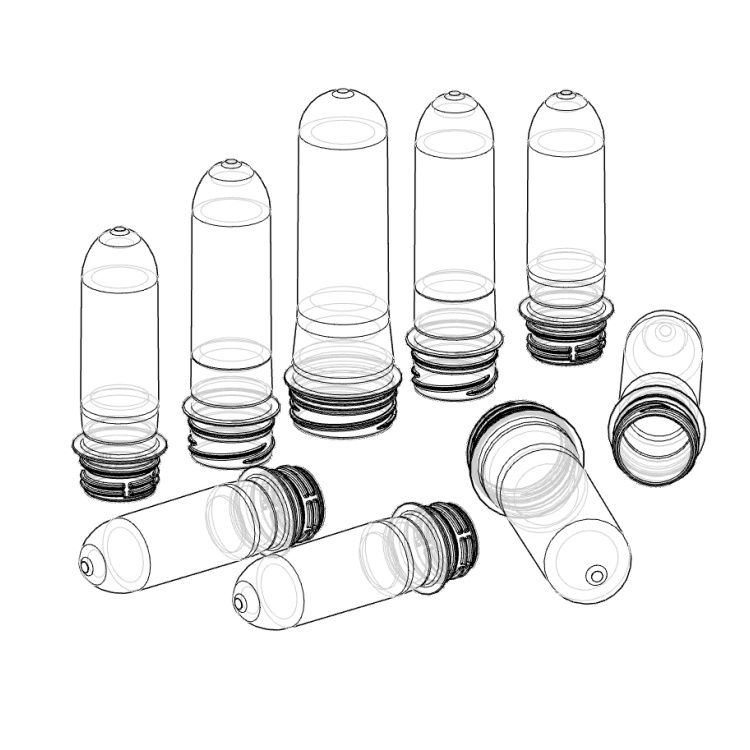
PET Bottle Blowing Defects and How to Find Their Causes
A bottle with a shallow foot does not automatically need more blowing pressure. PET bottle blowing defects can start in the preform, the oven, the stretching sequence or the mould. Begin with where the fault appears and whether it repeats at one station. Then test one possible cause while keeping the rest of the process steady.
This guide concerns reheated PET preforms in stretch blow moulding, mainly for conventional beverage bottles. Heat-set bottles need their own thermal settings and validation. The fault descriptions draw on BJY‘s bottle-blowing troubleshooting notes; the checks below turn those descriptions into a practical investigation you can record and discuss with your tooling supplier.

Record the defect before changing the recipe
Keep rejected bottles beside accepted samples from the same run. Mark the cavity or station, time, preform batch and recipe revision. Photograph the base from underneath and the wall against a consistent background. A close photograph of one dent is useful, but it cannot show whether the whole base sits flat.
Separate a recurring fault at one station from a fault spread across the machine. A single station points you toward local cooling, venting, alignment or air delivery, although it does not prove the mould is responsible. A defect affecting many stations makes a shared condition worth checking first: preform supply, heating or a change in utilities.
Do not adjust the oven and pressure together just to get acceptable samples quickly. You will lose the evidence needed to explain why they improved. BJY’s parameter notes recommend changing one variable at a time and recording both the setting and the bottle result.
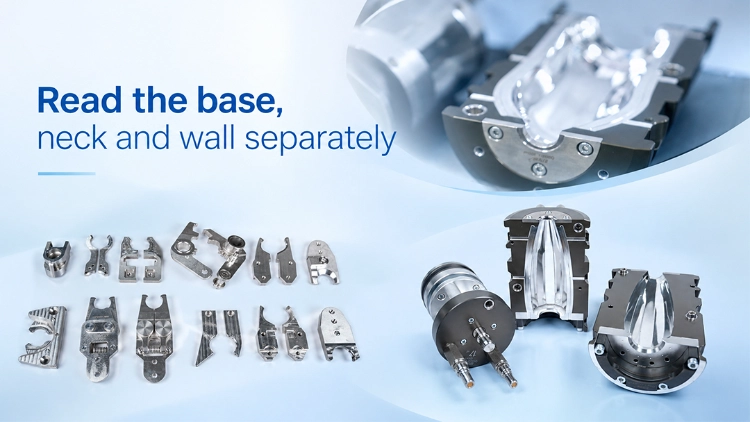
Read the base, neck and wall separately
An incomplete base or poorly formed feet
BJY’s defect notes associate incomplete base formation with insufficient high-pressure air, a base region that is too cool to form properly, a short high-pressure blowing period, late preblow and blocked base vents. These are alternative causes to investigate. They are not instructions to raise every setting.
First compare the defective area with the cavity detail. Check the recorded pressure during the blowing event, where the machine provides it, rather than relying only on a nominal setpoint. If air delivery appears stable, examine the thermal profile and sequence. A repeated weak detail in one cavity also gives you a reason to inspect its vent path.
Venting and blowing pressure do different jobs. Pressure expands the PET from inside; the air between the expanding bottle and the cavity must escape outside. Increasing pressure does not establish that this escape route is clear. The published 350ml PET Blow Molddescription identifies parting-line and base venting as design features worth discussing when a similar detail keeps failing.
An off-centre base or wrinkles around it
An eccentric base calls for an alignment check before another round of heat changes. BJY’s notes identify preform handling, stretch rod adjustment and blowing pressure that arrives too early or too strongly as possible contributors. Compare the gate position across marked samples and check the rod against the approved setup.
Base wrinkles have a different list of suspects. The notes mention inadequate blowing pressure, an incorrect rod position, excessive heat at the preform tip and delayed pressure application. The overlap between these lists explains why a photograph alone is rarely enough to choose a correction.
Ask the operator what changed immediately before the reject appeared. A new preform batch, a rod replacement and a faster recipe require different checks. Any physical inspection or rod adjustment must follow the machine’s isolation and maintenance procedure.
A swollen neck or distorted finish
The neck finish should retain the geometry required by the closure. BJY links neck swelling to excessive oven cooling-water temperature, inadequate flow, misplaced cooling plates and poor ventilation. That puts neck protection and oven conditions near the start of the investigation.
Examine whether the finish is already distorted before you alter the blow mould. Check cooling flow and the position of the protective components against the machine documentation. A bottle body that looks acceptable can still have a closure problem, so include finish dimensions and the specified closure checks in the decision to release the run.
White areas and uneven wall thickness
Do not give every white mark the same diagnosis. BJY’s notes describe pearlescence around the feet in connection with excessive stretching and poor centring or timing. Its wider technical material also discusses thermal causes of bottle faults. Record the location and appearance of the mark before choosing whether to investigate heating, stretching or both.
For uneven material distribution of a preform the relevant factors are the heating profile and the positions of the cooling. For differences in wall thickness around the circumference of a bottle preform rotation, correct centering of the stretch rod, preblow timing and preform eccentricity have to be measured at comparable positions on the bottle.
Section weights can help distinguish a heavy base from material concentrated near the shoulder. Weighting must be done using consistent cutting and weighing methods. Neck, body and base definitions must remain unchanged from sample to sample. The aim is to provide a fair comparison, not to define a ‘average weight distribution’ for all bottles.
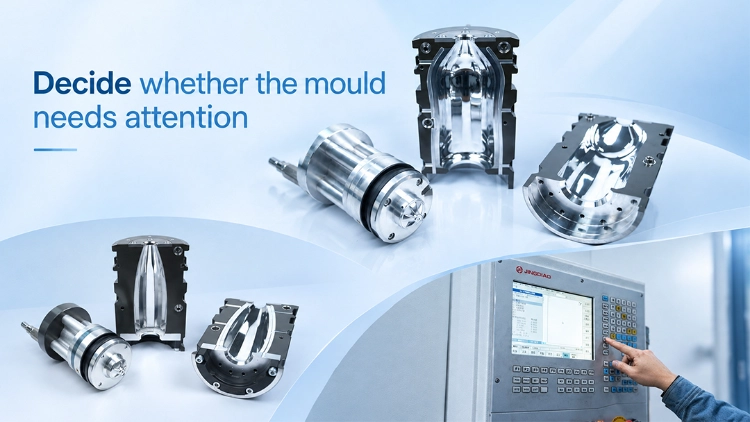
Decide whether the mould needs attention
A defect is stronger evidence of a tooling problem when it remains tied to the same cavity under comparable conditions. Inspect cooling connections, cavity surfaces, base seating and the intended vent outlets. Record what was found. “Mould checked” is too vague to help the next shift.
In BJY’s technical material on this problem, insufficient base cooling is linked with bottom instability, and checks for this are cooling-water circulation and the design of the base-waterways. If the bottle keeps its form but afterwards changes shape, these checks should be included instead of listing the problem as ‘not completely blown’.
Aluminium cavity body with stainless steel inserts and parting line venting for the 500ml PET Blow Mold Cavity. The above features describe this product and do not necessarily describe the dimensions, cooling connections or mountings for this tooling on your machine
The wider PET blowing mould range covers other capacities and formats. Select from that range using the bottle drawing and mechanical interface, not the assumption that a replacement mould will cure an unmeasured process fault.
Prove the correction on bottles you can compare
Before the trial, agree which defect is being corrected and which other checks must still pass. For example, a base-detail improvement should not be accepted if it creates a thinner weak section elsewhere. Choose tests from the bottle specification: dimensions, capacity, section weights, leak performance and any required load or pressure tests.
Use this short record for each change:
- Starting recipe and the single setting changed, including its unit.
- Cavity identification, preform batch and sampling time.
- Defect observed before and after the change.
- Measurements against the agreed acceptance limits.
- Decision to retain the change or restore the previous setting.
Take samples off the line after it has reached a stable condition and then continue to take samples while running. The number of samples to take on any given line will vary from line to vary and should be established with the plant’s quality team. Keep all the failed samples as well as the best ones – they will tell you whether the short trial solved a recurring problem or just happened to make a few great bottles.
If repeated controlled changes do not resolve the defect, stop tuning around it. BJY’s parameter guidance calls for checking moulds and stretch rods for wear or damage when problems persist. Send BJY the labelled bottle photographs, drawing, machine details and trial record so the discussion starts with evidence rather than a request to guess from a reject photo.
Questions that come up during troubleshooting
Can extra blowing pressure fix an incomplete base?
This test is used to confirm that insufficient pressure is the cause of a problem. It does not tell you if the preform temperature, the blowing time or the vent path are adequate. These must be tested for separately and pressure changed within the limits approved for your machine.
Should a clear bottle be accepted as a good bottle?
Note that the comment relates only to clarity of observation. The other key requirements for the bottle, e.g. size and use, must also be met. Inspect material distribution and test for specific use prior to release to production even though the obvious defect is no longer visible.
Should I replace the mould immediately when PET bottle blowing defects occur across multiple cavities?
No, many different cavities can suffer from the same type of defect. This is usually a result of preform defects, oven defects or air supply defects. Isolate out the process variables first and only investigate mold issues if the defect stays within the individual cavities after you have isolated out the process variables.