

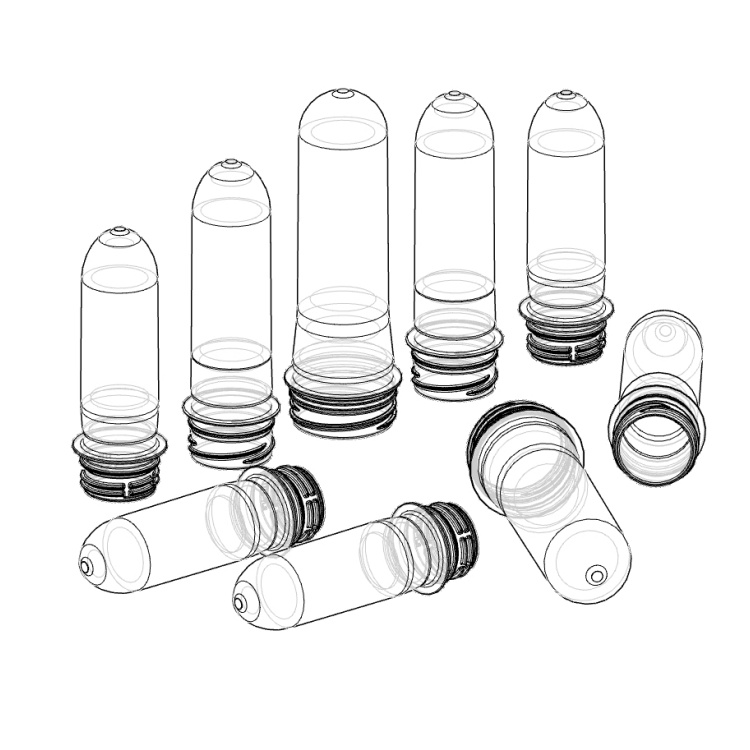
What Is PET Preform Manufacturing and Why It Impacts Bottle Quality
Bottle leakage, uneven wall thickness, scratches, poor cap fit, and unstable blowing often start at the preform stage. PET preform manufacturing is the process of turning PET material into preforms before they are blown into final bottles. For buyers comparing PET Preform manufacturers, many quality risks are already set at this stage: neck finish, weight control, inner shape, surface stability, and later bottle performance.
BJY produces PET liquid packaging molds and precision components. Its products cover PET preform mold parts, PET blowing molds, closure molds, and OEM machinery parts for beverage, edible oil, pharmaceutical, food, and daily chemical packaging lines. In preform production, small mold parts can determine daily production stability. Mold Core, Neck Ring, and Cooling Tube are three BJY components buyers should monitor, especially when molds show unstable dimensions, poor release, or neck finish inconsistencies.
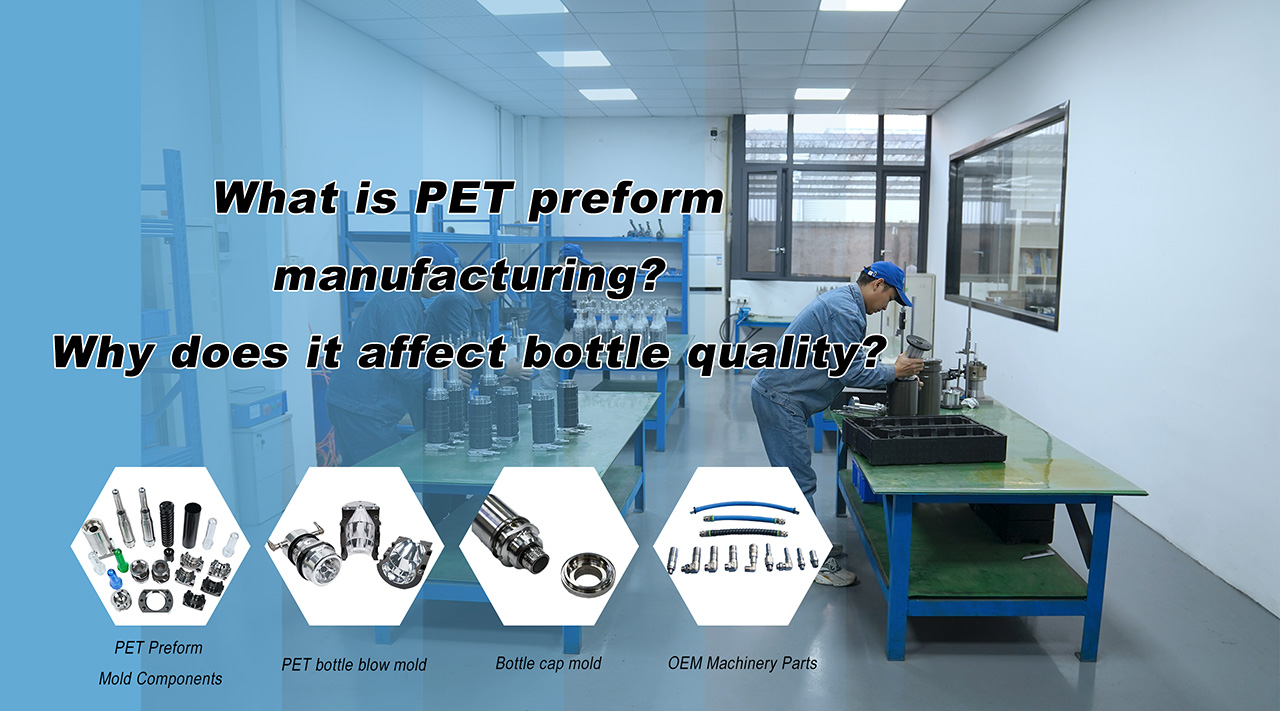
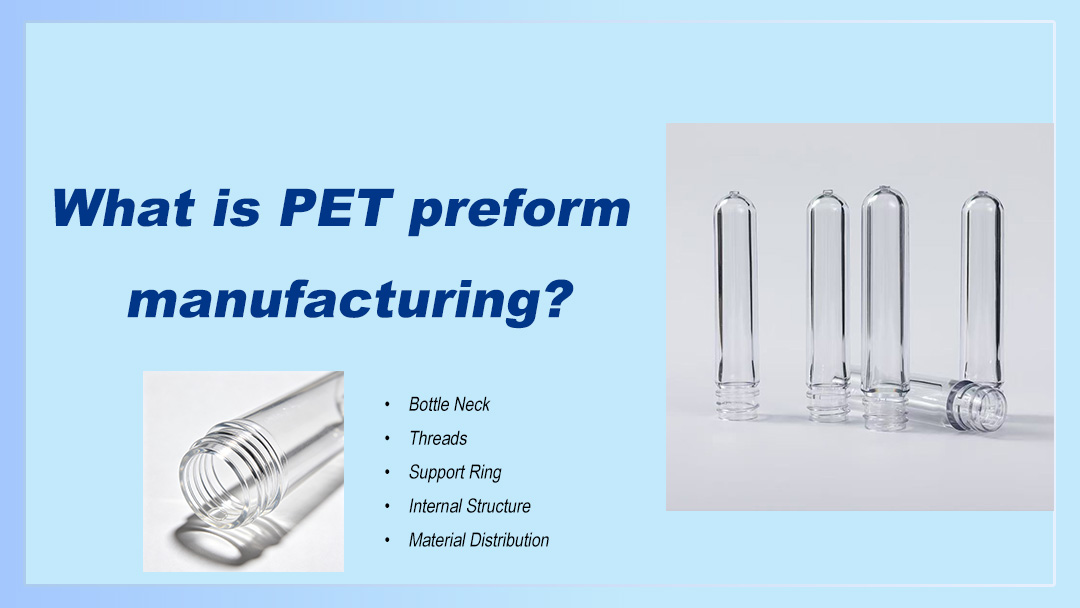
What Is PET Preform Manufacturing?
PET preform manufacturing turns PET resin into a preform through injection molding. The final bottle shape is not yet formed, but the neck, thread, support ring, inner shape, and material distribution are already defined. Many defects in bottles trace back to the preform rather than the blow molding stage.
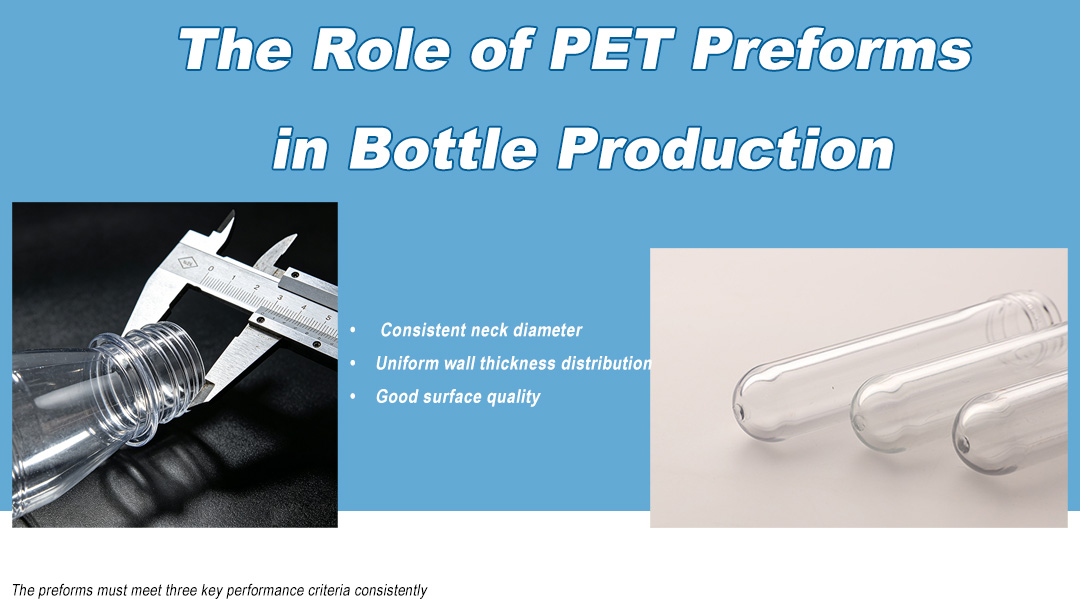
The Role of PET Preforms in Bottle Production
A PET preform is the starting point for later bottle blowing. It is reheated and stretched into bottles for water, juice, carbonated drinks, edible oil, personal care liquids, and some pharmaceutical packaging.
For PET preform manufacturers for beverage packaging, the preform must be stable in three areas: neck finish, wall distribution, and surface condition. If inconsistent, bottles may appear acceptable initially, but defects can emerge during filling, capping, labeling, packing, or transport.
The PET Preform Injection Molding Process
The PET preform injection molding process includes resin drying, plasticizing, injection, holding pressure, cooling, mold opening, preform removal, and inspection. Each step affects final bottle quality. Mold surfaces must be clean. Cooling must be uniform. Preform removal must avoid surface damage. Neck dimensions must match the cap. A worn Mold Core, damaged Neck Ring, or improperly matched Cooling Tube can cause problems that are difficult to correct later.
Operators often monitor Cooling Tube alignment and suction flow to maintain dimensional stability and prevent scratches. Routine inspection of tube wear and alignment ensures consistent preform removal and smooth cycles.
Why Preform Accuracy Affects Bottle Quality
Uneven wall thickness can produce weak bottle areas. Poor neck finish may cause leakage or cap misfit. Surface marks affect appearance. Improper preform removal can slow cycles and create repeated defects. Experienced buyers check not only mold price but also core accuracy, neck ring wear, Cooling Tube performance, and inspection before shipment.
How Does PET Preform Manufacturing Differ From Bottle Blow Molding?
PET preform manufacturing vs bottle blow molding is a common question. The steps are connected but serve different purposes. Preform manufacturing forms the controlled starting shape. Blow molding reheats and stretches it into the final bottle.
Preform Manufacturing Creates the Base Shape
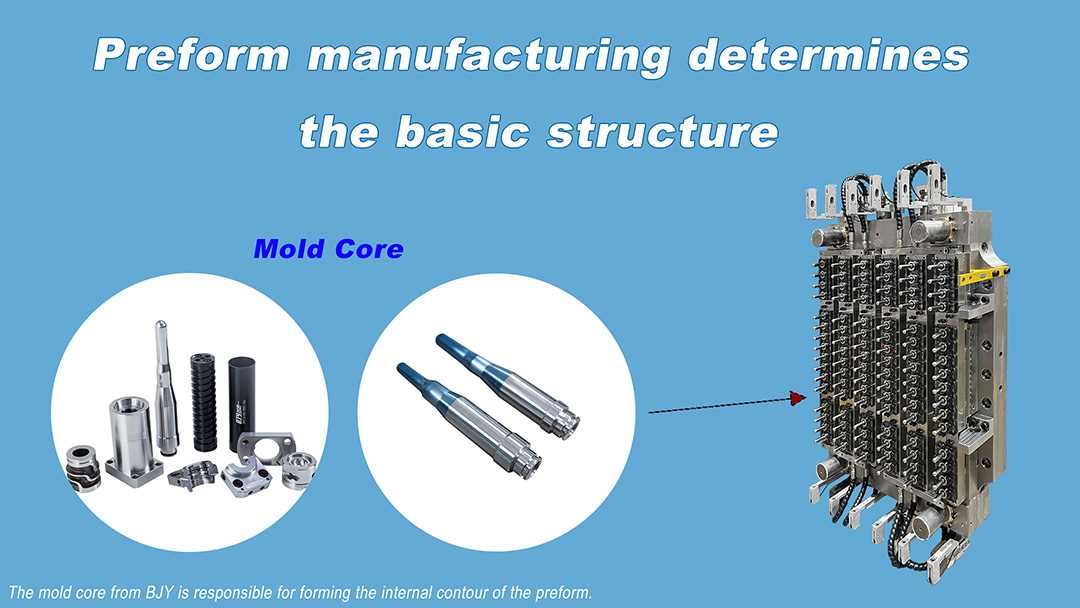
Preform manufacturing defines neck finish, inner shape, weight, and material layout. BJY’s Mold Core shapes the inner profile. If preforms show repeated deviations, unstable wall thickness, or surface issues, the Mold Core is typically the first component to review.
Bottle Blow Molding Creates the Final Container
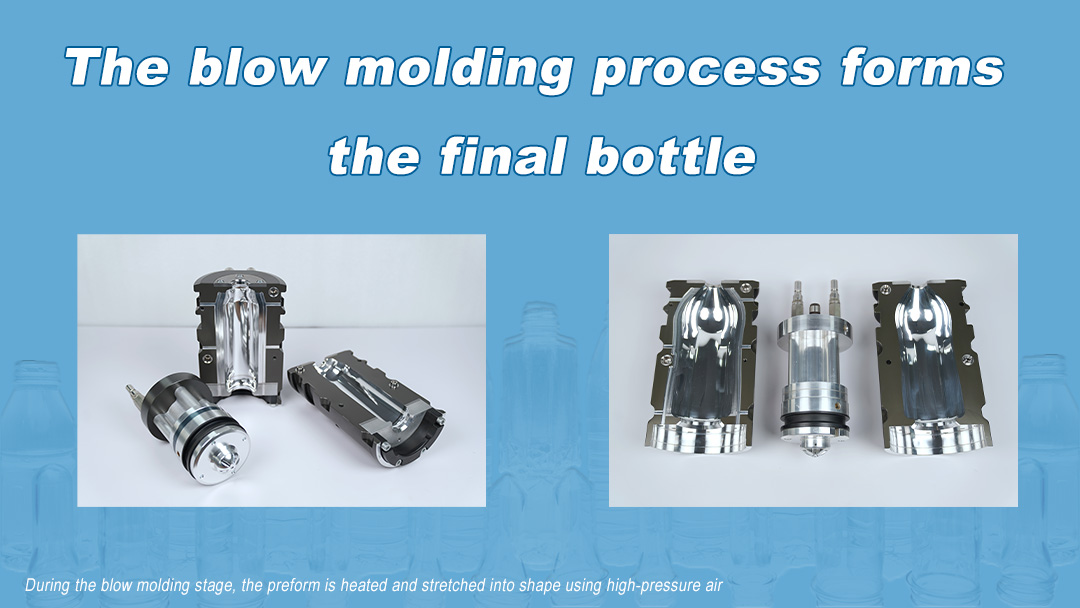
Blow molding reheats the preform and stretches it into the bottle via air pressure and mold shaping, forming shoulder, body, label area, and base. However, blow molding cannot fully fix preform defects. A misaligned neck or uneven wall thickness at the preform stage can still lead to rejects.
Better Preforms Reduce Later Production Problems
Stable preforms ease bottle blowing. They reduce whitening, uneven wall thickness, sealing risk, and surface defects. For PET Preform manufacturers, component quality at the preform stage directly affects bottle quality.
Which BJY Products Help Improve PET Preform Quality?
Some mold parts carry more risk than others. For buyers checking old molds or preparing new parts, Mold Core, Neck Ring, and Cooling Tube require special attention.
Mold Core for Stable Preform Shape
Mold Core affects inner shape. Worn, damaged, or mismatched cores produce inconsistent preforms. BJY Mold Core is suitable for buyers needing replacement parts, custom components, or support for existing molds. Regular inspections and alignment checks help maintain preform consistency and reduce defects.
Neck Ring for Sealing and Neck Finish Control
The neck must match the cap and sealing system. Inaccurate neck finish can lead to leakage or capping issues. BJY’s Neck Ring focuses on precise neck control. Buyers experiencing cap fit problems, thread defects, or unstable sealing should inspect the Neck Ring first.
Cooling Tube for Integrated Cooling and Suction-type Preform Removal
Preform removal happens quickly, and the preform is sensitive to heat and handling. Uneven cooling or a poorly matched Cooling Tube can create scratches, sticking, or dimensional instability. BJY’s Cooling Tube provides internal cooling and vacuum suction, gently removing preforms while maintaining dimensional stability. Operators monitor suction flow and tube alignment to prevent surface defects. For factories aiming to reduce damage and maintain steady cycles, Cooling Tube is essential.
How Should Buyers Choose PET Preform manufacturers?
Buyers searching how to choose PET preform manufacturers focus on practical production support. A supplier should discuss mold parts, bottle type, and potential defects, not only send a product list.
Check Application Experience
Different packaging types require different preform specifications. Water, carbonated drinks, edible oil, cosmetics, and pharmaceutical containers vary in wall thickness, neck finish, sealing, and filling conditions. Suppliers with real experience will ask about bottle type, preform weight, neck finish, machine condition, and current production issues before recommending parts.
Review Mold Component Capability
Check if the supplier can support Mold Core, Neck Ring, Cooling Tube, cooling-related parts, refurbishment, and sample-based production. This ensures they can handle long-term production, not just one-off orders.
Ask About Inspection Before Production
Before placing an order, confirm drawings, sample checks, material choice, surface treatment, fit dimensions, and inspection steps. Include preform samples, bottle drawings, neck finish specs, mold cavity info, machine model, and defect photos. These details allow the supplier to judge parts accurately, not just quote similar items.
What Should a PET Preform Quality Control Checklist Include?
A PET preform quality control checklist should be brief but precise. Its purpose is to stop defective preforms from entering blow molding.
|
Production Problem |
What Buyers Should Check |
Related BJY Product |
|
Preform inner shape is unstable |
Core wear, core surface condition, core alignment |
Mold Core |
|
Cap fit is poor or leakage appears |
Neck thread, sealing surface, support ring accuracy |
Neck Ring |
|
Preform surface has scratches or sticking marks |
Suction stability, tube surface, removal alignment |
Cooling Tube |
|
Bottle wall distribution is difficult to control |
Preform wall thickness, inner profile, material balance |
Mold Core |
|
Production stops during preform removal |
Tube wear, suction instability, sticking, part fit |
Cooling Tube |
This checklist helps buyers link visible bottle problems to the relevant mold part.
Service and Project Communication
For a new preform project or replacement part, provide bottle drawings, preform samples, neck finish, machine info, and defect photos. This helps BJY determine whether issues are related to Mold Core, Neck Ring, Cooling Tube, or other parts. For drawings, samples, or purchasing communication, use the BJY contact page.
FAQ
Q: What is PET preform manufacturing?
A: PET preform manufacturing is the injection molding process that produces PET preforms before bottle blowing. For PET Preform manufacturers, this includes controlling neck finish, weight, wall thickness, surface condition, and later bottle performance. The PET preform injection molding process determines these critical parameters.
Q: Why does PET preform quality affect bottle quality?
A: Bottle quality depends on the preform. If Mold Core is worn, the inner shape may vary. If Neck Ring is inaccurate, bottles may leak. If Cooling Tube does not operate correctly, scratches or sticking marks may appear.
Q: How can buyers choose suitable PET Preform manufacturers?
A: Buyers should ensure suppliers discuss real production details, including bottle type, neck finish, mold part condition, samples, inspection steps, and after-sales support. PET Preform manufacturers with Mold Core, Neck Ring, and Cooling Tube capability are easier to work with for long-term projects.