

What Is PET Preform Manufacturing and How Does the Process Work?
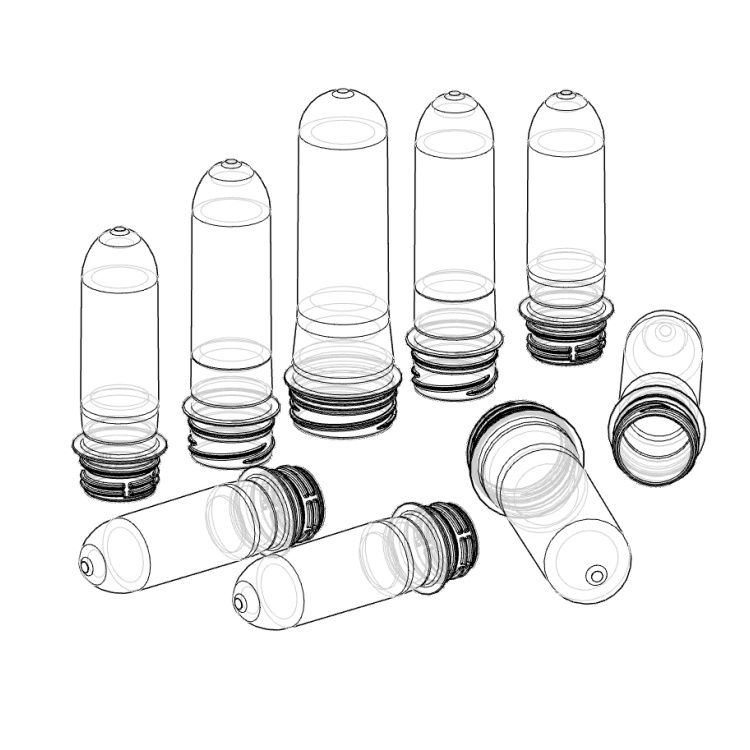
What is PET preform manufacturing? It is the production of small, thick-walled PET components that are later reheated and stretch-blow molded into bottles. The process begins with resin preparation, continues through injection molding, cooling, ejection, and inspection, then ends when the preforms are transferred to bottle-forming equipment. For packaging buyers, the key decision is not simply choosing a mold. You must match the preform, mold, machine, neck finish, cooling design, and filling application as one connected system.
BJY supports PET preform, blow, closure, and mold-component requirements. Its role is most relevant when you need application-specific review rather than a generic tooling selection.
How Does The PET Preform Process Begin?
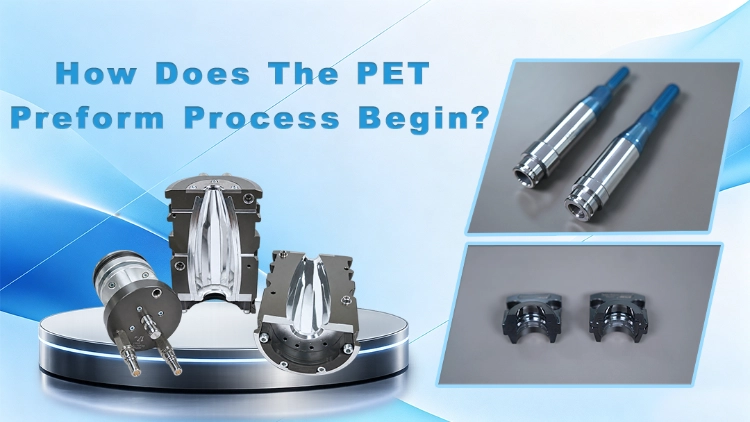
PET preform production depends on controlled material preparation and a mold designed around the required geometry. Small differences in moisture, flow, cooling, or machine interface can affect the next stage of bottle production.
What Role Does PET Resin Preparation Play?
PET resin is first handled and dried before it enters the injection system. Moisture control matters because excess moisture can contribute to appearance, dimensional, and processing problems during molding. Drying conditions should be checked against the resin supplier’s requirements and the specific production system rather than copied from a universal setting.
You should also review resin type, recycled-content requirements where applicable, material storage, conveying, and the condition of the drying equipment. These checks belong in the process plan before the mold is commissioned.
How Is A Preform Formed By Injection Molding?
Prepared PET enters the injection unit and flows through the hot-runner system into the preform cavities. The mold forms the neck, external body, gate, and internal geometry. Inside the tool, the core creates the inner shape while the cavity forms the outside surface. Together, they define the wall distribution and final preform dimensions.
A hot-runner system belongs to an injection or preform mold, not to a stretch-blow mold. Selection should reflect the preform drawing, weight, neck finish, cavity count, machine envelope, take-out arrangement, and output requirement.
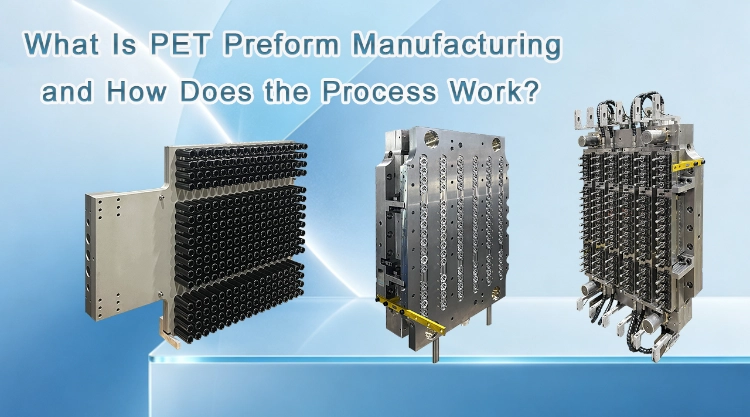
One documented example is the 96 Cavities PCO1881 Preform Mold for Husky HyPET. It is specified for a 96-cavity configuration, a PCO1881 neck finish, and a 21.5 g preform. Its needle valve gate hot runner provides individual cavity shut-off control, while the interface, cavity spacing, and take-out geometry are designed around the stated machine platform.
Disclaimer: Husky is a registered trademark of its respective owner. Any reference to Husky in this document is solely for the purpose of describing product compatibility. BJY is not affiliated with, authorized by, or in partnership with Husky.
How Are Preforms Cooled, Ejected, And Inspected?
After injection, the PET must cool sufficiently for the preform to retain its shape during mold opening and take-out. Cooling effectiveness depends on the cooling system, water-path design, flow distribution, and the geometry of the core, cavity, and neck-ring area. Water cooling is common, although water or oil cooling may be selected according to the equipment design.
The preform is then removed by the take-out system and checked for visible defects, gate condition, neck dimensions, transparency, and general conformity with the approved drawing. Dimensional checks should cover critical features before the parts are stored or transferred to stretch-blow molding.
The Cooling Core is designed for thermal management in PET injection cells, including the neck-ring area. Its design can be adapted to specific waterway configurations and extraction-tube interfaces, making water-path review important before ordering.
How Should A Preform Mold Match The Bottle Design?
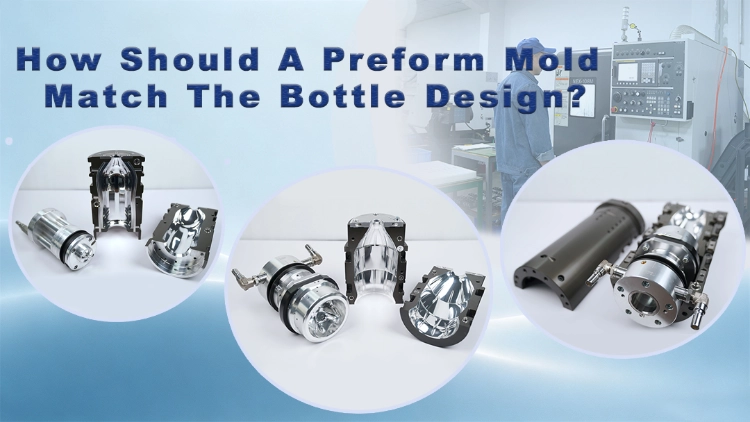
A preform is not selected independently from the finished bottle. The bottle’s capacity, wall structure, neck finish, filling method, and blow-molding machine all affect the injection mold and related tooling.
How Do Preform Weight, Wall Thickness, And Bottle Capacity Affect Selection?
Preform weight influences how much PET is available for the bottle body, base, shoulder, and neck. Wall thickness and material distribution then affect reheating and stretching. A lightweight preform of 15 g or less may need a different heating and stretching approach from a thick-wall bottle or a container larger than 1 L.
Do not apply a fixed weight-to-volume rule. Final selection should use the approved preform drawing, bottle design, resin, filling application, and machine capability. Carbonated beverages, still drinks, and hot-fill products can place different demands on shape stability, pressure resistance, or stress control.
Why Is The Neck Finish A Critical Compatibility Dimension?
The neck finish affects the preform mold, closure fit, transfer tooling, rinsing, and capping. A mismatch can create handling faults even when the bottle body appears correct.
A Rinser gripper removes a preform or bottle on a complete line. It is generally stainless steel and must be specified against the bottle-neck finish. A Stopper is the anti-rotation part that holds the bottle during capping and is also matched to the neck finish. The capping head, referred to in some terminology as the “choke of cappe,” tightens the cap.
Provide the exact neck-finish drawing and verify all contact points before approving the tooling design.
What Should Buyers Verify Before Ordering A Replacement Or Supplementary Mold?
Before placing an order, confirm:
- Machine model and mold envelope
- Cavity spacing and cavity count
- Robot or take-out interface
- Preform drawing, weight, and neck finish
- Production target and resin requirements
- Cooling connections and water-path expectations
- Required drawings, spare parts, and commissioning support
The 96-cavity PCO1881 example demonstrates why replacement tooling should be planned against actual machine specifications, not treated as a generic catalogue item. Its documented compatibility applies to the Husky HyPET series and should not be generalized to other equipment without technical review.
Which Mold Components And Cooling Features Matter Most?
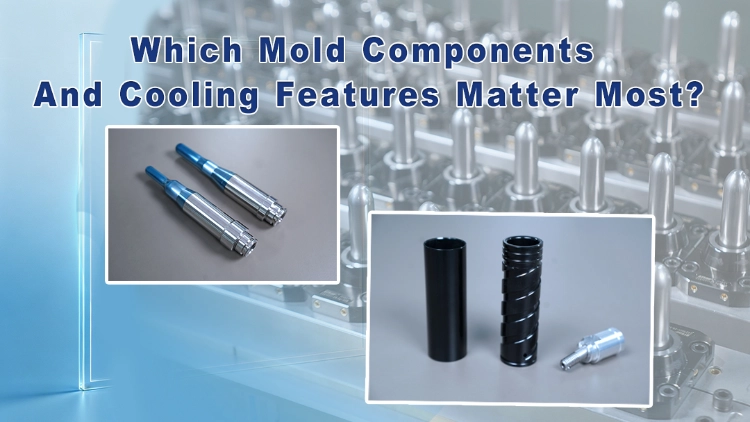
Mold internals influence geometry, thermal balance, gate quality, maintenance, and dimensional consistency. Review each component against the complete injection system.
What Does The Mold Core Control Inside The Preform?
The core helps define the preform’s internal dimensions, wall-thickness distribution, and molding stability. The PET Mold Core is specified at 35 × 208.7 mm and uses premium precision mold steel, professional vacuum heat treatment, and special surface treatment and polishing. These are product specifications for that component, not universal requirements for every application.
When replacing a core, compare its dimensions, fit, surface condition, and relationship with the existing cavity and extraction arrangement.
How Do Hot-Runner And Gate Arrangements Affect Injection Molding?
Hot-runner selection should reflect cavity count, resin flow, gate design, injection-machine capability, maintenance access, and the preform requirements. The needle valve gate arrangement in the 96-cavity example provides a documented model of individual cavity shut-off control. It should not be assumed suitable for every machine or preform design.
Why Do Cooling Cores And Water Paths Require Engineering Review?
Cooling-core geometry, extraction-plate fit, waterway layout, flow distribution, sealing, and connection design all deserve review. Poorly matched waterways can create uneven thermal conditions around the neck ring or internal core.
Most systems use water cooling, but the correct arrangement depends on the mold and equipment. Confirm connection sizes, circuit layout, cleaning practice, and maintenance access. Factory cleaning frequency may be weekly or monthly according to operating conditions and internal practice.
How Does The Preform Become A Finished Bottle?
Injection molding creates the preform; stretch-blow molding creates the final container. The second stage must be adjusted to the preform design rather than run with assumed settings.
What Happens During Reheating And Stretching?
The preform is reheated so the PET becomes suitable for axial and radial stretching. Heating depends on preform weight, wall thickness, bottle capacity, material distribution, oven configuration, and line speed. A 3,000 W setting may be too high for a lightweight preform of 15 g or less, while a thick-wall or larger-than-1 L bottle may require more power or longer heating.
An apparent heating defect may also involve moisture in the air or excessive stretching. Review temperature distribution, drying, oven balance, and stretch conditions together.
How Do Stretch Rods And Blowing Pressure Influence Bottle Formation?
The stretch rod controls axial movement and helps guide material distribution toward the base and shoulder. Its position is normally sensor-positioned or directly controlled. Blowing pressure varies with bottle design, wall thickness, material distribution, and filling application. Thick-wall and hot-fill bottles may require different settings from lightweight cold-fill containers.
Validate pressure, timing, rod movement, and pre-blow conditions using the bottle drawing, machine documentation, and production trials.
How Do Cold-Fill And Hot-Fill Applications Change Equipment Decisions?
Cold-fill blow-mold cavities use A6061 aluminum; only some accessories are stainless steel. Hot-fill blowing molds use high-quality stainless steel. For international-equipment compatibility, cavities use imported aluminum. These material choices apply to the relevant blow-mold application and must be checked against the intended equipment and bottle design.
Foshan Baijinyi Precise Technology Co., Ltd. can review your preform drawing, bottle design, neck finish, machine interface, cooling requirements, and filling application. Request application-specific pricing and compatibility confirmation. Preform molds require at least six weeks; stocked connector parts may ship quickly, while other custom items generally take 15–25 days. For a technical review, use Contact Us with the relevant drawings and machine data.
FAQ
What Is The Difference Between A Preform Mold And A Blow Mold?
A preform mold injection-molds the PET tube-like part, including its neck and internal geometry. A blow mold receives the reheated preform and shapes it into the finished bottle through stretching, air pressure, and cooling.
Which Bottle And Neck-Finish Details Should Buyers Provide?
Provide the preform drawing, preform weight, bottle capacity, wall-thickness requirements, neck-finish drawing, filling application, resin information, machine model, cavity target, and expected production conditions. These details allow the mold and line components to be reviewed as a compatible set.
How Can Buyers Confirm Mold And Line-Component Compatibility?
Compare the machine envelope, cavity spacing, robot interface, take-out geometry, cooling connections, neck finish, and component drawings. Confirm the Rinser gripper, Stopper, capping head, preform mold, and blow mold against the same bottle-neck specification before production approval.