

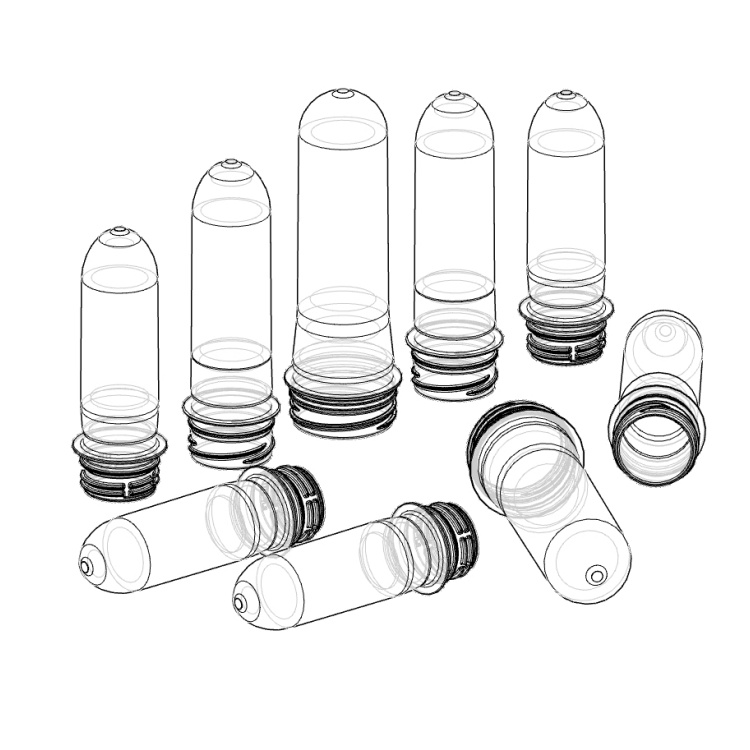
Exploring the Benefits of Using PET in Injection Molding
PET has turned into one of the most popular plastics for injection molding, particularly in liquid packaging. It appears in bottled water, carbonated drinks, edible oil, and personal care items. PET preforms stand at the heart of numerous fast-paced production lines. The appeal goes beyond habit or expense. PET provides a blend of durability, clearness, and reliable processing that suits current packaging needs quite effectively.
As packaging quantities expand and profit edges narrow, makers focus more on how materials act and how molds function. When combined with a smartly built injection mold, PET can yield both high production rates and steady results. This is precisely where skilled PET mold makers such as BJY make a vital difference in actual factory settings.
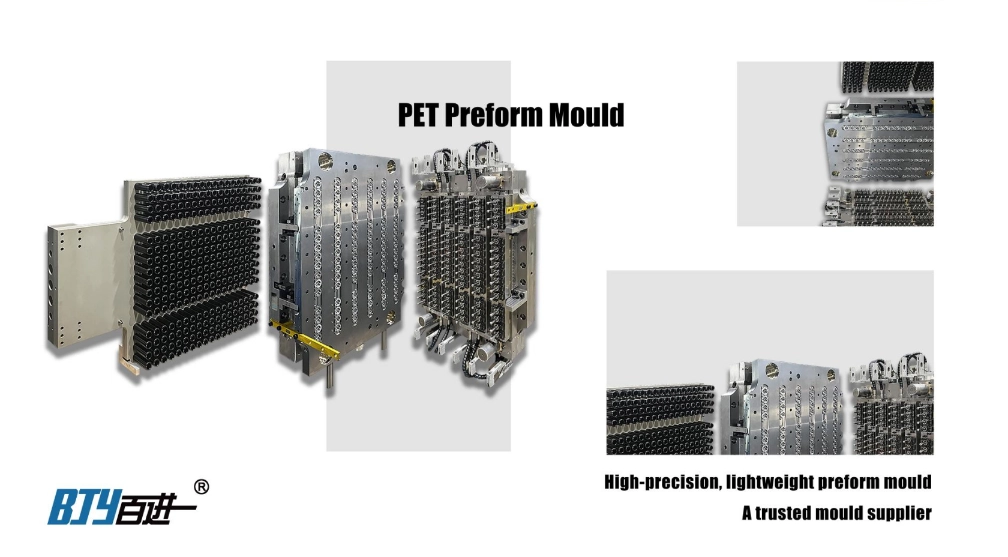
Why Is PET Widely Used in Injection Molding Applications?
PET gained its popularity for good reasons. Its physical properties and handling features align better with injection molding needs than numerous other resins do.
Prior to examining equipment and molds, it proves useful to grasp what PET contributes fundamentally as a material.
Strong Mechanical Performance and Dimensional Stability
PET offers solid tensile strength and stiffness relative to its lightweight nature. After molding, preforms hold their form reliably, even through storage or extended shipping prior to blowing. Such dimensional steadiness plays a key part in rapid blow molding, since minor differences in neck finish or wall thickness might lead to sealing failures.
In beverage and food packaging, dependable neck sizes also ensure caps work smoothly, thereby cutting down on leak issues later on.
Excellent Transparency and Surface Finish
Clear visibility represents yet another factor why PET leads in liquid packaging. When molded correctly, PET preforms create bottles with sharp transparency and even surfaces. This quality holds special value for water, soft drinks, and health beverages, as looks on the shelf influence buying choices.
A finely crafted mold cavity contributes greatly to this outcome, because the mold’s inner surface finish influences light transmission in the finished bottle.
Consistent Quality for High-Volume Production
Injection molding operations frequently operate around the clock. PET delivers dependable performance under these demands, as long as moisture handling and heat regulation occur properly. After setting the parameters, PET enables steady production across extended runs, which proves essential for major beverage facilities and contract bottlers.
How Does PET Improve Production Efficiency in Injection Molding?
Efficiency involves more than just cycle duration. It encompasses reduced downtime, lower waste levels, and fewer mold maintenance needs as well.
PET aids effective manufacturing when paired with suitable mold setups and cooling arrangements.
Fast Cooling and Short Cycle Time
Unlike various engineering plastics, PET solidifies fairly swiftly. Consequently, this permits briefer molding cycles without overworking the equipment. In molds with multiple cavities, quick cooling gains extra importance, for overall productivity hinges on each moment gained per cycle.
Molds for high-cavity PET preforms incorporate this trait via even cooling and runner configurations.
Stable Processing Window for Mass Production
PET features a defined processing range. Once melt heat and injection settings align correctly, fluctuations remain minimal. Thus, this reliability cuts the need for constant tweaks, which often trouble big-scale operations.
Such steady handling also renders PET ideal for automated lines that limit operator involvement.
Lower Scrap Rate and Material Waste
Through adequate drying and mold planning, PET produces fewer incomplete fills, air pockets, or shape distortions. Reduced waste translates to decreased material expenses and shorter fix times. Across millions of cycles, these modest gains accumulate into substantial cost reductions.
What Makes PET a Sustainable Choice for Injection Molding?
Sustainability now forms a core part of packaging discussions, far from mere promotion. PET integrates smoothly into this area.
Recyclability and Compatibility With rPET
PET recycles completely and fits into worldwide recycling networks easily. Even better, current PET preform molds frequently accommodate recycled PET (rPET) mixtures. As a result, producers can boost recycled portions without overhauling their whole systems.
Mold accuracy grows more essential with rPET, given its greater material inconsistencies.
Lightweight Design for Material Reduction
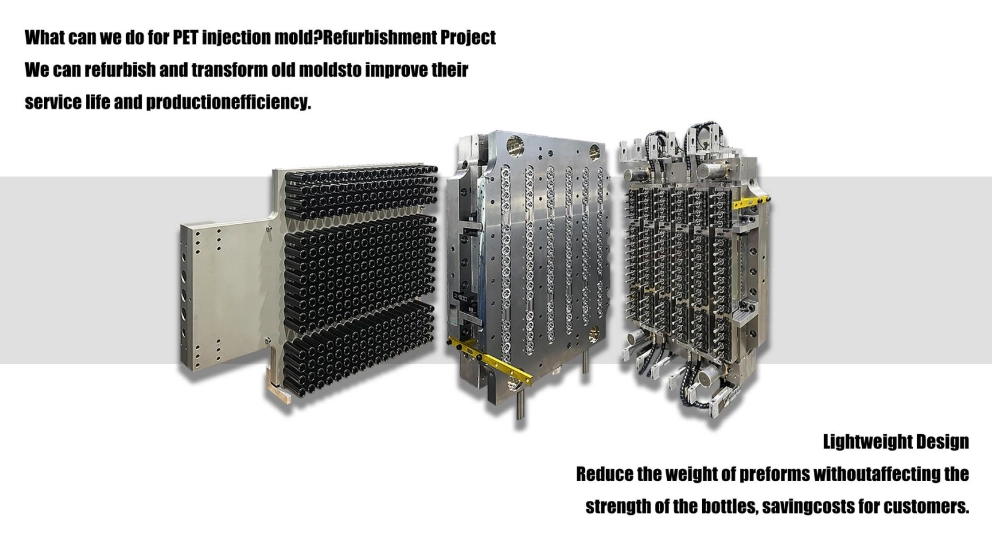
Today’s PET packaging emphasizes weight reduction. By lightening preform mass while preserving durability, makers lower resin consumption and shipping costs. Striking this equilibrium calls for exact cavity shaping and close tolerance management.
Here, knowledgeable PET mold providers offer value beyond mere components.
Support for Eco-Friendly Packaging Trends
Whether tethered caps or slimmer walls, PET injection molding adapts to green regulations across markets. Adaptable mold planning and tailoring options simplify shifts to these updates without halting lines for extended periods.
What Challenges Can Arise When Molding PET Materials?
PET performs effectively, yet it demands careful oversight. Specific issues require attentive handling.
Strict Temperature and Moisture Control Requirements
PET reacts strongly to dampness. Inadequate drying causes material breakdown, harming durability and visibility. Heat management matters just as much, particularly in molds with many cavities where warmth spreads evenly.
High Precision Demand on Mold Design
PET preforms need narrow tolerances, notably at the neck area. Even slight discrepancies can disrupt cap fits or trigger blow molding flaws. For this reason, PET injection molds call for superior machining standards compared to standard plastic molds.
Need for Reliable Multi-Cavity Mold Structures
With rising cavity counts, ensuring even flow and cooling turns tougher. An inadequately planned multi-cavity mold might seem efficient theoretically but deliver inconsistent results practically.
Why Is a High-Cavity PET Preform Mold Critical for PET Injection Molding?
High-cavity molds have become essential for major beverage makers. They form the foundation of expense management.
Higher Output per Cycle With Stable Performance
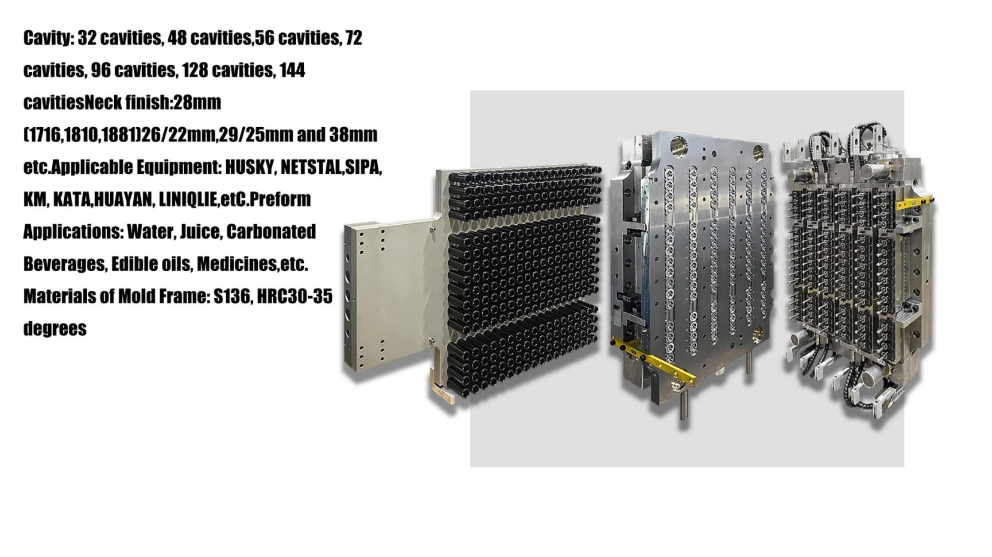
A 96-cavity mold generates many more preforms each cycle than fewer-cavity options, all while keeping the same machine space. If engineered well, production rises without compromising standards.
Uniform Wall Thickness and Neck Finish Accuracy
Maintaining sameness in every cavity poses the true test. All cavities must operate identically, run by run. This relies on exact machining, even runner distribution, and heat planning.
Optimized for Large-Scale Beverage Packaging
High-cavity PET preform molds suit water, carbonated soft drinks, and edible oil packaging ideally, where sheer volume outweighs the need for constant redesigns.
Why Choose BJY for PET Injection Molding Solutions?
Selecting a PET mold provider involves more than cost. Enduring reliability, ongoing assistance, and practical know-how count heavily.
Advanced PET Mold Engineering and Manufacturing Experience
BJY has specialized in PET liquid packaging molds from 2011 onward. Drawing on extensive work with beverage, food, pharmaceutical, and personal care sectors, the firm grasps mold dynamics in live plants, beyond mere blueprints.
Precision Machining and Strict Quality Control
BJY employs cutting-edge CNC tools and checking devices, including precise CMM units. This setup enables firm control over tolerances in cavities, neck rings, and core parts, which impact preform excellence directly.
Customized Support for Global Injection Systems
BJY molds work seamlessly with leading injection brands like Husky, Netstal, SIPA, and more. Tailoring options exist for specific machine setups, preform weights, and neck standards.
How Does the 96 Cavities PET Preform Mold Support High-Speed Production?
The 96 Cavities PET Preform Mold from BJY targets makers seeking both high volume and dependability.
Optimized Multi-Cavity Layout for Maximum Efficiency
This mold includes an even runner network that supplies steady melt to each cavity. Therefore, it maintains wall thickness and weight variations in check, particularly during rapid injections.
Compatibility With Husky Injection Molding Machines
Built to align with Husky interfaces, the mold fits existing lines effortlessly. Hence, it shortens preparation periods and skips needless equipment changes.
Designed for Long Service Life and Stable Output
Using premium steel, appropriate heat processing, and smart cooling, the mold endures prolonged runs. Consequently, upkeep occurs less often, and interruptions remain minimal, crucial for nonstop shifts.
FAQ
Q1: Is PET suitable for high-cavity injection molding?
A: Yes. PET functions excellently in high-cavity molds, provided moisture oversight and mold accuracy receive due attention. Numerous beverage operations depend on 72-, 96-, or greater-cavity PET preform molds for routine output.
Q2: What industries commonly use PET injection molding?
A: PET injection molding finds broad use in beverage packaging, edible oil containers, pharmaceuticals, personal care goods, and household chemicals. Applications needing clearness, toughness, and food-grade safety gain from PET.
Q3: How long does a 96-cavity PET preform mold typically last?
A: Under normal maintenance and standard production conditions, high-quality billet molds can typically reach 8 million cycles or even longer. The specific lifespan depends on the grade of raw materials, equipment conditions, and production intensity.
Disclaimer
The brand names and logos of sidel, husky, khs, sacmi, sipa, netstal, etc., are registered trademarks owned by their respective legal holders. All mentioned trademarks and brand names in this article are used solely for the purpose of illustrating product compatibility and suitability. BJY does not claim any rights to the aforementioned trademarks and has no affiliation, authorization, or partnership with the companies mentioned. Any references herein do not imply that our products are original factory parts or have received official recognition from the manufacturers.