

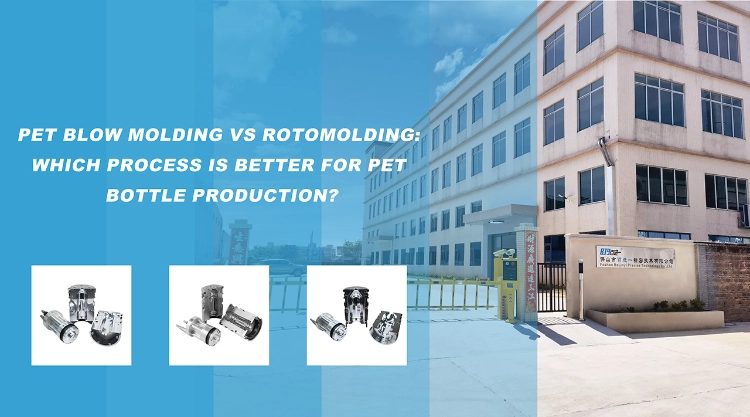
PET Blow Molding vs Rotomolding: Which Process Is Better for PET Bottle Production?
PET bottle buyers sometimes compare different manufacturing processes before selecting the right tooling solution. Blow molding and rotomolding can both produce hollow plastic products, but they serve very different production requirements and are not interchangeable for a typical beverage bottle project.
For bottled water, juice, carbonated drinks, hot-fill beverages, or other PET containers requiring a controlled neck finish, repeatable bottle geometry, and integration with filling and capping equipment, PET stretch blow molding is usually the preferred production route.
BJY focuses on PET molds and related machinery parts for liquid packaging, including blow molds, preform molds, machine parts, bottle development, mold testing, and equipment adaptation. For PET bottle projects, the more useful purchasing question is how the bottle, preform, blow mold, and machine should work together under actual production conditions.
What Makes PET Blow Molding Different for Beverage Bottle Production?
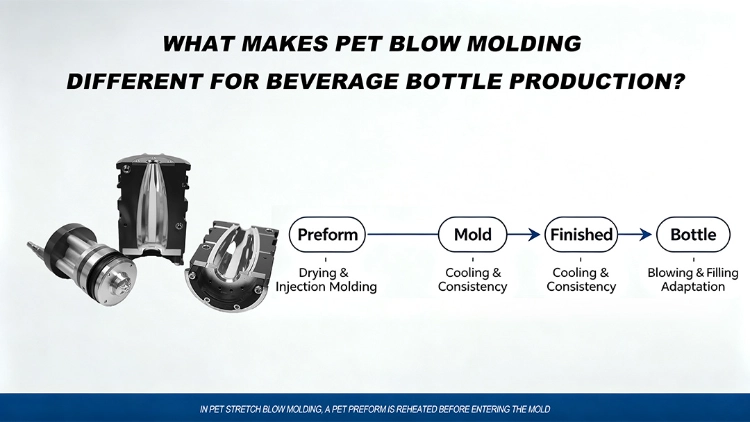
PET stretch blow molding is designed around preforms, controlled stretching, high-pressure forming, repeatable bottle geometry, and continuous production. These characteristics make it particularly relevant to beverage packaging.
Rotomolding follows a different forming principle and is generally associated with larger hollow plastic products rather than high-speed PET beverage bottles. For bottle buyers, the comparison therefore matters mainly because it helps eliminate an unsuitable process before tooling selection begins.
Process Flow and Part Formation
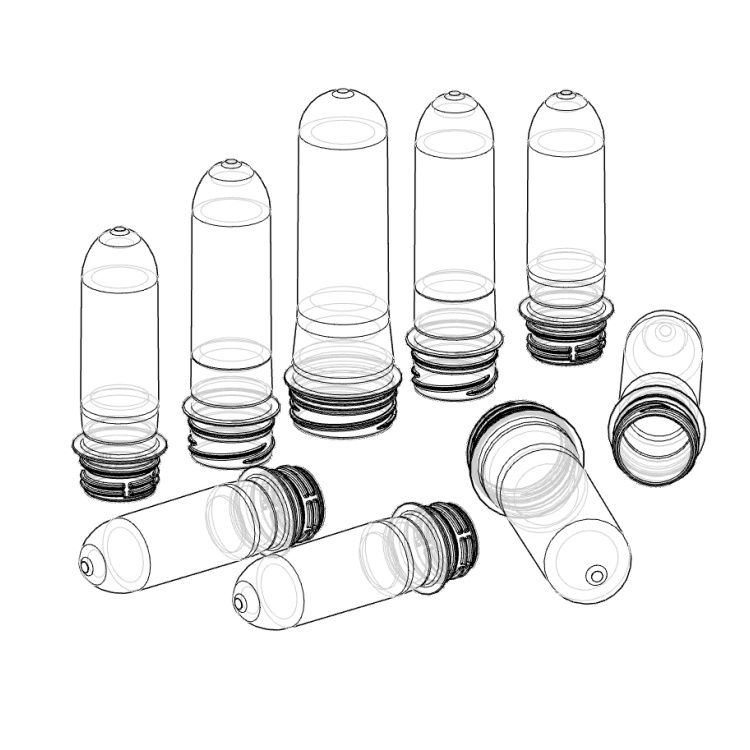
In PET stretch blow molding, a PET preform is reheated before entering the mold. A stretch rod extends the preform axially, pre-blow air begins expansion, and high-pressure air pushes the softened PET against the mold cavity.
The blow mold forms the bottle body, shoulder, label area, and base, while the preform neck finish must be protected from excessive heating or deformation.
Because the preform neck has already been formed during injection molding, the blowing stage must work around that fixed interface. This is important for later filling, rinsing, capping, and bottle handling.
Speed and Production Scale
PET beverage production is usually designed for recurring high-volume output. Bottle shape, base formation, wall distribution, and handling must remain consistent across repeated cycles.
For a bottle around 500ml, practical PET pre-blow pressure may be around 7–12 bar, while high-pressure blowing for water bottles can operate around 28–38 bar.
These pressure stages work together with heating, stretch-rod movement, mold temperature, and cooling. For buyers, stable process conditions and tooling compatibility are therefore more important than comparing production methods only by equipment price.
Typical Bottle and Container Use
PET stretch blow molding is normally the practical choice when a project requires repeatable bottle geometry, a stable preform neck finish, high-volume output, and integration with filling and capping systems.
For water, juice, carbonated beverages, hot-fill drinks, edible-oil packaging, and aseptic PET applications, the next decision after choosing the process is normally the blow mold and its compatibility with the existing production platform.
Rotomolding belongs to a different hollow-product category and is generally not the first process considered for these beverage bottle requirements.
Where Does a PET Blow Mold Fit in the Decision?
Once PET stretch blow molding is selected, the decision moves from “Which process?” to “Which bottle, preform, mold, and machine combination?”
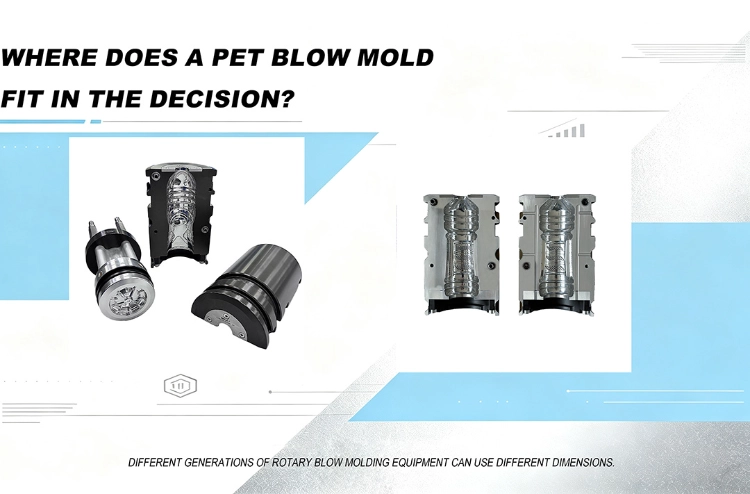
The blow mold plays a critical role in determining final bottle geometry and production consistency. A mold therefore has to be evaluated against the specific machine platform and bottle application rather than purchased by bottle capacity alone.
Bottle Size and Wall Consistency
Bottle capacity affects how PET stretches between the shoulder, body, and base. Changing bottle size can require changes to the preform, heating profile, stretch behavior, base design, and cooling strategy.
For a medium-capacity beverage project, the 600ml PET Blow Mold is a practical example of why bottle capacity needs to be considered together with mold structure and machine conditions.
A thin bottle area may become a weak point during filling or transport, while excessive material in another area increases bottle weight without necessarily improving performance. The approved bottle drawing and preform specification should therefore guide the final tooling design.
Machine Compatibility
A correctly machined mold can still fail as a project if it does not fit the exact machine platform.
Buyers should confirm the machine model, generation, mold height, mounting interface, bottom mold structure, cooling connections, and bottle specification before the tooling design is approved.
Different generations of rotary blow molding equipment can use different dimensions. BJY technical specifications, for example, include quick-change mold heights such as 518.5mm, 413mm, 420.3mm, and 401.6mm for different equipment structures.
This means that providing only the machine brand or bottle volume is not enough for a reliable quotation. Exact equipment information is necessary for proper mold matching.
Mold Material and Production Life
BJY’s rotary PET blow mold portfolio includes ALCOA A6061 and A7075 aluminum for multiple cold-fill applications, while selected hot-fill structures use stainless steel cavity materials according to production requirements.
Several BJY blow mold specifications list service targets of up to 10 million cycles under suitable installation, operating, and maintenance conditions.
For purchasing teams, material selection should therefore be considered together with filling temperature, cooling conditions, production speed, and machine compatibility rather than relying on a generic claim that a mold is simply “durable.”
How Do Cost, Speed, and Compatibility Affect the Choice?
The lowest mold quotation does not always produce the lowest long-term production cost.
A buyer should consider production stability, reject risk, maintenance, format changes, commissioning effort, and the possibility of production interruption.
Per-Unit Production Logic
A lower initial price can lose its advantage if the mold requires frequent adjustment or causes recurring production problems.
For continuous beverage production, stable cooling, consistent bottle quality, and correct machine compatibility usually matter more than a small difference in initial tooling price.
This is especially important when the same bottle format will be produced repeatedly over a long production period.
Setup and Tooling Decisions
A producer running one bottle format for long periods may prioritize stability and long maintenance intervals. A contract packer changing formats frequently may place more value on easier mold changes and adaptable components.
BJY’s broader PET Blowing Mold range covers different bottle capacities, machine interfaces, filling conditions, and mold configurations.
Tooling should therefore reflect how the actual plant operates rather than copying a standard mold specification from another production line.
Stable Output vs Flexibility
The first bottle trial may expose details that were not obvious during quotation. Shoulder material distribution may require adjustment, the base may need improved cooling, or pre-blow conditions may need modification.
These issues should be identified and corrected during commissioning rather than after full production begins.
BJY has in-house testing capability for blow molds and preform molds and can conduct small-batch trial production where required. For buyers, the supplier’s ability to support mold testing and production adjustment is therefore part of the tooling decision.
What Should Buyers Confirm Before Ordering?
Before releasing a PET blow mold order, buyers should confirm the bottle specification, preform information, machine conditions, cooling interface, production target, and acceptance method.
Incomplete machine or bottle data can create greater project risk than the price difference between two tooling quotations.
Neck Finish and Bottle Spec
The preform neck finish is already formed before stretch blow molding and must be protected from excessive heating and distortion.
Bottle volume, body diameter, shoulder shape, base geometry, label area, preform weight, and neck specification should all be confirmed before final tooling design.
Closure and capping requirements should also be reviewed early because the bottle must eventually work with the entire downstream packaging line.
Machine Model Fit
For replacement or retrofit projects, buyers should provide the exact machine model, generation, existing tooling condition, and any upgrade limitations.
BJY supports equipment adaptation and mold conversion for different neck finishes, bottle volumes, preform requirements, and machine platforms.
In some retrofit projects, existing mold shells, bottom mold assemblies, stretch rods, or related components may remain usable after engineering review. Evaluating these components before manufacturing can help avoid unnecessary replacement.
Inspection and Approval
BJY’s inspection facilities include hardness testing, thickness measurement, pressure testing, image dimension measurement, and a Zeiss coordinate measuring machine with measurement accuracy reaching 0.002mm.
The company also has in-house commissioning systems for blow molds and preform molds, allowing small-batch trial production and bottle inspection when required.
These checks give buyers a clearer acceptance basis than visual inspection alone and help verify whether the mold matches the approved drawings and production requirements.
Service and Spare Part Support
Spare-part planning should begin before production starts.
Buyers should know which wear components may require replacement, which parts should be kept in stock, and which customized parts need additional manufacturing lead time.
BJY also manufactures related components for rotary blow molding equipment and provides adaptation support. For an existing PET bottle line, this makes maintenance and retrofit requirements worth reviewing together with the mold order.
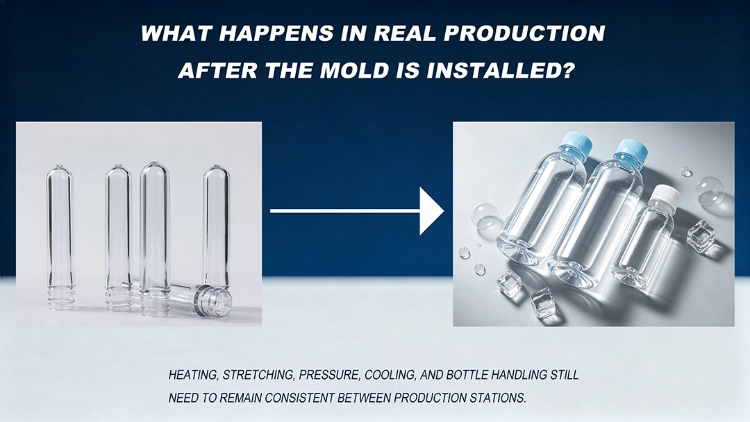
What Happens in Real Production After the Mold Is Installed?
Installation does not guarantee stable bottle output. Heating, stretching, pressure, cooling, and bottle handling still need to remain consistent between production stations.
The mold should therefore be evaluated as part of the actual blowing process rather than as an isolated machined component.
Cooling and Cycle Rhythm
Cold-fill PET bottle molds may operate with cavity temperatures around 25–45°C and bottom mold temperatures around 7–12°C. Station-to-station mold temperature variation should generally remain within approximately ±1.5°C.
Blocked or scaled cooling channels can reduce heat transfer and create bottle differences even when machine settings appear unchanged.
Cooling-system condition, water flow, mold temperature, and cavity consistency should therefore be checked when bottle quality begins to vary between stations.
Pressure and Material Distribution
For a bottle around 500ml, pre-blow pressure may be approximately 7–12 bar, with station variation controlled near ±0.1 bar.
Water bottle high-pressure blowing may operate around 28–38 bar, with station variation kept close to ±1.0 bar.
If one station behaves differently, material distribution may shift, affecting shoulder thickness, base shape, bottle volume, or mechanical performance.
Before assuming that a bottle defect comes from the mold itself, production engineers should also review heating, pre-blow timing, stretch-rod position, pressure consistency, and cooling conditions.
BJY’s guide on how to optimize PET blow molding machine parameters for precision provides more detail on these production variables.
Maintenance Access Over Time
Regular maintenance also affects long-term mold performance.
PET blow mold forming surfaces and parting areas can be cleaned around every 72 operating hours. Guide pins, guide sleeves, and bottom mold sleeves should receive regular food-grade lubrication.
Cavity polishing may be carried out monthly or around every 500 operating hours, while cooling circuits should be inspected quarterly for scale or blockage.
A mold that is correctly maintained and easy to inspect will generally create less production disruption over its working life.
Which Process Should a Bottle Buyer Choose?
For conventional PET beverage bottles, PET stretch blow molding is normally the appropriate production route when the project requires controlled bottle geometry, a stable neck finish, repeatable high-volume output, and integration with filling and capping equipment.
Rotomolding serves a different category of hollow plastic products and is generally not evaluated as an alternative once these beverage-bottle requirements are established.
For PET bottle projects, the more important purchasing decision comes next: selecting the correct preform specification, blow mold, machine interface, cooling arrangement, and tooling supplier.
For an existing beverage line, buyers should not choose a mold by bottle volume alone. The bottle design, preform, mold structure, equipment model and generation, cooling conditions, and production requirements should be reviewed together before manufacturing begins.
Contact
If you need to match a PET blow mold to an existing machine, bottle format, or production target, Contact BJY with your bottle drawing, preform details, machine model, and current tooling information for a compatibility review.
FAQ
Is rotomolding normally used for PET beverage bottles?
No. Rotomolding generally serves a different type of hollow plastic product. PET stretch blow molding is better suited to beverage bottles requiring controlled neck geometry, repeatable high-volume output, and integration with filling and capping equipment.
Why does PET blow mold compatibility matter?
The mold must match the actual production platform. Machine generation, installation dimensions, cooling interfaces, bottom mold structure, bottle design, and existing tooling can all affect whether the mold can be installed and operated correctly.
What pressure is commonly used in PET bottle blowing?
For a bottle around 500ml, pre-blow pressure may be around 7–12 bar. Water bottle high-pressure blowing may operate around 28–38 bar. Exact settings depend on the bottle, preform, machine, and required production conditions.
What should buyers confirm before ordering a PET blow mold?
Confirm the bottle and preform specifications, neck finish, exact machine model and generation, mold dimensions, cooling requirements, production target, inspection method, and spare-part requirements.