

PET Molding Processes for B2B Buyers: Tooling, Scale, and Supplier Selection
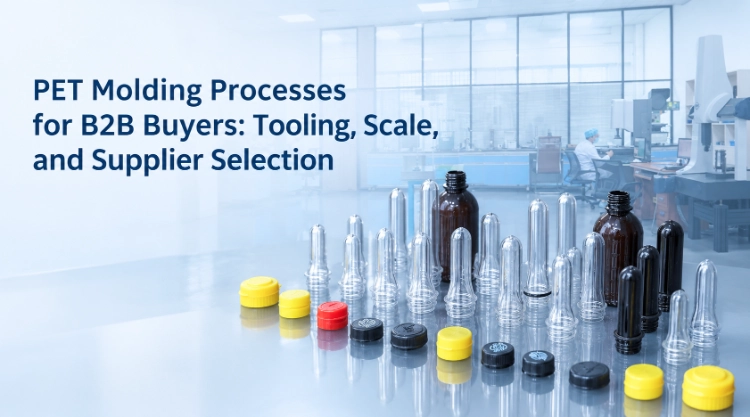
PET packaging projects often involve several molding stages, and each stage has a different job. Preform injection molding creates the PET preform, stretch blow molding turns that preform into the finished bottle, and compression molding can be used for closures. For procurement, the key is to define the package, production equipment, tooling boundary, and output target before comparing quotations.
BJY focuses on PET liquid packaging molds, including blow molds, preform injection molds, compression cap molds, and related parts. Its work across bottle, preform, and closure applications makes it useful to evaluate each molding stage by machine compatibility, tooling structure, and production target.
What Are the Main PET Molding Processes?
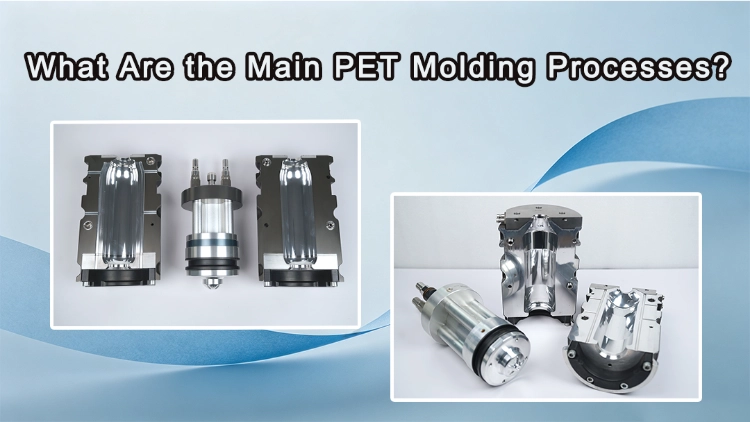
A PET packaging line may use more than one molding process. Buyers should treat each stage separately because the machine interface, mold structure, cooling method, cavity configuration, and acceptance criteria are different.
How Does PET Preform Injection Molding Work?
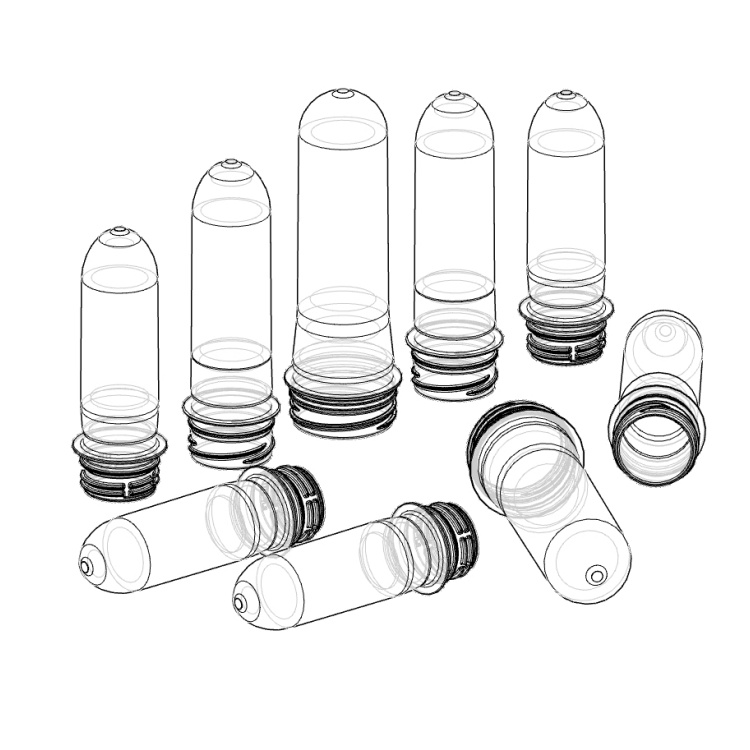
PET preform injection molding melts PET resin and injects it through a runner system into closed mold cavities. After cooling, the preforms are released and transferred for inspection or later bottle blowing. The mold must control the neck finish, preform weight, wall distribution, gate area, and dimensional consistency across every cavity.
For an RFQ, specify cavity count, preform weight, neck finish, hot-runner arrangement, take-out method, machine model, and any lightweighting target. A quotation for a preform mold should also state which components, cooling parts, and machine-matching work are included.
How Does Stretch Blow Molding Form the Bottle?
In a two-step PET bottle line, a molded preform is reheated, placed in the blow mold, stretched axially, and expanded against the cavity by compressed air. Heating, stretch-rod motion, pre-blow, high-pressure blowing, venting, and mold cooling work together to determine bottle shape and material distribution.
This makes blow-mold selection closely tied to bottle capacity, bottle geometry, filling condition, pressure resistance, label area, base design, changeover requirements, and the exact rotary or linear machine interface. Cooling and vent design also affect cycle stability and repeatability.
Where Does Compression Molding Fit in Closure Production?
Bottle closures are a separate tooling application. Compression cap molds form caps for defined neck finishes and closure types, so buyers should confirm the cap design, neck standard, machine platform, cavity arrangement, ejection method, and changeover requirements rather than treating the closure mold as part of the bottle mold.
For PET packaging projects, separate the finished bottle, preform, closure, production machine, mold, automation interface, and auxiliary systems in every quotation. A hot-runner system, for example, belongs to a preform injection-mold application, while a blow mold relies on the blowing machine, stretch system, air circuit, and mold cooling arrangement.
Which Molding Route Best Fits Your Packaging Project?
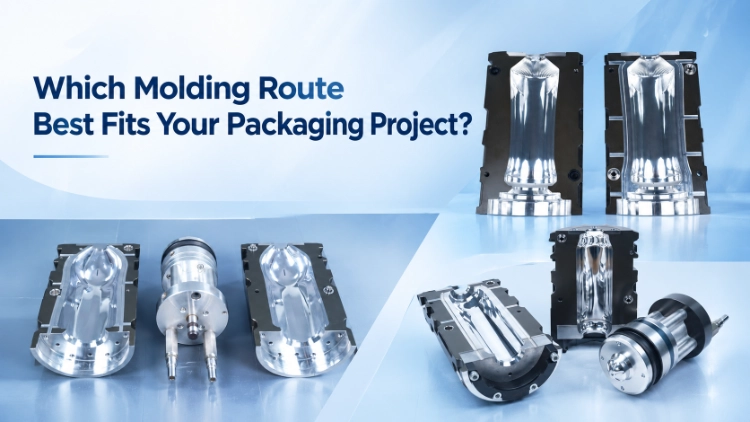
Start with the package you need to produce rather than the tool name. Bottle capacity, filling method, neck finish, preform weight, required output, bottle performance, and the installed machine can determine the correct tooling route before commercial evaluation begins.
How Do Package Function and Filling Conditions Affect the Choice?
Define whether the package is for water, carbonated soft drinks, hot-filled beverages, aseptic products, edible oil, pharmaceuticals, personal care products, or another liquid. Then state the required pressure resistance, temperature exposure, sealing duty, hygiene requirement, weight target, and shelf-handling conditions.
These conditions influence mold material, bottle base design, cavity surface treatment, cooling strategy, neck-finish control, and process settings. A buyer should ask the supplier to confirm the intended application and any limits that could affect bottle performance or line stability.
How Should Buyers Evaluate Geometry, Finish, and Dimensional Needs?
Review bottle wall distribution, overall diameter and height, base geometry, label panel, grip features, neck details, parting line, and release direction. For preforms and closures, focus on neck threads, sealing surfaces, weight, wall thickness, gate quality, and dimensions that interface with downstream equipment.
Identify the dimensions that are truly critical and state how they will be checked. Also confirm whether polishing, anodizing or other surface treatment, engraving, bottle sampling, trial runs, installation support, or modification work is included in the quoted scope.
What Do Packaging Molds Show About Application-Specific Selection?
The 300ml PET Blow Mould for CSD Bottles is an application-specific blow-molding example. It uses A6061 aluminum and is intended for 300ml carbonated soft drink bottles, where bottle geometry, wall distribution, base stability, cooling, and repeatability must remain consistent at production speed.
The Compression Cap Mold for Sacmi serves a different packaging stage. BJY’s closure mold range supports 1810, 1881, 38 mm, 29/25, and 30/25 neck options for CSD, hot-filling, aseptic, and flat-water closures. Buyers therefore need separate specifications for bottle blowing and cap production, even when both belong to the same packaging line.
How Should Buyers Compare Tooling, Volume, and Lead Time?
Commercial evaluation should cover the complete production requirement. A low tool price can become expensive when scrap, maintenance, machine mismatch, long changeovers, weak cooling, repeated adjustments, or unsuitable capacity is added later.
What Belongs in a Tooling and Unit-Cost Review?
Separate mold investment from resin, labor, machine time, compressed air, cooling, energy, scrap, maintenance, spare parts, packaging, freight, trial costs, and installation. Compare total cost at the forecast production volume rather than using the mold price as the only purchasing criterion.
Ask bidders to document expected maintenance responsibilities, recommended spare parts, consumables, trial scope, and cost exclusions. Tooling economics change with cavity count, material, bottle or preform geometry, cycle requirements, machine condition, and annual volume.
How Do Cavity Count and Equipment Integration Affect Scale?
Cavity count alone does not define output. Check machine platen or mold-envelope limits, cavity spacing, hot-runner layout where applicable, automation interface, cooling arrangement, take-out system, maintenance access, and changeover requirements.
The 96 Cavities PCO1881 Preform Mold for Husky HyPET illustrates the integration requirements of a high-cavity preform project. The original specification lists 96 cavities, a PCO1881 neck finish, 21.5g preform weight, premium stainless steel with surface coating, a needle-valve hot runner, and multi-stage take-out plate cooling. These details affect machine matching, cooling balance, maintenance access, and repeatable cavity-to-cavity output.
How Should Project Timing Be Assessed?
Break the schedule into drawing review, bottle or preform confirmation, material procurement, machining, surface treatment, assembly, machine matching, trials, corrections, shipping, installation, and commissioning. Confirm which milestone starts the quoted lead time and which approval steps can pause it.
For BJY projects, preform molds require at least six weeks. Other custom items generally take 15-25 days, while stocked connector parts may ship faster after availability and specifications are confirmed. Actual timing remains project-dependent and should be reconfirmed before order placement.
How Can Buyers Qualify a Molding Process and Supplier?
A disciplined RFQ reduces the risk of comparing different tooling scopes, machine assumptions, output targets, or quality criteria. The strongest quotation is not simply the lowest price; it is the one that clearly connects the mold design to your machine, package specification, trial plan, and acceptance requirements.
What Information Should Be Included in the RFQ?
Send the controlled bottle, preform, or closure drawing; target capacity and weight; neck finish; critical dimensions; annual and batch quantities; machine model; interface details; fill condition; surface requirements; operating environment; and required secondary operations.
For an existing line, also describe the current production issue, available cooling and air conditions, changeover expectations, current mold configuration, and any spare-part constraints. Require written assumptions and exclusions so suppliers are quoting the same technical boundary.
Which Quality and Defect Controls Should Be Reviewed?
Ask how cavity dimensions, neck-finish geometry, cooling performance, alignment, surface finish, bottle or preform consistency, and recurring defects are inspected and controlled. Acceptance criteria should be tied to your part drawing and production requirement, not to broad claims such as “high precision.”
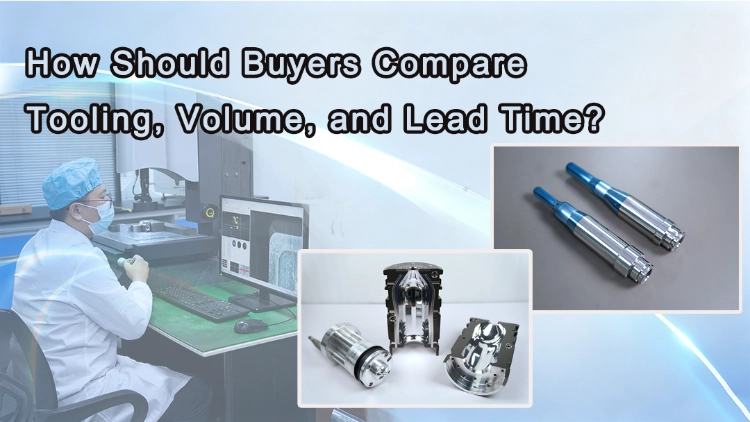
BJY’s inspection resources include hardness and thickness testing, pressure testing, high-precision projection, Keyence image measurement, and a Zeiss CMM with stated detection accuracy of 0.002 mm. For mold projects, dimensional checks should be combined with trial data and bottle or preform inspection when the project scope requires it.
What Final Decision Framework Should Buyers Use?
Score each option against machine compatibility, package function, critical dimensions, tooling investment, expected output, changeover time, cooling design, maintenance access, defect risk, lead time, trial support, and after-sales responsibilities. Give mandatory technical requirements greater weight than initial price.
If the project involves a new bottle, a neck-finish change, lightweighting, a machine conversion, or a high-cavity preform mold, request an engineering review before award. Confirm drawings and interfaces first, then lock the acceptance criteria that will be used during trial and delivery.
For PET bottle, preform, or closure tooling, BJY can review drawings, machine information, production targets, and compatibility requirements. Contact BJY for a project-specific tooling assessment before finalizing the RFQ.

FAQ
What Is the Difference Between Preform Injection Molding and Blow Molding?
Preform injection molding creates the PET preform in a multi-cavity injection mold. Blow molding reheats that preform and expands it inside a bottle mold to create the final container. The two stages use different machines, tooling structures, process controls, and acceptance checks.
Which Factors Have the Greatest Effect on PET Tooling Cost?
Mold material, cavity count, bottle or preform geometry, neck finish, hot-runner or cooling requirements, machine compatibility, surface treatment, trial scope, spare parts, expected production volume, and required engineering modifications can all affect total project cost.
What Should Buyers Send a Supplier Before Requesting a Quotation?
Send a controlled drawing or sample, target capacity and weight, neck finish, critical dimensions, expected volume, machine and automation information, filling condition, surface expectations, and known production problems. For replacement or conversion projects, include current mold and interface data whenever possible.
Disclaimer
The brand names and logos of Sidel, Husky, KHS, Sacmi, Sipa, Netstal, etc., are registered trademarks owned by their respective legal holders. All mentioned trademarks and brand names in this article are used solely to illustrate product compatibility and suitability. BJY does not claim any rights to the aforementioned trademarks and has no affiliation, authorization, or partnership with the companies mentioned. Any references herein do not imply that our products are original factory parts or have received official recognition from the manufacturers.