

Can One PET Bottle Blowing Machine Produce Different Bottle Sizes and Shapes?
A PET Bottle Blowing Machine can often produce bottles in several sizes and shapes, but the change is not completed by adjusting the control panel alone. The machine must have enough mechanical space and suitable handling capacity, while the mold, preform, stretch system, and transfer parts must match the new bottle.
A change from one 500ml round water bottle to another 500ml bottle is usually straightforward. A change from a small water bottle to a wide 2L carbonated bottle can affect the mold, preform, stretch rod, blow nozzle, grippers, guides, and downstream handling equipment.
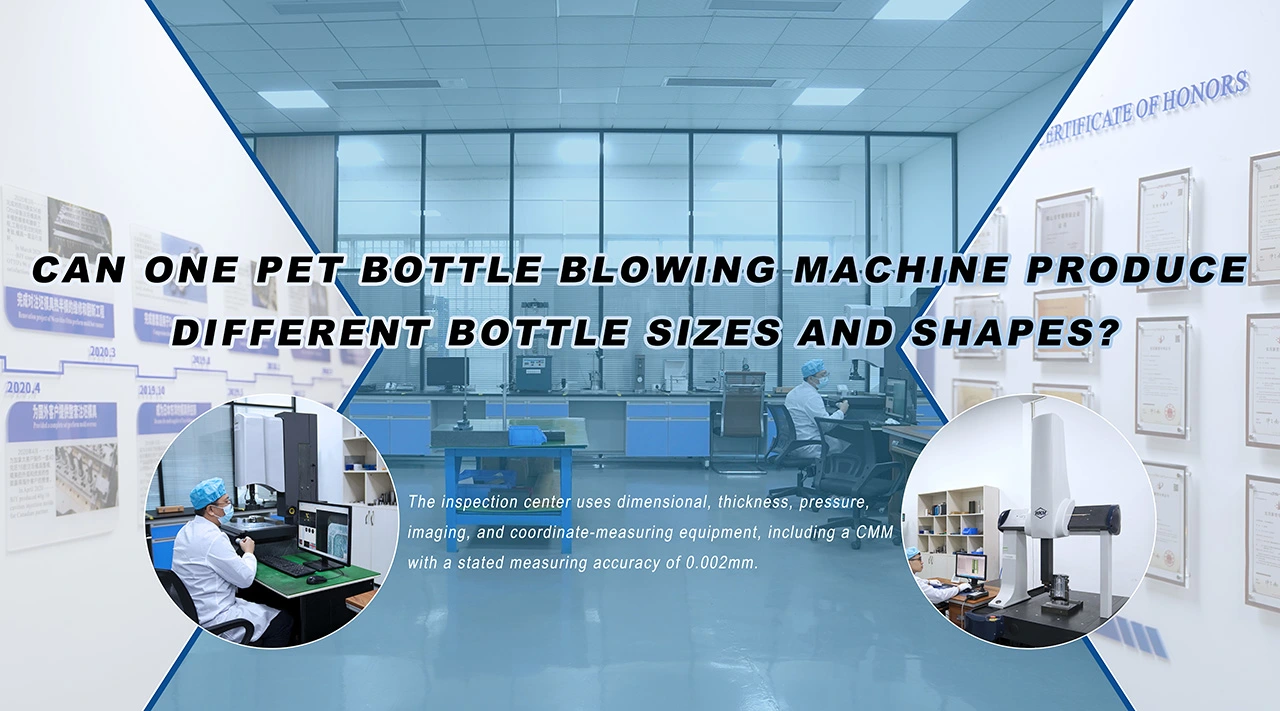
Founded in 2011, BJY designs PET liquid packaging molds, bottle formats, preform solutions, and machinery adaptation components. Its production process includes drawing confirmation, machining, inspection, trial molds, and bottle testing. The inspection center uses dimensional, thickness, pressure, imaging, and coordinate-measuring equipment, including a CMM with a stated measuring accuracy of 0.002mm.
Can One PET Bottle Blowing Machine Handle Multiple Bottle Formats?
The answer depends on what is changing. Bottle artwork or shallow surface ribs may only require a new cavity. A major increase in volume, a different neck finish, or a much wider bottle can require a larger conversion project.
The Machine Sets the Usable Format Range
A pet bottle blowing machine has fixed limits for bottle height, bottle diameter, mold height, base travel, neck handling, cavity spacing, and transfer clearance. A mold supplier therefore needs the machine model, production year, equipment generation, cavity number, and current mold drawings before confirming compatibility.
BJY’s mold range includes formats from small containers to multi-liter bottles. Its technical documentation lists many blowing mold applications between 50ml and 2500ml, with certain equipment configurations covering larger formats. This describes BJY’s mold manufacturing scope, not a guarantee that every machine accepts every capacity.
The Blow Mold Defines the Final Bottle Geometry
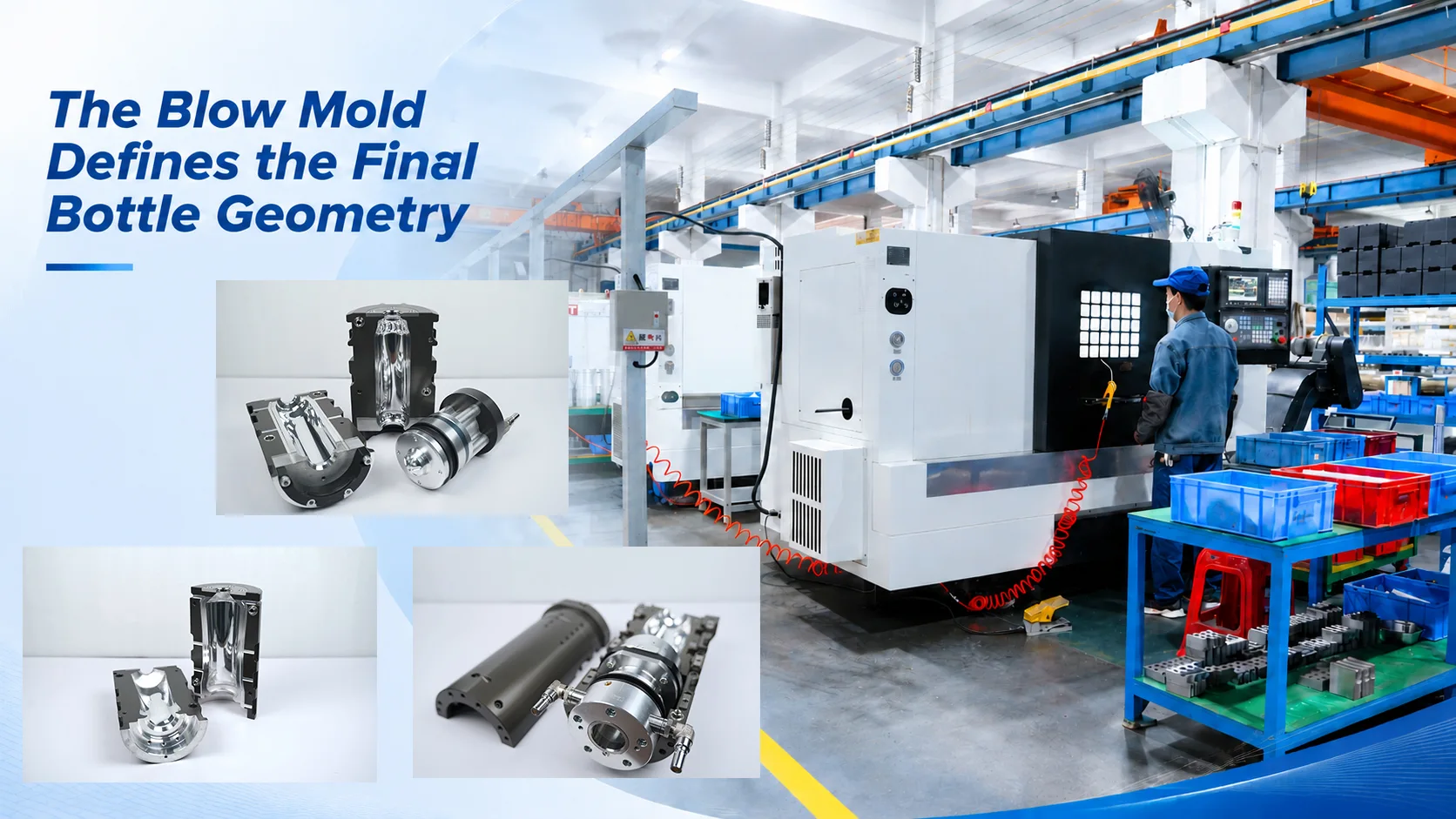
The machine heats and stretches the preform, but the mold forms the bottle body. The cavity controls the outer profile, label panel, grip area, decorative ribs, shoulder, and parting line. The base mold controls the standing surface and much of the bottom geometry.
A custom PET bottle blow mold is therefore required for each distinct bottle profile. BJY manufactures cold-fill, hot-fill, carbonated beverage, aseptic, edible-oil, and other liquid-packaging molds. The design can be developed from a bottle sample, an approved drawing, or a new bottle concept.
The Preform and Neck Finish Limit Compatibility
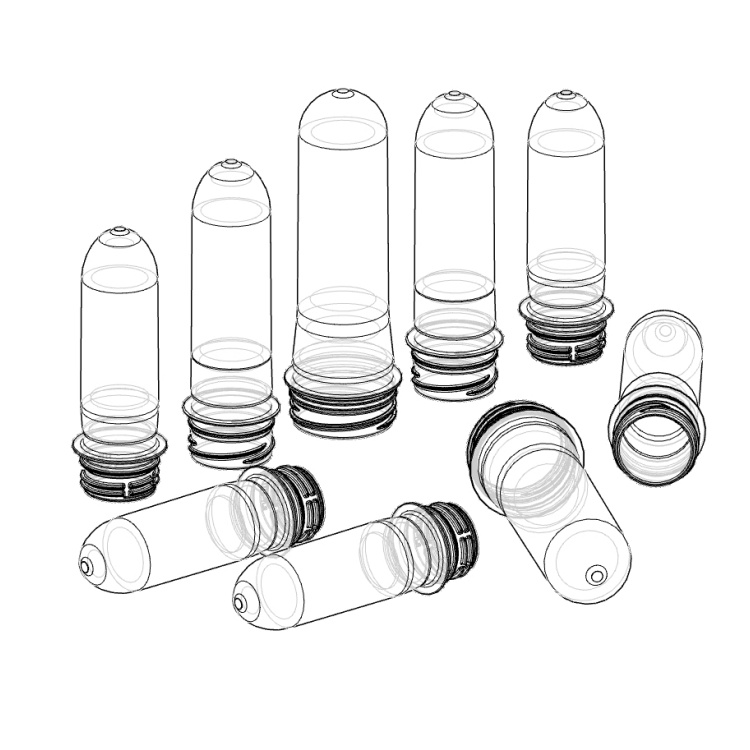
The preform must contain enough material to form the new bottle without creating thin sidewalls, a weak base, excessive shoulder material, or unstable plastic distribution. Preform weight, length, wall profile, resin behavior, and stretch ratio all matter.
Keeping the same neck finish usually reduces the conversion scope because the neck does not change during stretch blow molding. A new neck finish can affect preform handling, the blow nozzle, transfer components, filling parts, and capping equipment.
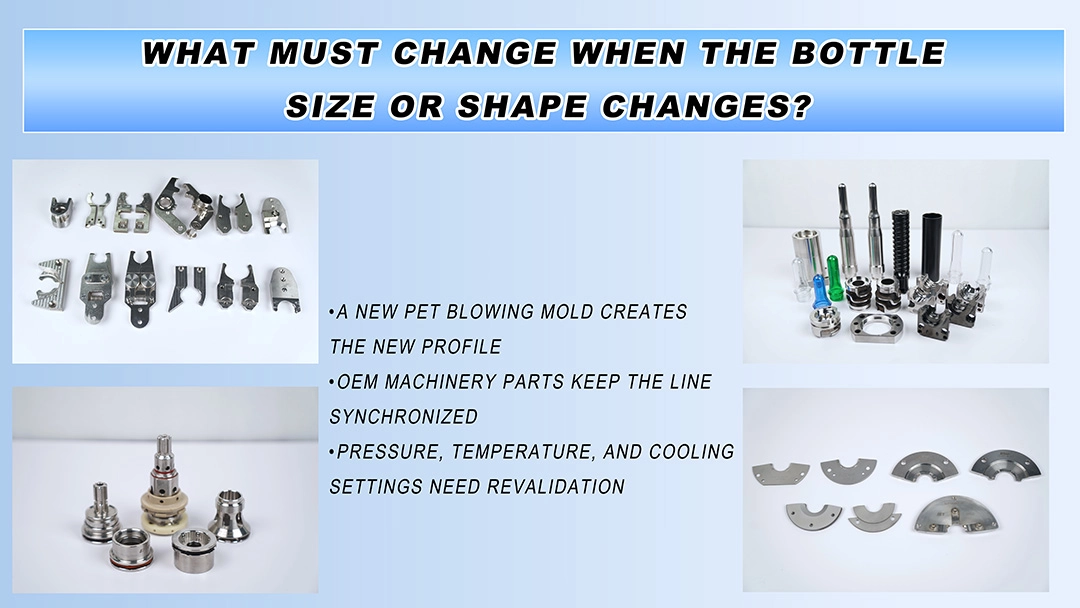
What Must Change When the Bottle Size or Shape Changes?
A format change should be treated as a coordinated tooling project. The bottle, preform, mold, machine movements, and handling path must be checked as one system.
A New PET Blowing Mold Creates the New Profile
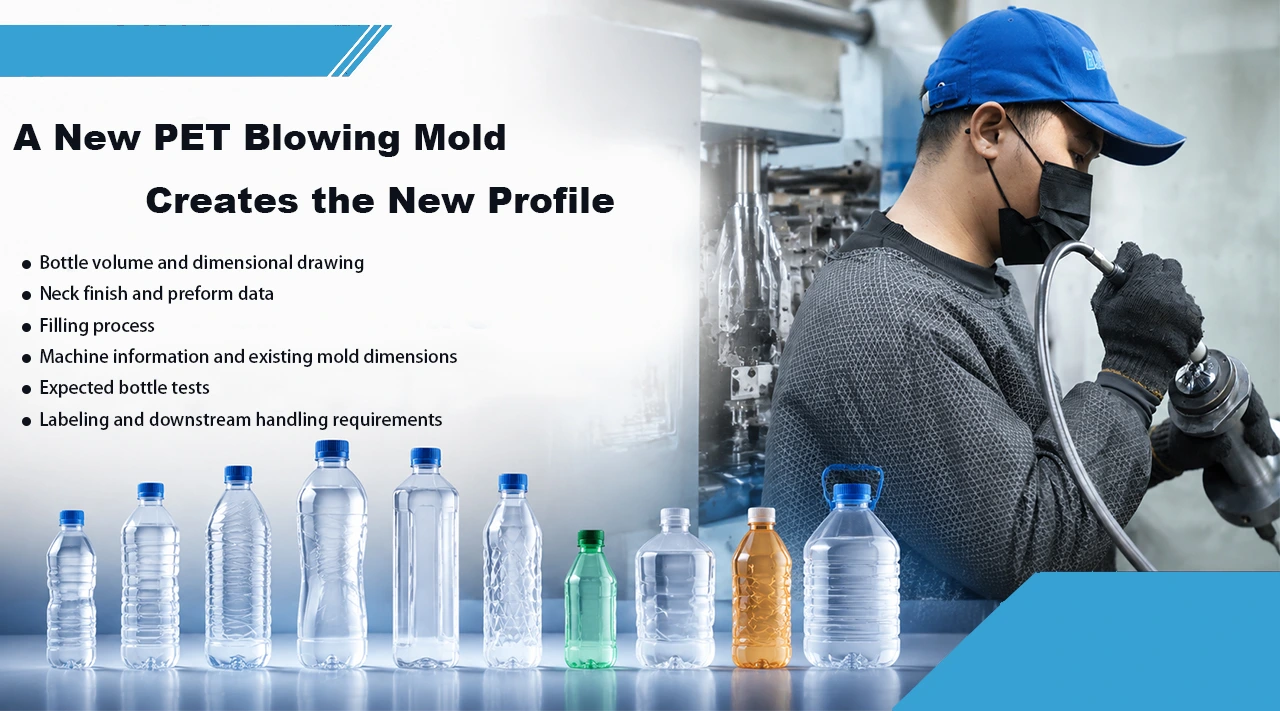
The new mold must match both the bottle drawing and the machine interface. BJY uses aluminum alloys such as A6061 and A7075 for many cold-fill molds. Some hot-fill structures use an S136 cavity with an A6061 base. The choice reflects thermal behavior, bottle application, equipment load, and the required heating or cooling arrangement. BJY’s product documentation specifies a design life of up to 10 million cycles for multiple mold configurations under the stated operating and maintenance conditions.
For procurement, provide:
- Bottle volume and dimensional drawing
- Neck finish and preform data
- Filling process
- Machine information and existing mold dimensions
- Expected bottle tests
- Labeling and downstream handling requirements
These inputs are more useful than a bottle photo alone.
OEM Machinery Parts Keep the Line Synchronized
A pet bottle blowing machine may need more than a mold when the bottle height, diameter, neck, or preform length changes. BJY’s OEM Machinery Parts cover parts such as stretch rods, blow nozzles, locking axes, bottle grippers, preform grippers, spindle components, mold shells, and related transfer parts.
These blow molding machine conversion parts perform different jobs. The stretch rod controls axial stretching. The blow nozzle seals against the neck. Grippers transfer the preform and bottle without dropping or deforming them. Guides and starwheel-related parts keep the new bottle centered during movement.
If one of these parts remains matched to the old bottle, the new mold may fit physically while the line still runs poorly.
Pressure, Temperature, and Cooling Settings Need Revalidation
A new bottle should not inherit the previous production recipe without testing. The heating profile must soften the correct sections of the preform. Stretch timing must move material toward the base before high-pressure blowing locks the bottle against the cavity.
Pre-blow timing, airflow, mold temperature, cooling flow, stretch-rod travel, and exhaust time can affect wall distribution, base centering, capacity, haze, and vertical stability. Typical commissioning problems include neck material accumulation, bottom piercing, off-center bases, uneven wall thickness, and bottle blowout. BJY’s troubleshooting records link these defects to heating, stretch movement, air timing, preform condition, and mold venting rather than to one isolated setting.
Which Format Changes Need Only a New Mold?
The table below gives a practical first assessment. Final requirements still depend on the machine and line layout.
|
Format Change |
Likely Requirement |
Main Checks |
|
Similar capacity and same neck |
New mold and recipe adjustment |
Bottle clearance, preform stretch ratio, base position |
|
Larger or wider bottle |
Mold plus selected machine parts |
Stretch rod, nozzle, grippers, guides, bottom travel |
|
New neck finish |
Full conversion review |
Preform infeed starwheels and rails, blow nozzles, grippersspindle noses and ejectors, outfeed start wheel, filling,capping |
Same Neck Finish and Similar Volume Require Fewer Changes
A PET bottle mold changeover is usually simpler when the new bottle retains the original neck finish, preform family, and approximate dimensions. The mold cavity and base can be replaced, followed by a new heating and blowing recipe.
Even then, check label-panel position, bottle height, base clearance, and preform stretch ratio. A bottle that looks similar on a drawing may distribute material differently because of a deeper shoulder, sharper ribs, or a narrower waist.
Larger Volumes and Complex Shapes Need More Hardware Checks
A larger bottle needs more room inside the machine and may require a longer stretch path. A square bottle, deep-grip bottle, or bottle with pronounced ribs may also need closer attention to venting and plastic distribution.
Mold alignment becomes especially important in these projects. BJY’s installation guidance calls for consistent station height, controlled alignment between mold halves, and a checked closing gap after heating. These checks help prevent heavy parting lines, poor locking, uneven bases, and repeated defects at one station.
A New Neck Finish Can Trigger a Full Conversion Package
A PET bottle neck finish conversion can affect several sections of the packaging line. The preform neck must match the handling system, while the blow nozzle must seal correctly. Transfer and filling equipment must hold the bottle at the right height, and the closure system must match the new threads and sealing surface.
BJY supports neck changes, bottle-volume changes, preform-weight changes, bottle-shape modification, and conversion components that allow a mold or bottle format to work with another equipment configuration.
How Should Buyers Select Molds and Conversion Parts?
Buying decisions should be based on interface data and process requirements, not only on the target bottle capacity.
Machine Interface and Generation Come First
Different generations of a pet bottle blowing machine may use different total mold heights, mounting structures, base assemblies, locking systems, cooling connections, and positioning features.
Send the supplier clear photographs, machine identification information, existing mold drawings, and measured interface dimensions. For older or modified equipment, a physical sample of the current part can prevent errors caused by incomplete records.
Mold Material Must Match the Filling Process
Aluminum transfers heat quickly and reduces mold weight, which helps with handling and cooling in many cold-fill applications. Hot-fill bottles require different thermal management because the mold operates at elevated temperatures and must control shrinkage and bottle stability.
Material alone does not determine performance. Cooling passages, venting, surface finish, cavity balance, base design, and the contact between the mold and mold shell also affect the result. A multi-format PET bottle production line needs repeatable mounting and water connections so each format can be installed and commissioned without uncontrolled variation.
Changeover Time and Maintenance Cost Affect Total Value
A lower tooling price can lose its advantage if every format change requires long adjustment, repeated bottle rejection, or difficult part replacement.
Compare:
- Number of components changed during each format conversion
- Access for cleaning and polishing
- Availability of replacement inserts and wear parts
- Cooling-passage maintenance
- Drawing and inspection records
- Trial procedure before batch production
BJY’s maintenance guidance includes regular cleaning of the forming surfaces, lubrication of guides and base components, periodic polishing, and inspection of cooling passages for scale. These tasks protect heat transfer and alignment over long production runs.
How Can BJY Support a Bottle Format Conversion Project?
A structured development process reduces the chance of discovering an interference or handling problem after the tooling reaches the factory.
Bottle Drawings and Samples Start the Engineering Review
BJY can begin from a bottle sample, drawing, or dimensional specification. The engineering review compares the target bottle with the machine interface, preform, neck finish, filling method, and handling path.
The output may be a blowing mold only, or a package containing the mold and selected machinery parts. The decision should follow the size of the change rather than a standard sales bundle.
Prototype Testing Confirms Fit Before Batch Production
BJY’s stated workflow includes reverse engineering or bottle design, 2D and 3D drawing confirmation, prototype or test-mold production, dimensional inspection, bottle testing, and batch manufacturing after approval.
Testing should cover bottle capacity, base centering, verticality, neck condition, wall distribution, appearance, and station-to-station consistency. For a bulk conversion-parts order, confirming a test piece before producing the remaining quantity can reduce fitting risk.
Service and Contact Complete the Conversion Plan
One PET Bottle Blowing Machine can produce different bottle sizes and shapes when the machine range, mold interface, preform, stretch system, and handling components are compatible. BJY can supply PET Blowing Mold tooling and OEM Machinery Parts as separate items or as a coordinated conversion package. Installation review, trial feedback, drawing revision, mold commissioning, and replacement-part support should be agreed before production begins.
Planning a format change but unsure whether the project needs only a mold or a wider conversion package? Use the BJY contact page to provide the machine model, present bottle, target bottle drawing, neck finish, preform specification, filling method, and required output. These details allow the engineering team to review compatibility before tooling design starts.
FAQ
Q: Can one PET Bottle Blowing Machine make both small and large bottles?
A: Yes, provided both bottle formats stay within the machine’s permitted height, diameter, mold, and handling range. A pet bottle blowing machine may also need different molds, stretch rods, nozzles, grippers, or guides when the size difference is large.
Q: Is changing the PET blow mold enough to produce a new bottle shape?
A: It may be enough when the neck finish, bottle size, preform, and handling path remain similar. Larger dimensional changes should trigger checks of the stretch system, blow nozzle, base travel, transfer components, and downstream equipment.
Q: What information is needed to order a mold for another bottle format?
A: Provide the machine model, equipment generation, cavity number, current mold dimensions, target bottle drawing or sample, neck finish, preform data, filling process, and required bottle tests. BJY can then determine whether the project needs a mold alone or additional conversion components.