
From Flash and Bubbles to Clean Preforms: A 96-Cavity Refurbishment Case
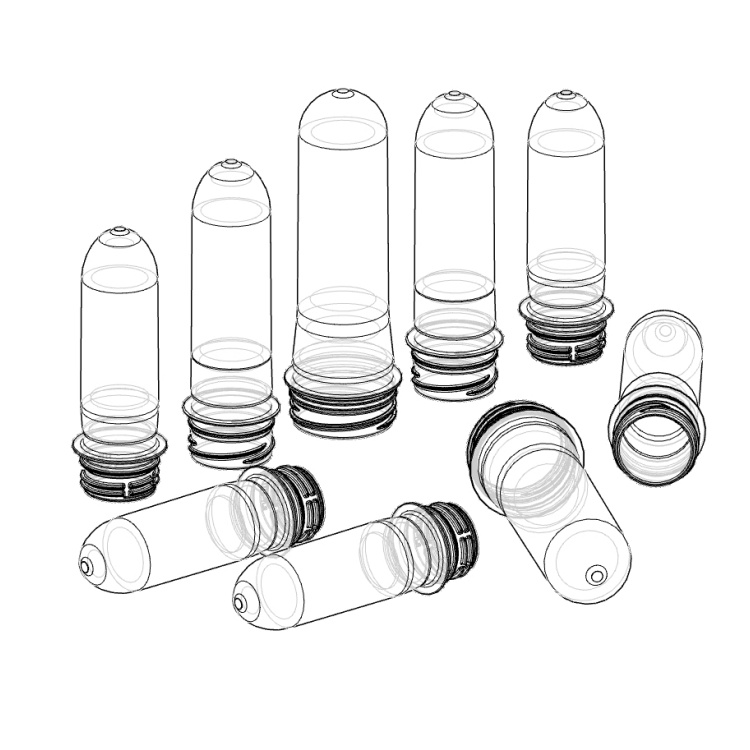
A customer running a 96-cavity preform mold on a Husky HyPET series machine, producing a 21.2g preform, came to Foshan Baijinyi Precision Technology Co., Ltd. (BJY) with a problem that had been building for a while. Preforms were coming off the line with visible flash along the parting line of the neck ring, and a bubble showing up after the neck had crystallized. The plant had already ruled out obvious process issues, since the defect kept showing up regardless of settings, which pointed toward the mold itself but not to any single system inside it.
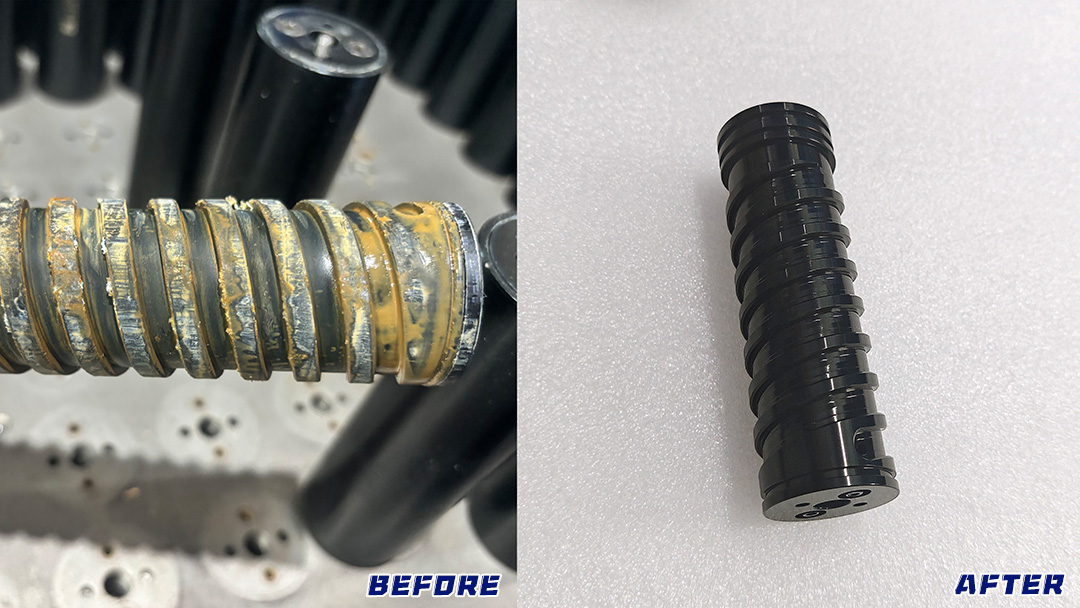
BJY’s engineers started with inspection across the whole mold rather than assuming where the fault was. The hot runner was checked first, since melt delivery problems can distort preform geometry in ways that mimic a mechanical defect. It tested within tolerance and needed only routine servicing. Attention then moved to the neck ring, lock ring, cavity, cavity flange, and gate insert, measured against original spec. This confirmed what the defect pattern suggested: the mating surfaces that form the neck geometry had worn unevenly after years of production, opening a clearance that let resin escape as flash and trapped air that later appeared as a bubble.
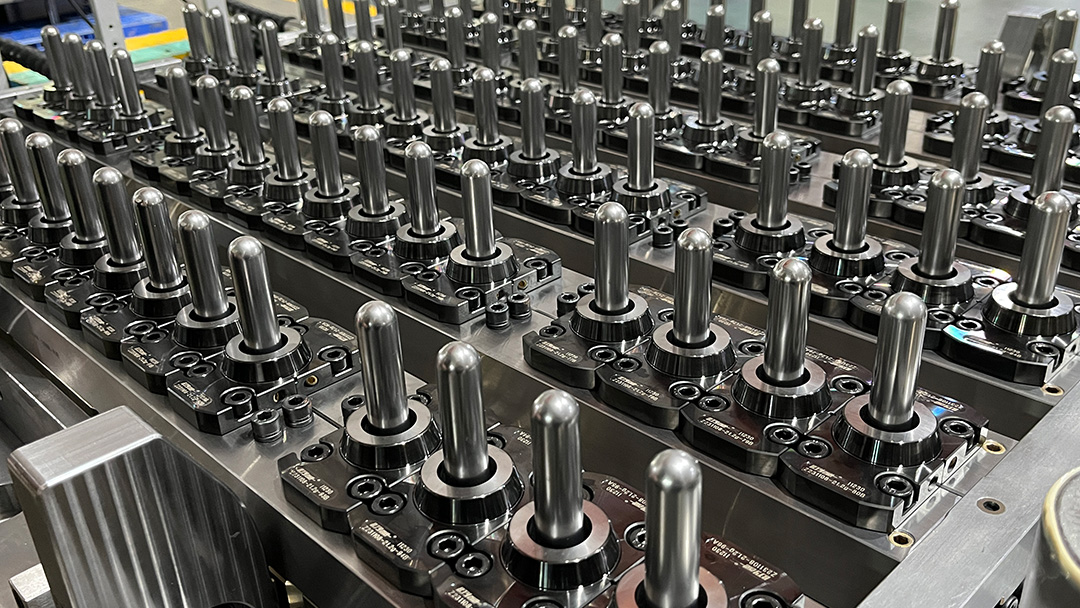
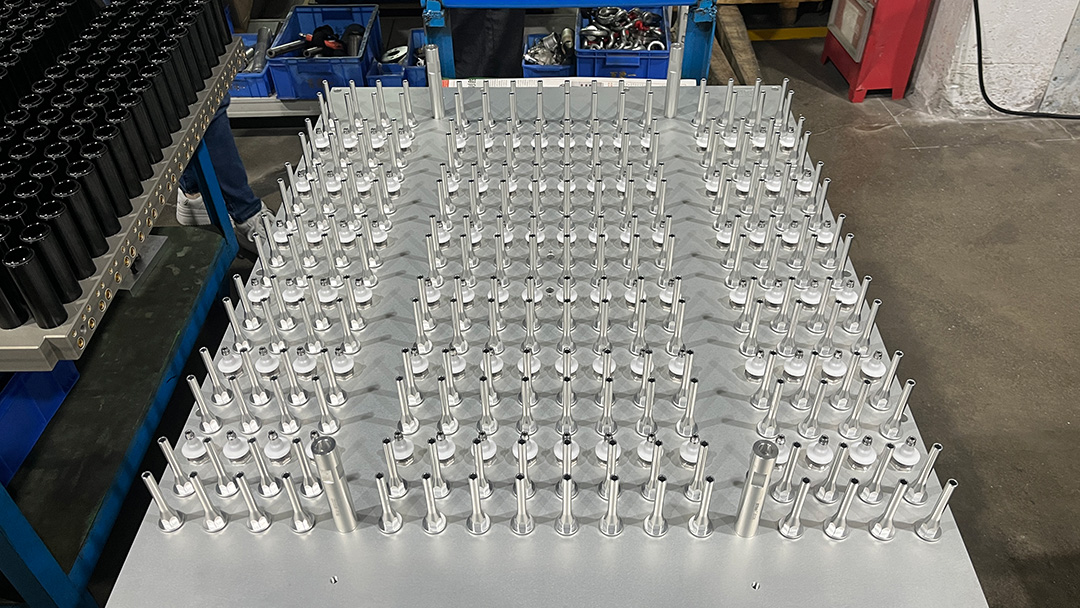
The refurbishment that followed addressed all three systems, even though the wear turned out to be concentrated in one of them. On the cavity side, all 96 sets of neck rings, lock rings, cavities, cavity flanges, and gate inserts were replaced with new components; mold cores were replaced only where wear was confirmed on inspection. The hot runner’s nozzles and heater bands were inspected and cleaned rather than replaced, since they remained within working spec. On the take-out robot side, all 96 EOAT preform absorbers were replaced as a full set, since a worn absorber was also contributing to inconsistent part handling. Quick-wear parts, including wear-resistant copper plates, guide sleeves, slide guide rails, slide bearings, screws, and seal rings, were replaced at the same time, and the mold’s water and pneumatic channels were deep-cleaned and de-rusted before final reassembly.
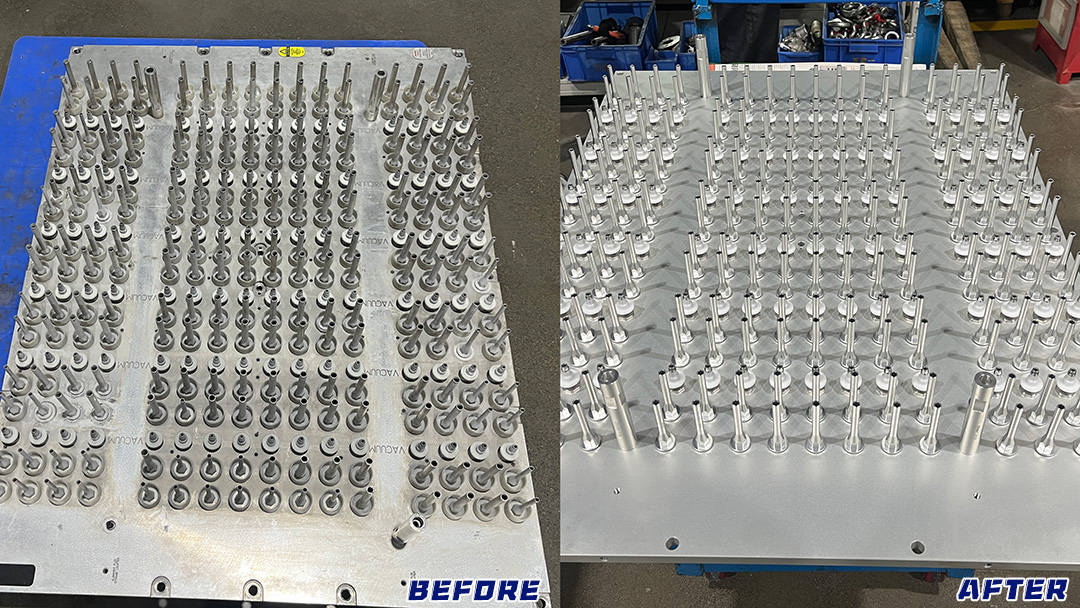
Once the mold went back into production, the flash and bubble defects that had prompted the whole project were gone, not masked by a process workaround, but resolved at the source. That’s the outcome BJY aims for with every refurbishment: check the hot runner, the cavity tooling, and the take-out system as three independent candidates, replace only the components that have actually drifted out of tolerance, and hand back a mold that produces clean parts consistently.