

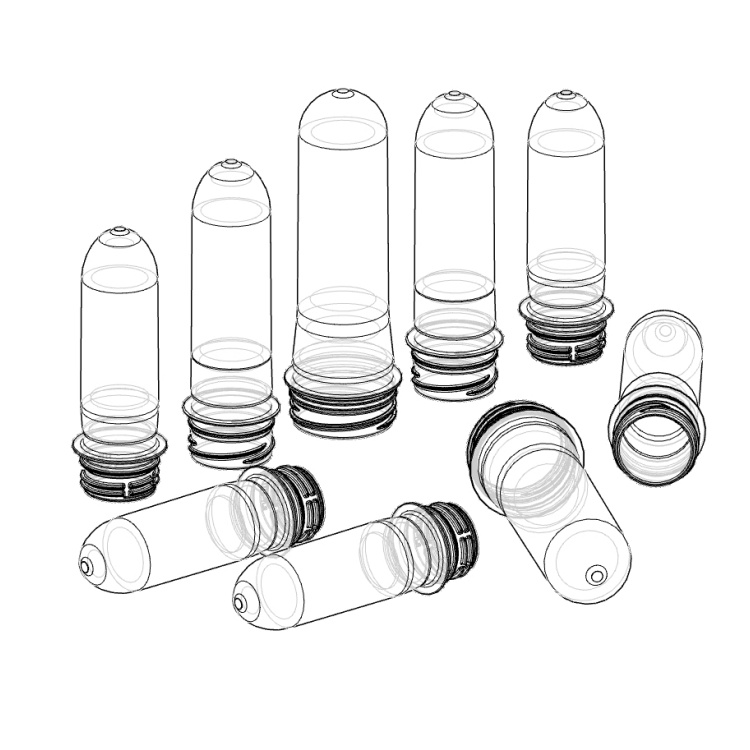
Why Material Selection Affects PET Preform Mold Life and Bottle Quality in Preform Mold Making
In preform mold making, material selection is not a small technical detail. It affects cavity wear, preform wall balance, neck finish stability, cooling speed, maintenance planning, and the final bottle’s blowing behavior. A low-cost material may look acceptable at the quotation stage, but the cost often returns later through flash, eccentricity, slow cooling, or unstable sealing.
BJY manufactures PET liquid packaging molds and precision mold parts, including PET injection molds, PET blowing molds, closure molds, and OEM machinery parts. Its product range includes PET Injection Mold, Cavity, Mold Core, Neck Ring, Lock Ring, Gate Insert, and Cooling Tube Assemble, which makes the company relevant for buyers comparing material choices for PET preform production.

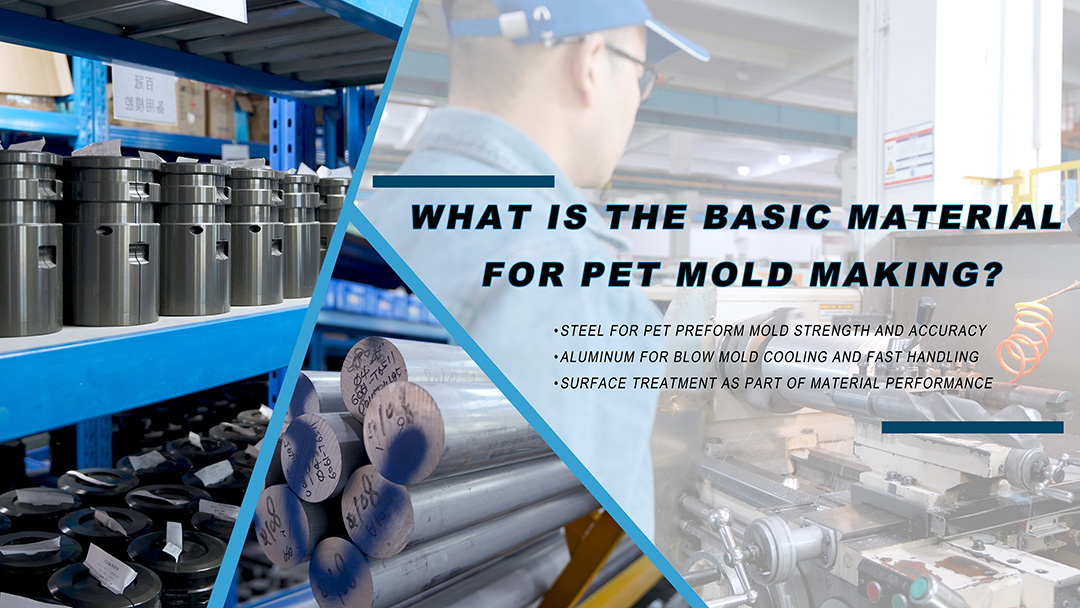
What Is the Basic Material for PET Mold Making?
The basic material for PET mold making is usually steel, aluminum alloy, or a functional alloy used in a specific mold position. For PET preforms, steel takes the main role because the cavity, core, neck ring, and related parts must hold accurate geometry under injection pressure and repeated heating. Aluminum alloy is more common in blow molds or certain cooling structures, not as the main answer for PET preform mold material selection.
Steel for PET Preform Mold Strength and Accuracy
In preform mold making, the steel used for the cavity and core must resist wear while keeping the preform shape stable. BJY’s Cavity product page lists S136 series mirror-finish mold steel, with processing accuracy within ±0.005mm, Ra 0.1 μm surface roughness, and HRC 52-54 heat treatment hardness for cavity/core material. These figures matter because the cavity is not only a “metal hole”; it controls the outside profile of the preform, the neck area, and the surface condition that later affects bottle blowing.
For buyers comparing a S136 steel preform mold, the real question is not only whether S136 is used, but where it is used, how it is heat treated, and whether critical dimensions are inspected before assembly.
Aluminum for Blow Mold Cooling and Fast Handling
Aluminum still has a place in the full PET bottle project, but it should not be confused with the main material for preform mold making. Aluminum alloy is more useful where rapid heat transfer and lighter mold handling are required, especially in blow mold bodies or supporting cooling structures. In a preform mold, the buyer should first check steel parts that shape the preform, then check cooling components that control heat removal.
This distinction helps avoid a common sourcing mistake. A supplier may talk mostly about aluminum mold benefits, but if your project is about preform accuracy, the first review should focus on steel cavity quality, core accuracy, neck ring wear, and cooling design.
Surface Treatment as Part of Material Performance
Base material is only one part of mold life. Surface polishing, heat treatment, anti-corrosion treatment, and cooling channel finishing all affect daily operation. A polished cavity can help reduce surface marks on the preform. A treated cooling part can reduce scaling risk. A stable neck forming area can lower sealing problems after capping.
For a buyer, surface treatment should be checked together with material and machining. A good drawing review should ask: which surfaces contact PET, which areas guide cooling water, which surfaces must resist friction, and which parts can be replaced separately during maintenance?
Why Does Material Selection Affect Mold Life?
Mold life depends on whether the material is matched to the actual stress point. A cavity and a cooling tube do different jobs, so they should not be judged by the same standard. In preform mold making, a long-running mold needs stable forming surfaces, accurate alignment, and cooling channels that do not lose efficiency too early.
Wear Resistance Under Continuous Production
Wear often starts at repeated contact points: cavity surfaces, thread-forming areas, lock positions, and moving interfaces. If the cavity surface loses accuracy, the preform may still come out of the machine, but the wall distribution and neck detail may no longer be consistent. This is where PET mold maintenance cost starts to rise through polishing, part replacement, line checks, and extra inspection.
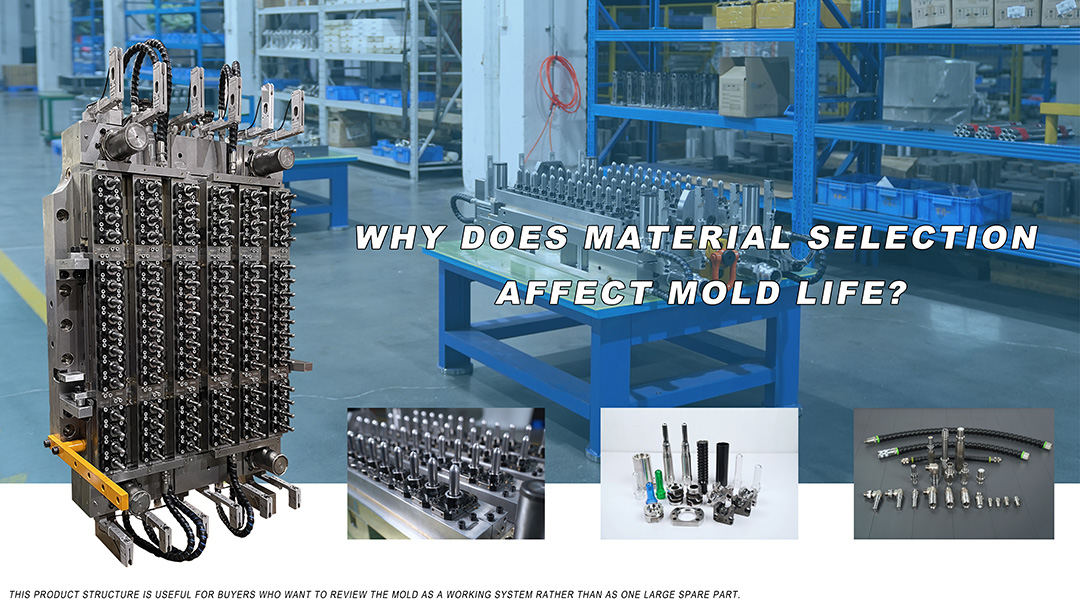
BJY’s PET Injection Mold category includes several preform mold components, such as Ejection Sleeve, Neck Ring, Mold Core, Lock Ring, Gate Insert, Cooling Tube Assemble, and Cavity. This product structure is useful for buyers who want to review the mold as a working system rather than as one large spare part.
Corrosion Resistance for Beverage and Liquid Packaging
PET preform molds may work in humid workshops and cooling-water environments. Corrosion does not always appear first on the forming surface. It may begin inside cooling passages, around threaded parts, or near contact areas. Once corrosion affects cooling or alignment, preform stability can decline slowly and become hard to trace.
For beverage, edible oil, personal care, and pharmaceutical packaging, corrosion resistance should be discussed early. The buyer should ask which parts use stainless steel, which parts use alloy material, and which surfaces need treatment for water, temperature, and long-term cleaning exposure.
Stable Structure During Repeated Heating and Cooling
Repeated heating and cooling can cause small dimensional changes. In a high-cavity mold, small changes become harder to control because every cavity needs similar thermal behavior. If the material expands unevenly or the cooling structure is not stable, preforms can show different weights, wall sections, or neck finish behavior between cavities.
Stable material choice gives the mold a better base. Stable machining and inspection decide whether that material advantage becomes real in production.
How Does Mold Material Influence Bottle Quality?
Bottle quality begins at the preform. If the preform is eccentric, poorly cooled, or unstable at the neck, the blow molding stage has less room to correct it. Material selection affects this chain because it controls how accurately the preform is formed and how evenly heat is removed.
Better Cooling Supports More Consistent Wall Thickness
A preform mold cooling system must remove heat evenly. If one area cools too slowly, the preform may shrink unevenly or carry stress into the blowing stage. BJY’s Cooling Tube Assemble is listed as a PET preform mold cooling system component, with processing accuracy ≤±0.01mm, surface roughness ≤Ra 0.4μm, direct-contact water cooling, and anti-scaling design.
A cooling tube assemble for PET preform mold is not a decorative part. It affects thermal balance, cycle stability, and the consistency of wall thickness across long production runs.
Precision Machining Reduces Flash and Bottle Defects
Flash, parting marks, and preform geometry errors often start from poor machining or loose tolerance control. For the PET injection mold cavity, machining precision has direct value because the cavity defines the preform’s outside shape. If the cavity surface is rough or the mold frame flatness is poor, the defects may appear as cosmetic issues first, then become functional problems during blowing or sealing.
Buyers should ask for drawing confirmation, critical tolerance points, and inspection method before production. These details are more useful than broad claims about material grade.
Material Stability Protects Neck Finish and Sealing Performance
The neck finish decides whether the bottle can be capped correctly. A preform with poor thread accuracy or support-ring deviation may lead to leakage, torque problems, or filling-line rejection. The material around the neck area should resist wear and keep geometry stable.
This is especially important for water, carbonated drinks, hot-fill products, and aseptic liquid packaging, where sealing performance is tied to safety, storage, and customer complaints.
Which Material Fits Different PET Bottle Production Scenarios?
A practical material decision should start from the product being packed, the preform weight, the neck finish, the cavity count, and the expected production rhythm. The table below keeps the decision simple.
| Production Concern | Part to Review First | Material or Design Focus |
|---|---|---|
| Preform shape accuracy | Cavity | S136 steel, machining precision, surface finish |
| Inner wall consistency | Core and cooling structure | Alignment, cooling balance, thermal stability |
| Neck sealing | Neck Ring and Cavity neck area | Wear resistance, thread accuracy, stable finish |
| Cycle stability | Cooling Tube Assemble | Water cooling path, anti-scaling design, accuracy |
| Maintenance cost | Replaceable mold parts | Modular repair, inspection access, spare part planning |
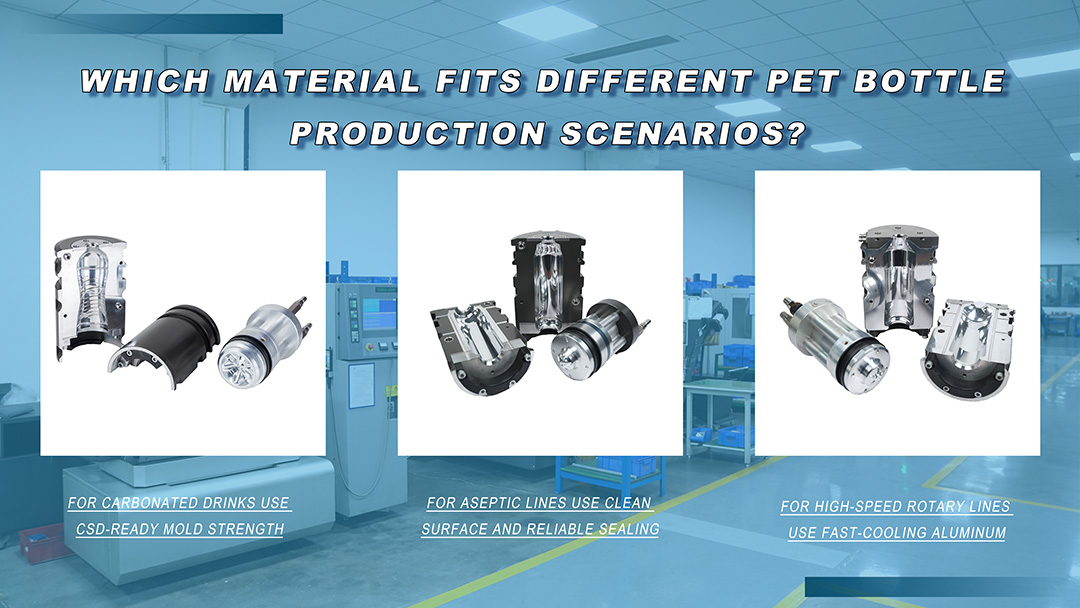
For Carbonated Drinks Use CSD-Ready Mold Strength
For carbonated drinks, the preform must support later pressure resistance. The blow mold and machine settings matter, but the preform’s wall balance and neck finish are already decided during injection molding. A buyer planning CSD packaging should review the cavity, core, neck ring, and cooling structure before discussing the final bottle mold.
For Aseptic Lines Use Clean Surface and Reliable Sealing
Aseptic lines require preforms that support clean bottle forming and stable sealing. The material should not create unnecessary surface defects, unstable neck dimensions, or hard-to-clean areas. In this case, cavity finishing and cooling control are more relevant than broad material labels.
For High-Speed Rotary Lines Use Fast-Cooling Aluminum
High-speed bottle production needs stable preforms before fast blowing can work properly. Aluminum may help downstream blow mold cooling, but in preform mold making, steel forming parts and precise cooling components remain the foundation. If the preform quality changes from cavity to cavity, high-speed output only makes the defect faster.
How Should Buyers Evaluate Material Before Ordering a PET Mold?
Before ordering, ask for more than a material name. Ask where each material is used, which parts are heat treated, how cooling is designed, which parts are replaceable, and what inspection data can be provided before shipment. This is a practical way to reduce later corrections.
Match Material to Filling Type and Bottle Pressure
Water, CSD, hot-fill, aseptic, oil, and personal care bottles do not have the same requirements. A light water bottle may focus on weight control and cooling. A CSD bottle needs pressure-related stability. An aseptic bottle needs clean forming and sealing control. Preform mold making should follow the filling type from the start.
Check Equipment Compatibility Before Mold Production
A PET preform mold must match the injection system, cavity layout, neck finish, cooling connections, and production habit of the buyer’s line. If the equipment data is incomplete, the buyer should provide old mold drawings, samples, preform drawings, or actual defect photos. Compatibility work before machining is cheaper than revision work after delivery.
Ask for Drawings, Inspection, Trial Support, and Maintenance Guidance
A reliable mold project should include 2D or 3D drawing confirmation, material discussion, machining control, final inspection, and maintenance advice. For preform mold making, these steps reduce risk before steel is cut and help both sides agree on the technical target.
If your team is comparing cavity material, cooling performance, neck finish accuracy, or replacement parts for an existing PET preform mold, prepare the preform drawing, neck standard, cavity count, current defect photos, and machine information. BJY can review these details and discuss a practical route through its contact page without forcing the discussion into a generic catalog request.
FAQ
Q: What is the basic material used in preform mold making?
A: Steel is the main material for forming parts such as cavity, core, neck ring, and related precision components. BJY’s Cavity product uses S136 series mold steel, while cooling parts may use other functional alloys depending on the cooling structure and application.
Q: Why is cooling important in preform mold making?
A: Cooling controls shrinkage, wall balance, and cycle stability. If cooling is uneven, the preform may carry stress into the blowing stage. Cooling Tube Assemble helps manage the preform mold cooling system, especially where stable heat removal is required.
Q: How should buyers choose between PET Injection Mold parts and a complete mold?
A: If the existing mold frame is still usable, replacing parts such as Cavity or Cooling Tube Assemble may reduce maintenance cost. If there are repeated dimensional problems, severe wear, or design mismatch, a full PET Injection Mold review may be more practical.