

Blow Molding Machine Price vs Mold Cost What Bottle Producers Should Know About Blow Molding Cost
Blow molding cost is often confusing because two suppliers may give very different prices for what looks like the same PET bottle project. One quotation may focus only on the machine. Another may include molds, bottle testing, changeover parts, and technical adjustment. For a bottle producer, the real question is not only “How much is the blow molding machine?” but “Will this setup keep producing stable bottles without high scrap, frequent downtime, or repeated mold changes?”
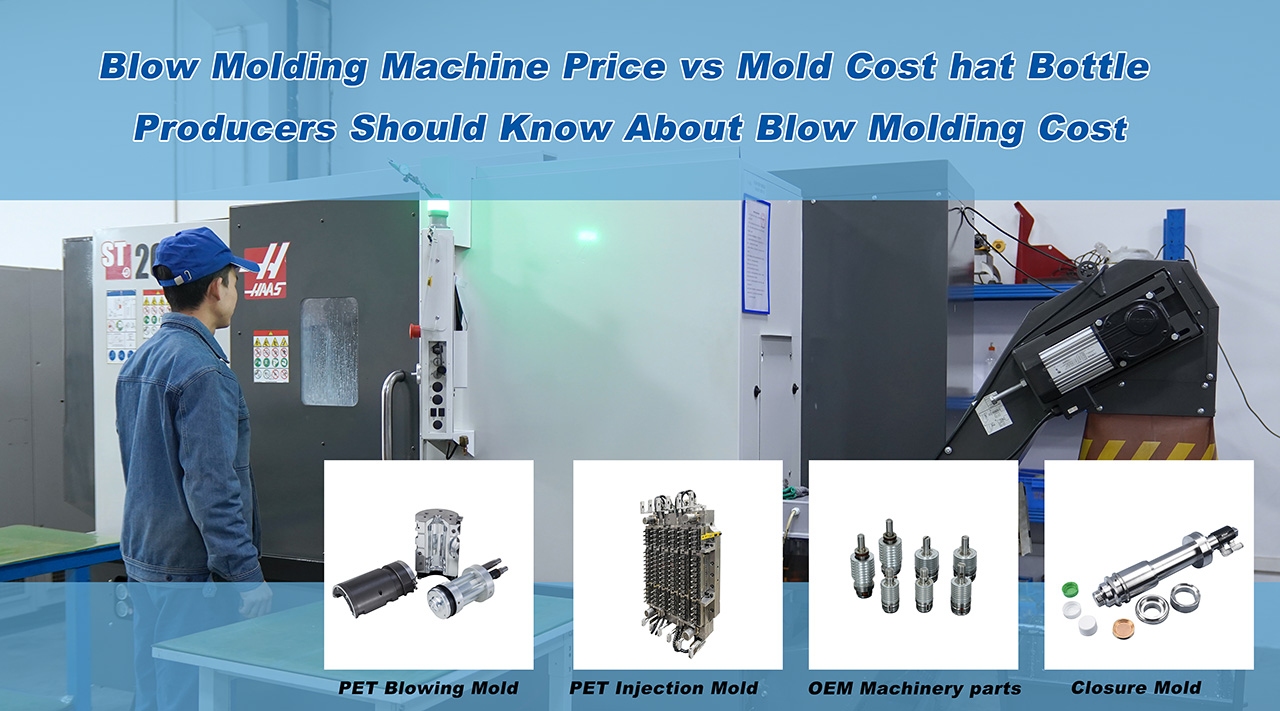
BJY works in PET packaging molds and related parts, including PET Blowing Mold, PET Injection Mold, OEM Machinery parts, and Closure Mold. For PET bottle projects, mold selection usually needs to match bottle volume, neck finish, preform weight, filling type, machine condition, and expected output. This makes the cost discussion more practical, because machine price, mold structure, and later maintenance are connected in daily production.
What Does Blow Molding Cost Include Beyond Machine Price?
A machine quotation gives only one part of the budget. For a new PET bottle project or a mold replacement project, buyers need to look at the cost items that appear before and after production starts.
Machine Price Is Only One Budget Line
Machine price is affected by machine type, output capacity, automation level, bottle range, and production layout. A small line and a rotary high-output line will not follow the same cost logic. But the machine itself does not decide bottle quality alone.
Buyers also need to include molds, bottle samples, preform matching, process tuning, spare parts, and future changeover work. This is why blow molding cost for PET bottles should be checked as a complete production budget, not as a single equipment price.
Mold and Testing Costs Shape Daily Production
PET blow mold cost is tied to bottle shape, neck finish, filling process, cavity accuracy, cooling design, and material selection. A mold that fits the machine well can shorten trial time and reduce repeated adjustment.
|
Cost Item |
What Buyers Should Check |
Why It Affects Blow Molding Cost |
|
Machine Cost |
Output level, automation, bottle range |
Sets the starting investment and production capacity |
|
Mold Cost |
Bottle volume, neck finish, filling type, cavity structure |
Directly affects forming stability and reject rate |
|
Testing Cost |
Trial run, bottle sample check, process tuning |
Decides how quickly the line reaches stable output |
|
Changeover Cost |
Future bottle volume or neck changes |
Affects flexibility for new products |
|
Maintenance Cost |
Mold wear, cooling parts, spare parts |
Changes long-term operating budget |
Scrap and Downtime Are Hidden Costs
A low purchase price may become expensive if it causes unstable bottle quality. Uneven wall thickness, weak bottle base, poor neck finish, or difficult demolding can create waste and stop the line. These costs are harder to see in a quotation, but they affect profit every day.
How Should Buyers Compare Blow Molding Machine and Mold Cost?
Buyers should compare blow molding machine and mold cost together. A suitable machine with the wrong mold still causes problems. A well-matched mold can also help an existing line run more smoothly.
Equipment Fit and Bottle Format
Before ordering a mold, prepare the machine information, bottle drawing or sample, preform weight, neck finish, filling type, and target output. These details help confirm whether the project needs a standard mold, custom cavity work, special cooling design, or machine-specific adaptation.
If the factory may change bottle volume later, this should also be discussed early. Future changeover cost is part of the cost of PET bottle production line planning.
Material and Machining Accuracy
Mold material and processing accuracy affect heat transfer, wear resistance, assembly fit, and bottle consistency. For PET bottle molds, aluminum materials are often used for efficient heat dissipation, while steel cavity structures may be needed for certain production demands.
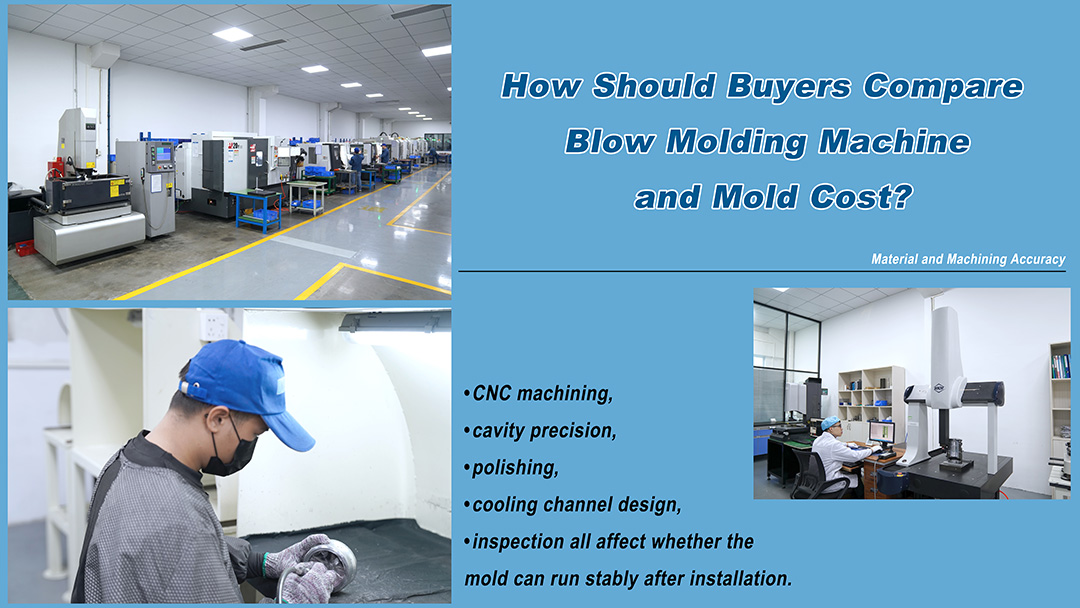
Buyers should not judge mold value only by weight or surface appearance. CNC machining, cavity precision, polishing, cooling channel design, and inspection all affect whether the mold can run stably after installation.
Low Mold Price Can Raise Daily Cost
A low mold price may look attractive at the quotation stage, but buyers should check what is missing. If the mold has weak cooling performance, poor machine fit, or unstable neck forming, the factory may spend more on trial runs, rejected bottles, operator adjustment, and later repairs.
For PET bottle production, a higher mold cost can still be reasonable if it reduces scrap, shortens debugging time, and keeps the filling line stable.
Which BJY Mold Fits Different Bottle Projects?
After the cost structure is clear, mold selection should start from the bottle application. Bottle volume, filling type, pressure demand, and machine condition decide which mold is more suitable.
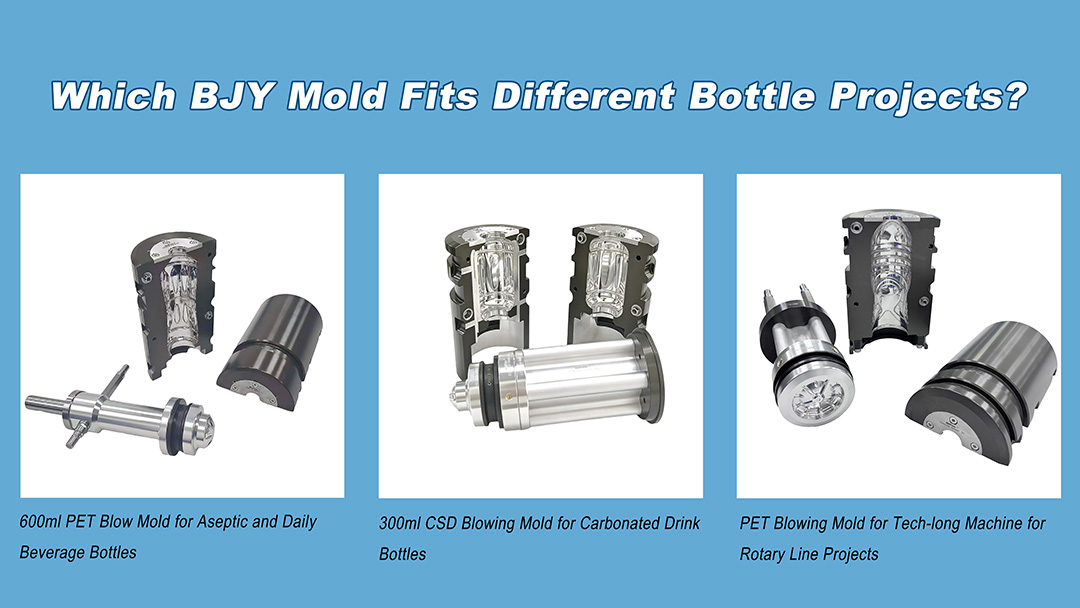
600ml PET Blow Mold for Aseptic and Daily Beverage Bottles
The 600ml PET Blow mold is suitable for 600ml PET bottle projects, including aseptic beverage, drinking water, tea, juice, and functional drink packaging. The product page lists an 1881 neck finish, 28g preform design, 600ml bottle volume, A6061 aluminum material, and aseptic filling line application.
This mold is more relevant when the buyer needs stable forming for daily beverage production. If the bottle will enter an aseptic or continuous filling process, mold consistency matters because downstream interruptions can raise blow molding cost quickly.
300ml CSD Blowing Mold for Carbonated Drink Bottles
The 300ml CSD Blowing Mold fits small carbonated soft drink bottle production. The product page lists 1881 neck size, 19g weight, 300ml capacity, A6061 Aluminum Alloy, and CSD application.
CSD bottles need stronger pressure performance than still water bottles. Buyers should check wall thickness distribution, base forming, bottle shape stability, and neck finish accuracy. If these points are weak, the line may face pressure-related defects, filling instability, or more quality checks.
PET Blowing Mold for Tech-long Machine for Rotary Line Projects
The PET Blowing Mold for Tech-long Machine is designed for rotary PET bottle production. It supports bottle applications such as water, CSD, hot-fill juice, aseptic packaging, edible oil, and other PET liquid packaging. The product page states a finished bottle size range from 50ml to 2500ml, with S136 steel for cavity and A6061 for base.
This option is more suitable for factories upgrading or maintaining a rotary bottle line. For this type of project, compatibility, cavity accuracy, cooling performance, and format range matter more than a low mold quotation.
|
Buyer Situation |
Main Cost Risk |
What to Check Before Ordering |
Suitable BJY Option |
|
600ml beverage bottle project |
Bottle shape variation during filling |
Neck finish, preform weight, aseptic line needs, cooling design |
600ml PET Blow mold |
|
Small CSD bottle production |
Weak pressure resistance or uneven wall thickness |
Bottle base, wall distribution, CSD filling condition, neck accuracy |
300ml CSD Blowing Mold |
|
Rotary line upgrade |
Poor machine compatibility and long debugging time |
Machine details, bottle size range, cavity structure, filling type |
PET Blowing Mold for Tech-long Machine |
How Can Mold Quality Lower Blow Molding Machine Maintenance Cost?
A mold that fits the line well can reduce pressure on operators and maintenance teams. Blow molding machine maintenance cost is often affected by repeated adjustment, worn parts, unstable cooling, and poor mold-machine matching.
Fewer Defects and Less Scrap
Good mold matching helps reduce common defects such as uneven wall thickness, weak bottle bottom, whitening, poor neck finish, and unstable capacity. Fewer defects mean less wasted PET material and fewer stops for inspection.
Shorter Adjustment Time
Operators still need to adjust heating, stretching, pre-blow, high-pressure blowing, and cooling. But a stable mold gives them a better starting point. This can reduce trial time after mold installation or bottle format changes.
Lower Risk During Bottle Changes
Bottle producers often need new volumes, new shapes, or new packaging styles. If the mold supplier can work from samples, drawings, and machine details, future changes are easier to manage. This helps control long-term blow molding cost across more than one product cycle.
How Should Buyers Plan the Cost of a PET Bottle Production Line?
A useful budget should include machine purchase, molds, preform matching, bottle testing, spare parts, installation, trial production, and future maintenance. The lowest offer may become expensive if it causes longer trial runs, unstable bottle quality, or frequent mold repair.
Filling Type Comes Before Bottle Volume
Cold-fill, hot-fill, aseptic, CSD, edible oil, and daily chemical packaging all need different mold decisions. Buyers should not choose a mold only by bottle volume. Filling type and bottle performance should come first.
Project Details Make Quotation Useful
To get a meaningful quotation, prepare bottle drawings or samples, machine model details, neck finish, bottle volume, preform weight, filling process, and expected production output. Clear details help the supplier judge whether the project needs a standard mold, custom mold, or machine-specific structure.
Service and Contact for Technical Review
A mold project does not end when the mold ships. Trial production, adjustment advice, replacement parts, and maintenance guidance all affect the final production result. Better preparation before ordering usually saves more time than solving avoidable problems after installation.
If your team is comparing machine investment, mold replacement, or a new PET bottle format, prepare your bottle drawing, sample, machine model, preform weight, neck finish, and filling process before discussion. These details help BJY review whether the project needs a standard mold, a custom cavity, or machine-specific adaptation. You can share project information through the contact page and make the cost review more accurate from the first conversation.
FAQ
Q: What Is the Difference Between Machine Price and Blow Molding Cost?
A: Machine price is the equipment purchase cost. Blow molding cost also includes molds, installation, production testing, material waste, maintenance, downtime, spare parts, and future bottle changes.
Q: Why Does PET Blow Mold Cost Matter So Much?
A: PET blow mold cost matters because the mold directly affects bottle quality, wall thickness, cooling, demolding, neck finish, and production stability. A low-cost mold can become expensive if it causes more rejects or downtime.
Q: How Can Bottle Producers Reduce Blow Molding Cost?
A: Bottle producers can reduce blow molding cost by choosing molds that match the machine, bottle type, filling process, preform design, and daily output target. Good preparation before ordering usually saves more money than choosing the lowest mold price.