

Blow Molding Machine-An In-Depth Exploration of Technology and Applications
Blow Molding Machine–An In-Depth Exploration of Technology and Applications
A blow molding machine is a device that uses the blow molding process to turn plastic pellets into hollow containers. This tool plays a big role in making different plastic items. People often use it for packaging in drinks, food, drugs, and everyday chemicals.
Hollow extrusion blow molding machines
These work with stuff like polypropylene (PP) and polyethylene (PE) for one-step shaping. They push out a tube and blow it into form right away. Another common type is the injection stretch blow molding machine. It uses polyethylene terephthalate (PET), polycarbonate (PC), or PP for two-step shaping. Here, you make a preform first by injecting. Then, you stretch and blow it later. Plus, there are new types like multi-layer hollow extrusion blow and stretch blow molding machines. These give better protection for things like fizzy drinks or cooking oils.
Two-Step Blow Molding Machines and PET Plastics
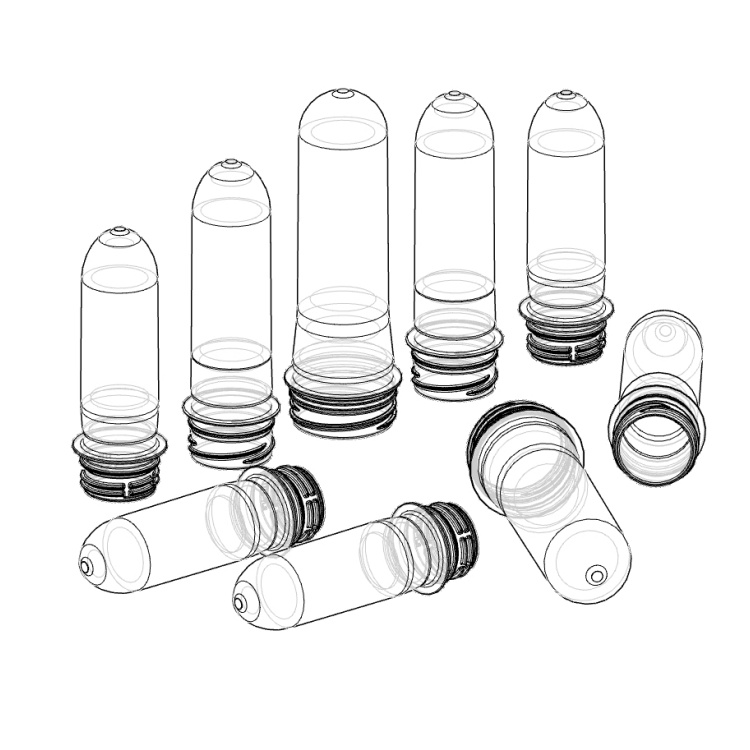
Most blow molding machines today are still two-step ones. So, you have to shape the plastic raw material into a preform first. Then, you blow it. This way works well with green plastics like PET. PET is popular because you can recycle it. It is clear and strong too. For example, in the drink business, PET makes bottles for mineral water, juices, soft drinks, and dairy items. The blow molding machine works by shooting out liquid plastic. Then, it uses wind from the machine to stick the plastic to a mold cavity with a certain shape. In the end, you get the product. People call this machine a blow molding machine. It can be hydraulic, which gives good control over pressure and moves.
Right now, two-step blow molding machines are the main ones. This split lets you check quality better. It also helps handle various bottle looks. Green PET plastics fit this method nicely. You can reuse them, which matches eco-friendly packing goals. Firms that focus on PET molds, like Foshan Baijinyi Precise Technology Co., Ltd., stress the need for exact molds. These fit well with the machines to make steady, good preforms and bottles.
Blow Molding Principles
Preheating
Preheating means shining infrared high-heat lamps on the preform, or embryo. This warms and softens the body part. You do this to get the right stretch without messing up the preform too soon. But to keep the bottle mouth in shape, which stays hard for caps and seals, you skip heating that spot. Often, you use a cooling tool for it. This picky heating makes sure the preform stretches and blows well. At the same time, it keeps exact neck sizes, like the 29/25 neck finish in drink bottles.
Blow molding shaping
In the blow molding shaping step, you put the warmed preform into a ready blow mold. There, you add high-pressure air. This swells the preform. It stretches into the wanted bottle form. A full auto blow molding machine makes things faster. It links these steps with a robot arm. The arm moves the warmed preform to the mold. No need for hands in between. This speeds up making a lot.
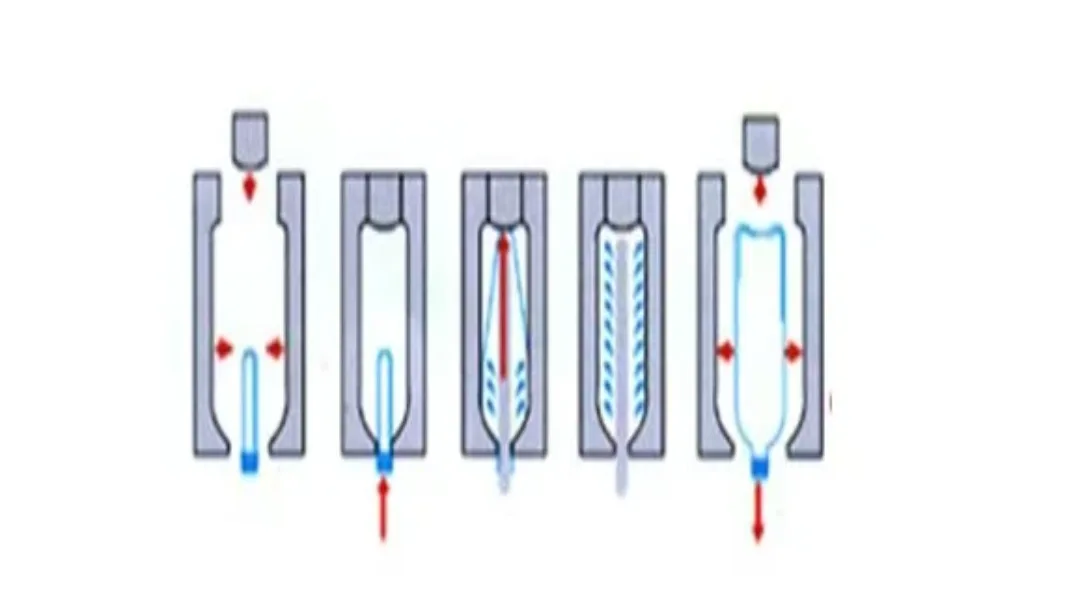
Process Flow of Blow Molding Machine: Detailed Mechanics
The blow molding process in a blow molding machine is a two-way stretch method. In it, the PET chains in the stuff spread out. They line up and point in both length and width ways. This setup boosts the bottle wall’s strength. It makes pull strength better. It ups hit resistance too. And it gives good seal against air. Stretching helps these things. But you cannot stretch too much. That might cause problems like thin walls or breaks. You must control the stretch blow-up ratio well. In width, do not go over 3.5 to 4.2. In length, keep under 2.8 to 3.1. Also, the preform wall thickness should not top 4.5mm. This ensures good spread of material.
PET Blow Molding Temperature Control and Heating Process
You do blow molding in a certain heat range. It is between the glass change point and the crystal point of PET. Usually, you keep it at 90 to 120 degrees Celsius. In this spot, PET acts very stretchy. You can blow it fast into a clear bottle. It sets when it cools. For one-step ways, this heat comes from how long it cools in the first inject part. So, you need good links between inject and blow spots. In real use, like with machines from Krones or Sidel, heating areas split up. Lamp powers change. For example, 3000W in the first area and 2500W in others. This gets even heating.
Key Stages and Adjustments in the Blow Molding Process
The blow molding process has a few sub-parts: stretching, first blow or pre-blow, and second blow or high-pressure blow. These happen quick one after another. But you must match them well. The first two steps set how the material spreads and the end quality. You might change things like when stretching starts, its speed, when pre-blow begins and ends, air pressure, and flow. Best case, you control the whole heat spread on the preform. That includes between inside and outside walls. This stops issues like uneven thickness or bad clearness.
Managing Stress in Bottle Walls and Mold Design for Blow Molding
When you blow fast and cool, stress builds in the bottle wall. For fizzy drink bottles, this stress fights inside pressure. So, it helps. But for hot-fill bottles, you must let it go above the glass change point. This avoids shape change when filling. Molds from brought-in aluminum help here. They have things like sandblasted bottoms for easy take-out. This gives smooth let-go and nice surfaces.
Applications and Advancements
Blow molding machines work for many uses. They help with bottled water, fizzy drinks, juices, dairy, home stuff, and medical packs. Molds like the 2L aluminum blow mold for KHS machines or 72-cavity PET preform molds let fast making. They have better cooling for short times and tough surfaces for long life.
New steps focus on green ways. They work with reused PET and plant-based stuff. This cuts energy with light plans. Help flows from turning back customer samples to checks for quality. This gives custom fixes. Firms like Foshan Baijinyi offer full help. This includes mold plans and machine updates. They push exact and steady work.
In short, blow molding machines are a key part of today’s packing. They mix auto work, material know-how, and building to make tough, green holders. By fixing usual problems and using good molds, makers can get steady, big output. This drives speed and new ideas in the field.
Disclaimer
The brand names and logos of sidel, husky, khs, sacmi.sipa, netstal, etc., are registered trademarks owned by their respective legal holders. All mentioned trademarks and brand names in this article are used solely for the purpose of illustrating product compatibility and suitability. BY does not claim any rights to the aforementioned trademarks and has no affiliation, authorization, or partnership with the companies mentioned. Any references herein do not imply that our products are original factory parts or have received official recognition from the manufacturers.